

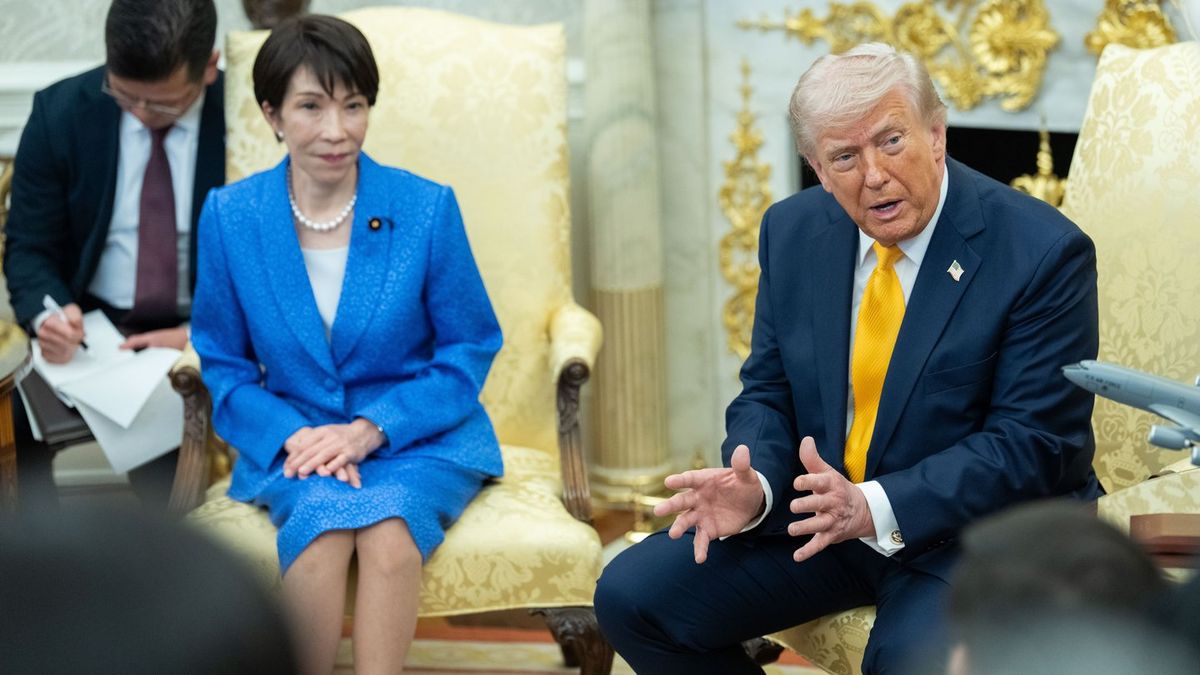
Donald Trump sparked an awkward moment during talks with Japan’s Prime Minister on Thursday, making a joke about the Pearl Harbor attack that drew the United States into World War Two.
The exchange came while the president was being pressed on why some NATO members were hesitant to support his push for conflict with Iran. Trump said he kept plans quiet because he wanted to maintain the element of surprise.
He added: “Who knows better about surprise than Japan, OK? Why didn’t you tell me about Pearl Harbor, OK? Right?” Despite the inflammatory reference being made in front of a close ally, Prime Minister Sanae Takaichi did not visibly respond in the moment.
Body language expert Dr Beth Dawson has since analysed the interaction, arguing that while the prime minister appeared composed, her non-verbal cues suggested she was masking a stronger reaction. She said: “Sanae Takaichi maintains control of her response to Trump’s comments about ‘surprise’ and Pearl Harbor; however, there is clear leakage in her body language.”
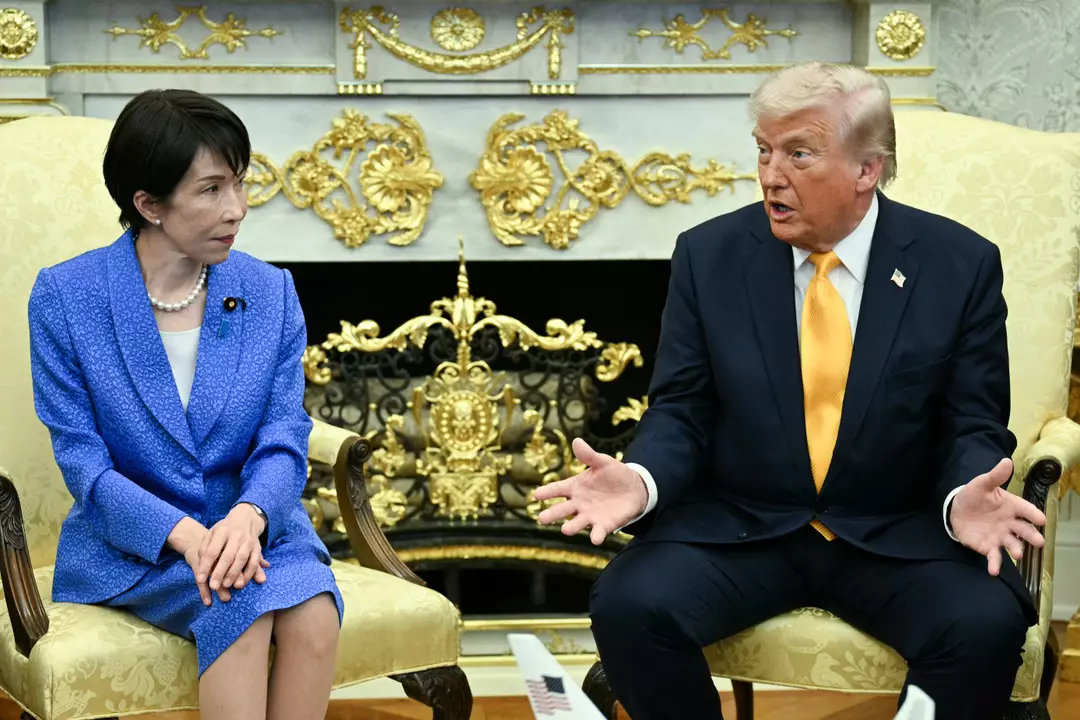
Dr Dawson added: “While she remains composed verbally, she visibly withdraws and retreats from the content of his remarks.”
According to the behavioural analyst, Takaichi is typically seen as “highly assertive, direct, and controlled,” but still operates within what Dawson described as the “structured, respectful norms of Japanese political communication.”
Dawson also noted that the Japanese leader has a reputation at home for taking unusually firm, direct positions — particularly on national security. “This makes the contrast between her usual composure and her non-verbal reactions here especially notable,” Dawson said.
She then identified a series of small reactions that, in her view, revealed what was going on beneath the surface as Trump spoke. Dr Dawson said: “When Trump refers to ‘surprise,’ Takaichi briefly purses her lips.
“Lip pursing is universally associated with suppressed disagreement or disapproval: it is a classic self-restraint signal, indicating that she is holding back a response she is not willing to express openly.”
While the prime minister didn’t address the comment aloud, Dawson suggested her facial shifts communicated more than words would — and that what came through most strongly was discomfort and embarrassment rather than amusement.
The body language expert explained: “She also looks as if she is trying to suppress a smile but due to the raised eyebrows and the lowered eye gaze, this is more of an embarrassed reaction as opposed to finding something funny.
“This is reinforced by subtle finger movements and the way she pulls her hands slightly backwards on her knees, suggesting rising tension and internal conflict.”
In Dawson’s view, those gestures pointed to someone making a deliberate effort to stay measured in a highly public setting.
Dr Dawson said: “At the same moment, she raises her eyebrows, signalling a flash of surprise or disbelief, followed almost immediately by a brief eye closure. This eye closure functions as a blocking behaviour, a subtle attempt to momentarily disengage from what is being said.
“Together, these signals point to active emotional management.”
Dawson also highlighted what she described as brief, more restrained indicators of irritation that appeared in Takaichi’s expression and posture.
The expert said: “As ‘Pearl Harbor’ is mentioned, we see a fleeting micro-expression combining surprise and anger in her eye region, as her eyes open wider and she stares at someone in the audience very briefly, chin down but eye-brows slightly raised – it’s a subtle movement and shows incredulity and it’s followed by a distinct backward movement of the upper body.
“This physical shift of the upper body is very significant: leaning away is a classic distancing behaviour, indicating psychological disengagement from the message.”
Overall, Dawson concluded that the prime minister’s outward calm didn’t necessarily reflect how she felt internally. She said: “Although she maintains verbal control, her non-verbal behaviour signals discomfort, suppressed disagreement, and a desire to distance herself from the comments.”