


The Pentagon is now fielding laser weapons in the Strait of Hormuz that troops operate with standard Xbox controllers, a defense official confirmed last week.
The Department of Defense acknowledged the deployment, saying that the systems are being used to destroy drones and incoming cruise missiles at far lower cost than traditional kinetic weapons. The revelation came alongside news that the Army has committed roughly $500 million to building war-ready directed-energy systems for combat environments.
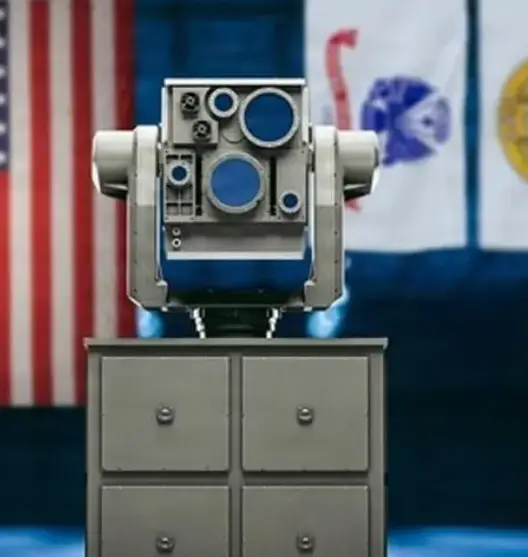
Pete Hegseth, 44, the US Secretary of Defense, personally demonstrated the controller setup at White Sands Missile Range in New Mexico this past June. The showcase was designed to highlight how quickly soldiers can adapt to the interface without extensive specialized training.
Jared Keller, who publishes the newsletter Laser Wars, broke down the logic behind repurposing consumer gaming hardware for lethal operations. He explained that the video games industry had already solved the controller problem through decades of ergonomic refinement and user testing.
“The video games industry figured out what the best controller was and now the US military is saying, ‘Well, why reinvent the wheel with a specialized control system where you can just use an Xbox controller or something really similar to do the job?'”
Keller described the actual firing mechanism to the Post in technical terms.
“It’s weaponized light that spends several seconds of what we call ‘dwell time’ on the target to bring it down.”
He expanded on the broader significance of moving these systems from laboratory conditions to active theaters.
“It now makes sense to actually take them outside of a laboratory and into real-world environments. The most significant [development] is the Army awarding a half-billion-dollar contract for building war-ready lasers [which] focus photons on a target to deliver catastrophic, destructive effects,” he added.

Keller also drew a direct line between popular gaming experience and real-world weapons operation.
“If you’ve shot a Spartan laser in ‘Halo’, you can probably fire [one of the actual weapons] in real life,” he claimed.
The systems deployed in the Hormuz region are understood to be the High-Energy Laser with Integrated Optical Dazzler and Surveillance platform, known by the acronym HELIOS. These units generate a 60-kilowatt beam and are mounted aboard naval vessels operating at sea. The weapons draw electrical power from generators or battery packs, convert that energy into photons, then concentrate those particles into a sustained beam directed at targets until structural failure occurs through thermal melting.
The Strait of Hormuz, a narrow waterway between Iran and Oman, handles roughly one-fifth of global petroleum shipments and has seen repeated tensions involving drone surveillance and attacks on commercial shipping. The US military presence there has historically relied on expensive missile interceptors to counter aerial threats, making the lower per-shot cost of laser weapons economically attractive for sustained operations.
The adoption of Xbox controllers reflects a broader Pentagon pattern of leveraging commercially available technology to reduce training timelines and equipment costs. Microsoft first released the Xbox controller in 2001, and subsequent iterations have become ubiquitous in American consumer culture, with hundreds of millions of units sold globally across two decades of gaming platforms.