

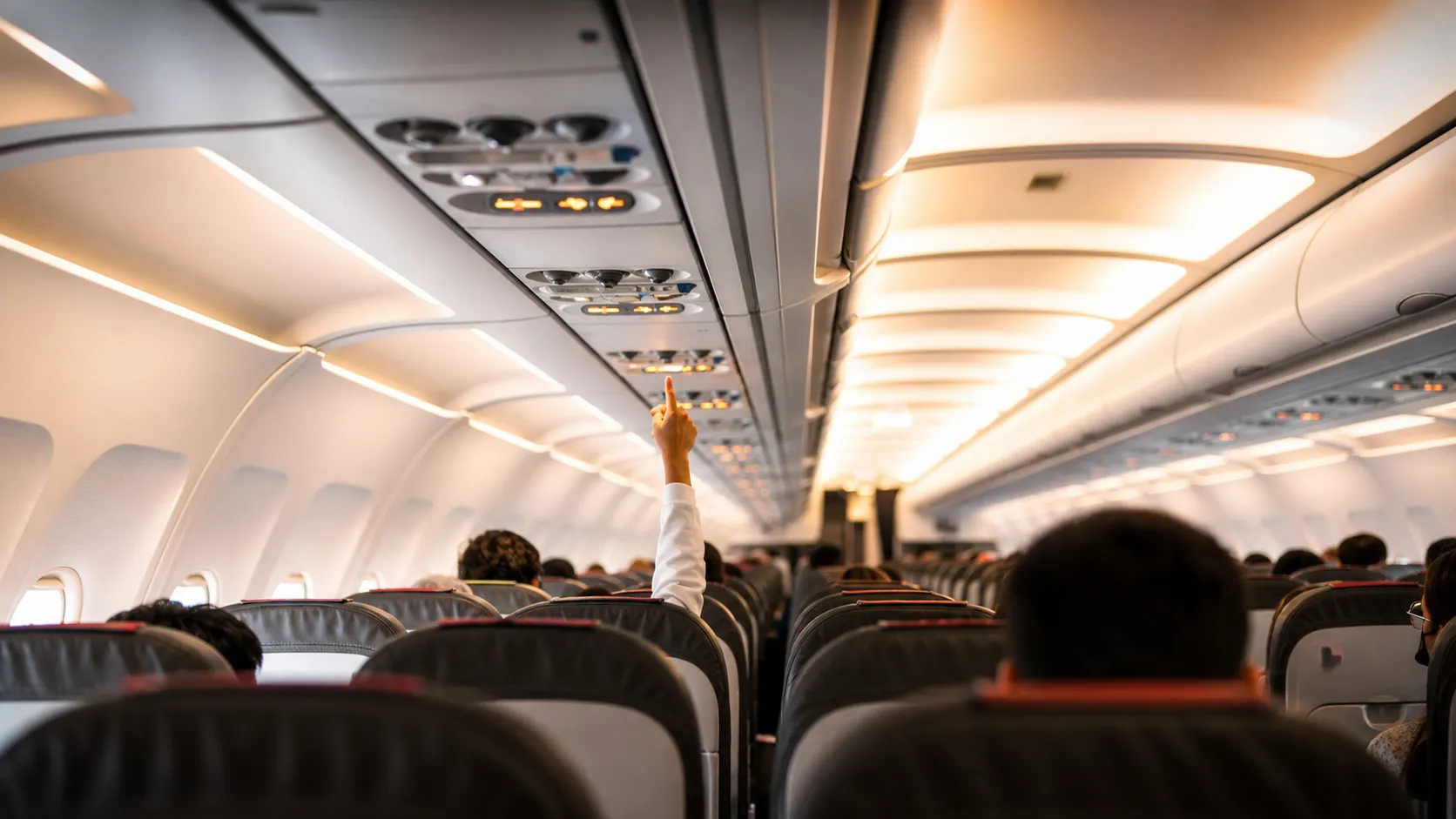
Aviation experts say there is no guaranteed “safe” seat on a plane in a crash, but some locations may offer a statistical edge depending on the type of accident.
Flying remains one of the safest ways to travel, and commercial aviation has become even more survivable over time thanks to stronger cabin structures, improved seats and restraints, clearer evacuation standards, and better emergency lighting and marking systems.
That said, rare accidents still happen, and seat location is often discussed when people wonder whether one part of the cabin is safer than another.
After major air disasters, attention frequently turns to the small number of survivors, with many people questioning whether where they were seated played any role.
It’s something travelers have debated for years, and for some, it even influences which seat they try to book before boarding.
Some assume sitting over the wing is best because that section seems stronger, but others point out it is close to the fuel tanks. That then leads to another theory: maybe seats at the rear are the better option.
Back in 2014, Professor Helen Muir, former director of the Cranfield Institute for Safety, Risk and Reliability, addressed the issue and highlighted a key complication.
The problem is that no two crashes unfold in exactly the same way.
In one scenario, the nose may take the impact first. In another, it could be the tail, the middle of the fuselage, or a wing. Each possibility changes which seats are exposed to the greatest danger.
For instance, the rear of the aircraft might sound safer if the front strikes first, but that assumption changes completely if a fire breaks out toward the back.
In that case, seats closer to the front could end up being the better place to be.
And in reality, anyone caught in such an event would have no way of predicting exactly how it would happen. In some cases, passengers may have very little warning at all.
Even so, Professor Muir did offer guidance, and it centers on how close you are to emergency exits.
She said:
“There isn’t exactly the safest place to sit on an aircraft, because one would have to know how it was going to hit the ground.
“However, having said that, I prefer to sit at a part of an aircraft that has access to the most exits, but I think that’s due to my experience as an accident investigator, and believe that properly designed aircraft every seat has an equal chance of success.”
She also explained what passengers should focus on if a crash does happen.
Professor Muir said:
“The answer is to go where you’re allocated, but to make the most of whatever opportunities you have near you to escape should you need to do so.”
Modern aviation safety advice generally supports that view. The Federal Aviation Administration tells passengers to familiarize themselves with evacuation procedures, count the rows between their seat and the nearest exits, and get out as quickly as possible if an evacuation is ordered.
Research and accident reviews have also suggested that, in survivable crashes, the ability to reach an exit quickly can matter more than any single “best” seat. Some analyses have found that seats toward the rear of the cabin, especially middle seats, have slightly better survival rates in certain crash types, but experts caution that those statistics do not guarantee anything in an individual emergency.
That is because crash dynamics, fire, smoke, debris, water, terrain, and the speed of evacuation can all matter more than the row number on a boarding pass.
Seat belts also remain important. The safest strategy on board is to keep the belt fastened whenever seated, listen to the safety briefing, locate the exits as soon as you board, and leave your belongings behind if an evacuation is required.
So while many people search for the single safest row on a plane, the reality is that proximity to an exit, prompt reaction, and the specific circumstances of an accident matter far more than any universal “best” seat.