

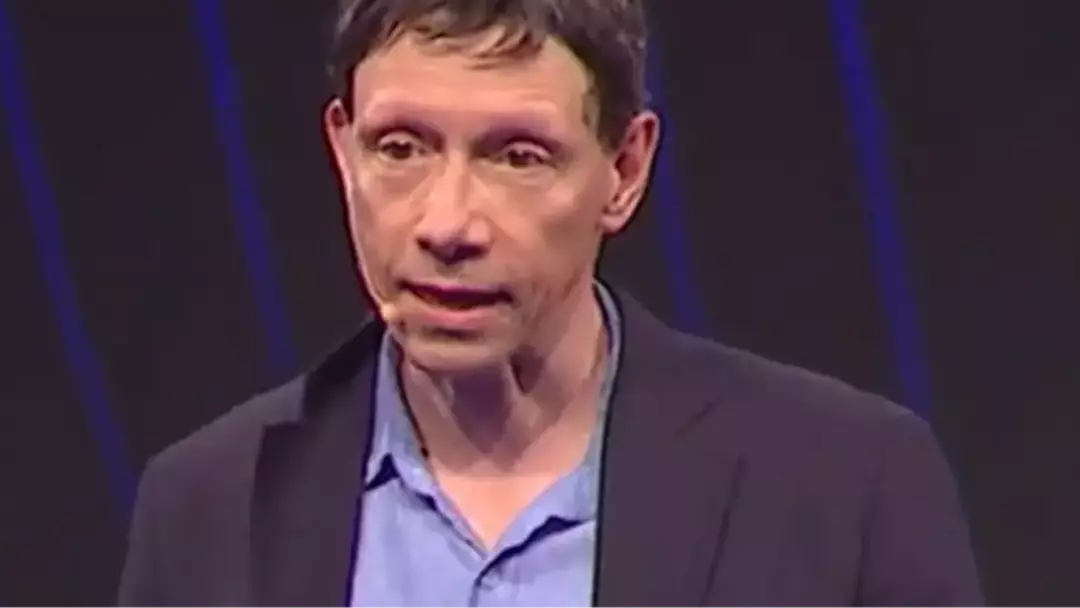
A leading geneticist who has significantly influenced the field of life-extending science believes it’s inevitable that humans will soon experience much longer lifespans than ever before.
Steve Horvath, the creator of the epigenetic biological clock and a former UCLA professor, has expressed his belief that humanity is on the verge of more than doubling the average global life expectancy, potentially allowing us to live until the age of 150.
Horvath’s groundbreaking method to determine the age of human cells, tissues, and organs, developed in 2010, has greatly advanced the field of life-extending research. It provides scientists with a way to assess how well their anti-aging treatments are working.
Although the idea of living to 150 once seemed like pure science fiction, Horvath confidently told Time, “I have no doubt it will happen, no question,” attributing this possibility to the rapid advancements in anti-aging technology over the last ten years.
This progress is partly due to Horvath’s innovative discovery of scientific methods to measure aging at a cellular level. This breakthrough enables the evaluation of whether a therapeutic treatment effectively slows or halts the aging process.
Horvath discovered that the age of a human cell can be calculated, different from a person’s ‘chronological age,’ by examining the chemical tags accumulated in its genetic code—a process known as ‘DNA methylation.’ The number and arrangement of these chemical tags are utilized to determine the cell’s age, influenced by environmental factors such as inflammation, stress, and toxins.
With this ‘quintessential tool to find interventions for rejuvenation,’ Horvath has focused his efforts on developing new methods to reverse the aging process at the biotech company Altos Labs.
This endeavor includes developing various new ‘clocks’ to help scientists measure the ages of different tissues and organs more accurately and a tool that claims to predict when a person will die.

Known as GrimAge, this tool analyzes specific biomarkers that statistically indicate mortality, offering health-conscious individuals an approximation of their lifespan through a blood sample and a brief interview. However, the breakthrough treatment that will reverse the effects of aging in cells across the body hasn’t been developed yet. Horvath suggests that “we’re not close at all” and even refers to the idea as “totally science fiction.”
Nonetheless, the researcher who transformed genetic research believes that ongoing breakthroughs suggest some people might witness this become a reality.
He told the publication: “I do think at some point there will be drastic extensions of lifespan.”
“Imagine we have 100 more years of biomedical innovations—what will that do for health? Of course, we would expect major breakthroughs.”
“So in an abstract sense, if we don’t wipe each other out in a nuclear holocaust and if we can avoid wars and pandemics, I think our species at some point will find ways to extend lifespan drastically.”