

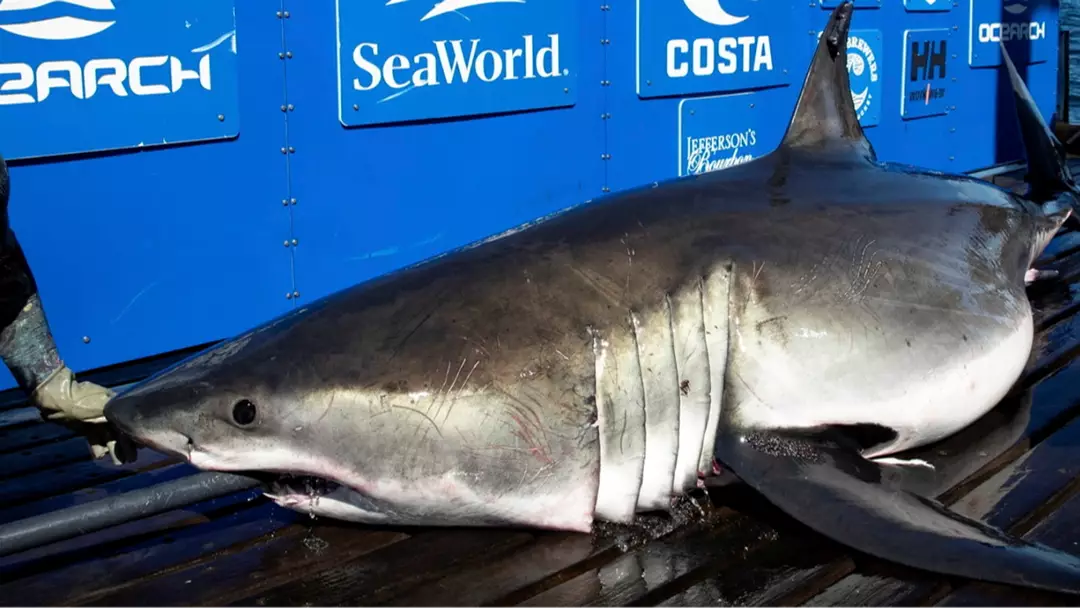
Researchers have disclosed that a massive great white shark has made an appearance at a well-known tourist destination in North Carolina.
The 14-foot-long shark, known as Breton, was initially tagged by OCEARCH in September 2020. The organization has been monitoring the enormous fish to gain insight into the mating habits of great whites.
In January 2025, Breton was tracked to Daytona Beach, Florida, after previously being detected in Nova Scotia, Canada, in 2020.
His recent movements suggest to scientists that Breton might be taking a new path, challenging longstanding assumptions held by experts.
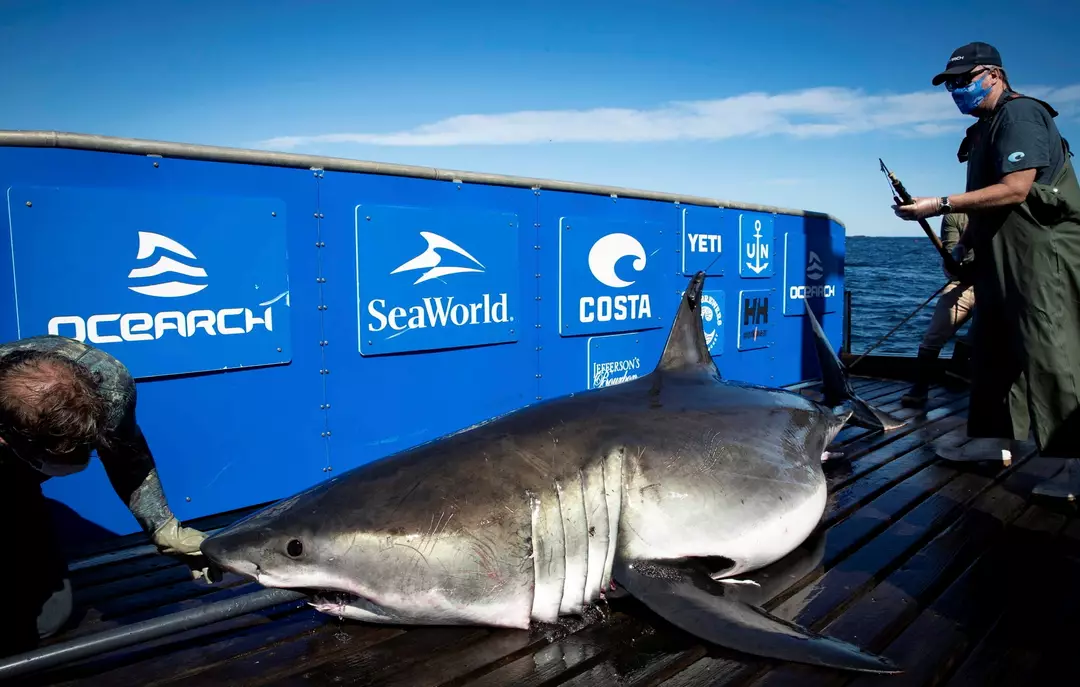
Instead of following a north-eastern path along the US coastline, Breton has ventured offshore, appearing recently in Cape Hatteras, North Carolina, on December 28.
Chris Fischer, the founder and expedition leader of OCEARCH, stated: “When he migrates down south and north, he often loops way offshore and does not go along any portion of the north-eastern United States.
“We’re seeing more and more of these animals that are in the south-eastern United States are just not part of the white sharks that go to New England or the north-eastern US.
“As we move into the middle of the winter and we start heading into the late winter and early spring, it’ll be very interesting to see where Breton is located.
“That could be a tip toward where big mature animals are coming together to potentially give us clues on their reproductive cycle.”

It is believed that great whites spend the winter and spring in the southeastern US before heading to Canada for the summer and fall seasons.
“Atlantic Canada is the primary summer and fall range of our white shark population off the East Coast of the United States,” Fischer added.
With Breton’s behavior challenging previous beliefs, Fischer suggests Breton might offer significant insights into the reproductive habits of white sharks.
“Hopefully, he’ll be giving us a tip, and we’ll see his track colliding with other mature males and mature females in the same region in the coming months,” Fischer said.
“That would be an enormous piece of data to be able to gather. So time will tell.”

Since being tagged in 2020, Breton has grown significantly, now weighing over 1,400 pounds and measuring 13 feet 3 inches.
“We’re looking at it five years later now, probably looking at a 14-foot-plus animal that’s put on a lot of weight as a big, mature male,” Fischer explained.