

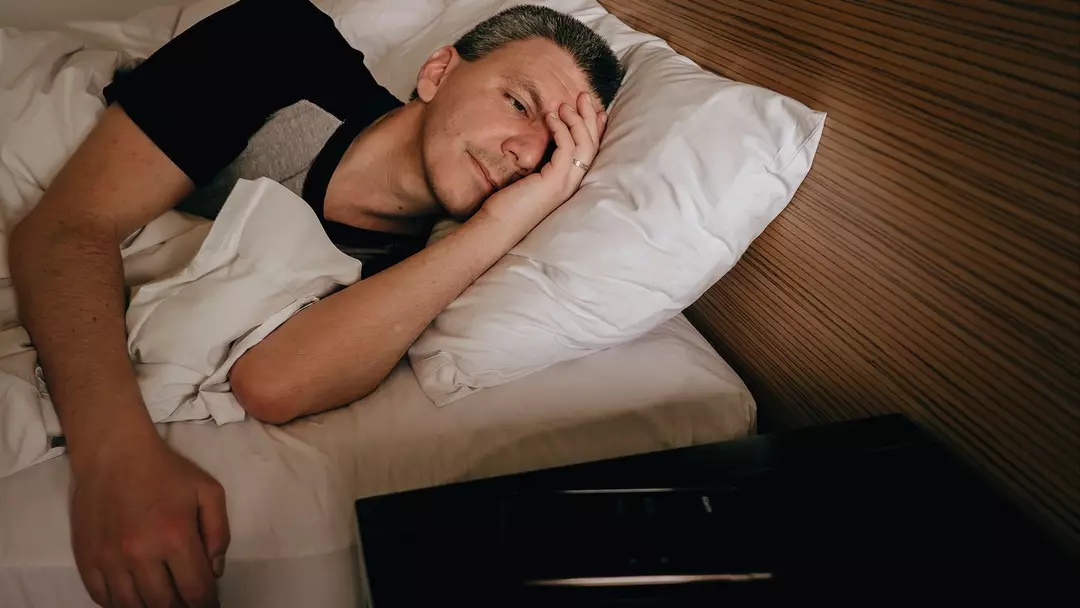
As we transition from childhood to adulthood, interrupted sleep becomes an almost unavoidable reality.
Experts highlight several factors to consider when dealing with this frustrating nighttime disturbance—a simple ‘blackout mask’ isn’t going to resolve the issue entirely.
It’s no surprise that stress is a major contributor to frequent awakenings, along with conditions like undiagnosed sleep apnea.
According to The Healthy, Dr. Morgan Soffler from New York Medical College and Westchester Medical Center explains that obstructive sleep apnea happens when throat muscles overly relax during sleep, hindering our oxygen flow. The brain, in a protective response, rouses us to resume regular breathing.
So, what is considered a ‘normal’ number of awakenings each night?

Dr. Ruchir Patel suggests that for young adults, waking up once or twice per night is normal, while middle-aged individuals might wake up two to three times. Older adults, however, may awaken between three and five times.
“It is also important to note that a person should be able to return to sleep within 30 minutes or less,” emphasized Dr. Patel, the founder of the Insomnia and Sleep Institute of Arizona.
Additional factors impacting restfulness include Restless Leg Syndrome (RLS), eczema, consuming alcohol before bed, hormonal changes, high bedroom temperatures, overly firm mattresses, and medication side effects.
Dr. Patel recommends consulting a board-certified sleep specialist if you’re feeling perpetually exhausted despite aiming for seven to eight hours of sleep. If you’re lying awake for over 30 minutes at night, that’s also a signal to seek assistance.
“First and foremost, we need to better determine the actual cause of the sleep disturbance and likely perform a sleep study to identify the exact cause,” he advised.

Recently, neuroscientist Andrew Huberman shared an intriguing sleep technique while talking to Bill Maher. The method purportedly helps you fall asleep in about five minutes.
“We are finally acknowledging the connection between mind and body—something known for thousands of years,” he stated. “I’ve published clinical trials on aspects like respiration physiology and its role in stress management and relief.”
“If you wake up in the middle of the night and struggle to fall back asleep, try taking long extended exhales. It sounds odd, but it has a physiological basis,” he explained.
While not everyone might find success with this approach, Huberman encouraged giving it a try.
He added, “Keep your eyes closed and move your eyes from side to side behind your eyelids, back and forth. Take some long exhales. I can’t guarantee it, but I’m willing to wager a pinky that within five minutes, you’ll be back to sleep.”