

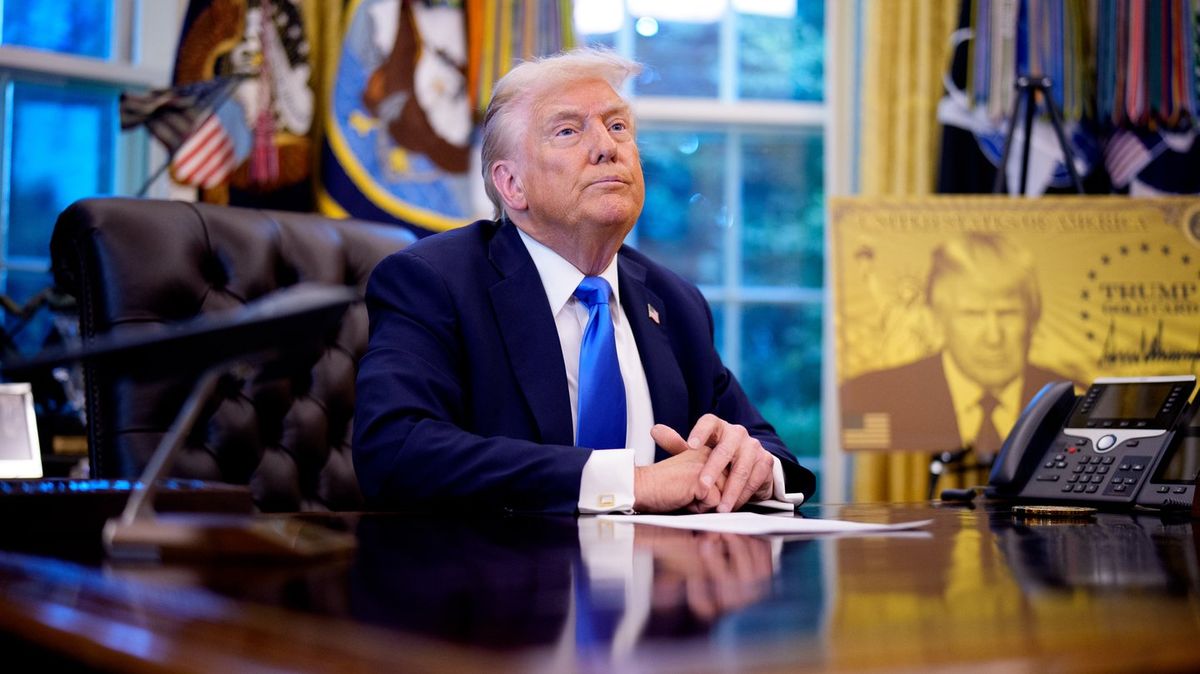
President Donald Trump promoted the Gold Card visa as a premium shortcut for affluent foreigners seeking U.S. Residency, but attorneys who work with those kinds of clients are reportedly urging caution — and in some cases, refusing to take applicants on.
According to a recent court filing, only 338 people have submitted applications since the programme began. Of those, 165 went on to pay the non-refundable $15,000 processing fee required to continue.
The filing also indicates that just 59 applicants have advanced to completing documentation with the Department of Homeland Security, a number that undercuts earlier claims that the initiative would bring in “significant revenue.”
Reports said that immigration lawyers who routinely advise ultra-wealthy individuals — the intended market for the Gold Card — have been discouraging clients from pursuing it.
Among the attorneys raising concerns is Michael Wildes, whose past clients have included Melania Trump and her parents, and who has also performed legal work for the Kushner family.
Despite those high-level connections, Wildes said he is not willing to handle Gold Card cases.
“It would be unethical of me to retain them,” Wildes said.
Lawyers have pointed to multiple red flags, including that the visa has not been created through Congress, the fact the programme is currently facing litigation, and unresolved questions about how applicants could be affected by U.S. Tax obligations.

The price tag for the Gold Card Visa is steep: $5 million overall, described as a $1 million investment plus another $1 million for each family member, alongside the $15,000 filing fee due at the application stage.
In exchange, Trump has pitched the idea as a fast-tracked route to residency for wealthy applicants.
There are also business-focused options. A Corporate Gold Card is advertised at $2 million, and a $5 million Platinum Card has been teased as “coming soon.”
While the sales pitch has been framed as straightforward — pay the money and secure the benefit — the process has appeared far less clear in practice.
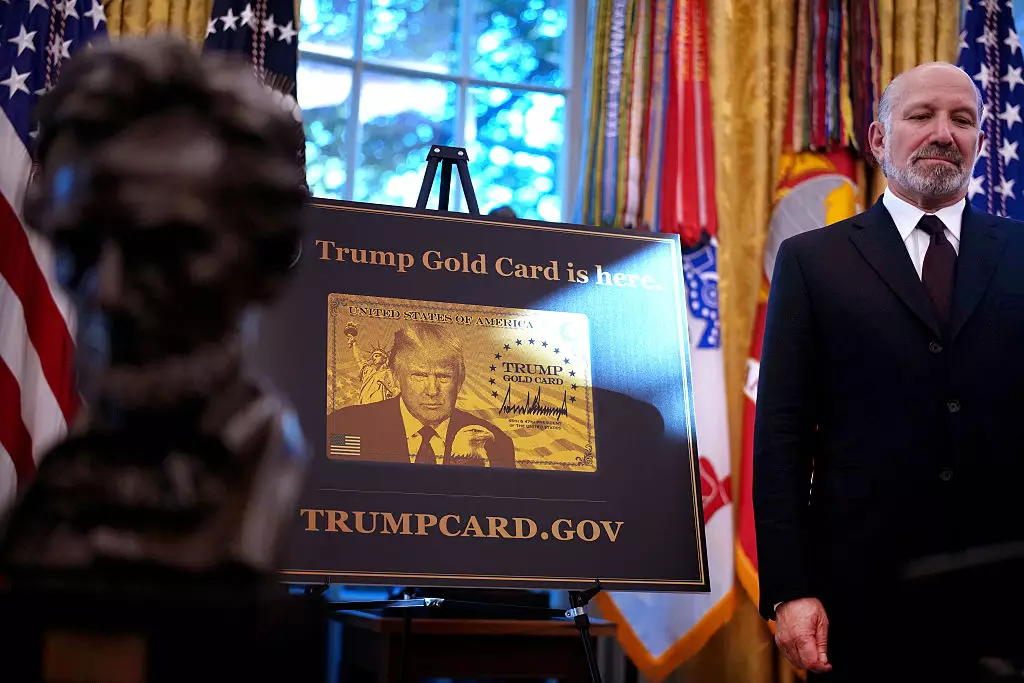
Commerce Secretary Howard Lutnick told lawmakers in late April that one applicant had been approved and that “hundreds” more were waiting.
That claim reportedly puzzled immigration attorneys, who said nobody they knew in the field could identify who the approved person was.
Online speculation even suggested the person might be rapper Nicki Minaj, after she shared an image of a gold card featuring Trump’s face. The White House later dismissed that idea, saying the item was merely a “momento” rather than an actual visa.
For clients who still want to proceed, attorneys say there are no guarantees — and that the legal and procedural uncertainty makes it difficult to give clear advice.
“They want me to say ‘Yes, you are going to get it,” Immigration attorney Mona Shah said, “and I can’t say that to them.”

Instead, many experts are advising would-be investors to look at the EB-5 visa, a long-standing route established by Congress in 1990.
The EB-5 visa is a U.S. Immigrant investor program that allows foreign nationals to obtain a green card by investing in a new commercial enterprise that creates at least 10 full-time jobs for U.S. Workers.
Applicants must invest at least $800,000 in targeted employment areas (TEAs) or $1,050,000 elsewhere, offering a path to residency for investors, spouses, and unmarried children under 21.