

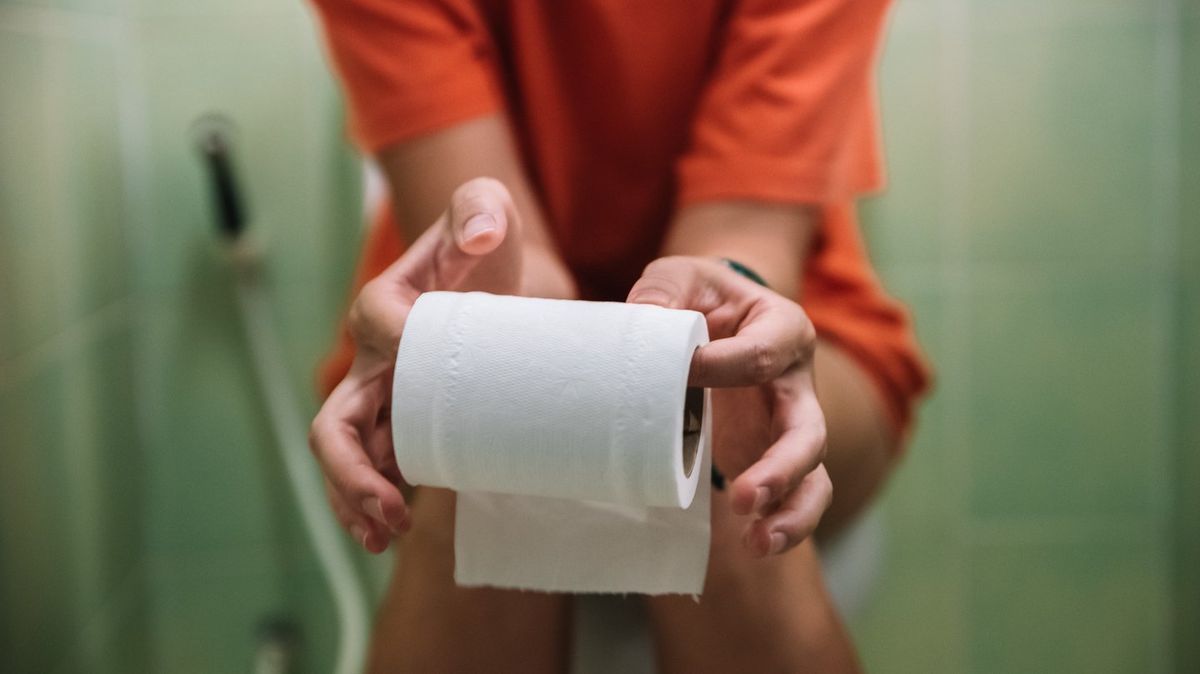
Doctors have now revealed how many bowel movements you should actually be having every week, along with the best time of day to go, with some surprising revelations.
Most people don’t pay close attention to their bathroom routine unless something feels unusual, but specialists say your regularity can offer useful clues about how your body is doing overall.
How often you poop is influenced by a mix of factors, including what you eat, how much water you drink, stress levels, sleep quality, medications, and the balance of bacteria in your gut.
Gastroenterologists speaking to the New York Post said there’s a broad window for what counts as “normal,” though certain patterns are more strongly associated with better gut health.
“Three times a day to three times a week is the broad normal range, but one to two solid poops per day seems tied to the healthiest gut microbiome and the fewest toxins in your blood,” Malibu gastroenterologist Dr. Sabine Hazan explained.
Digestive health expert Dr. Jason Korenblit also emphasized that your personal baseline matters, and that day-to-day consistency can be more important than hitting a specific number.
“Fewer than three bowel movements a week, especially with hard stools, straining or pain, can point to constipation,” he told the outlet.
“Very frequent watery stools may point to diarrhea.”
The doctors also addressed why many people feel the urge to go shortly after waking up.
Korenblit explained that digestion follows a circadian rhythm — your body’s internal schedule that helps regulate things like sleep, hormone release, and how active your intestines are at different times of day.
“During the day, the colon is usually more active. At night, it slows down,” he explained.
“This rhythm is shaped by the brain’s clock, meals, hormones, nerves and the gut’s own clock.”
That daily pattern helps explain why breakfast — and especially that first cup of coffee — often seems to activate the bowels.
“Some people feel movement within minutes to about an hour after eating because of the gastrocolic reflex,” Korenblit said.
“That is the normal reflex where the stomach tells the colon, ‘Make room; food just came in.’”
He added that this doesn’t mean your meal is racing straight through your system. In most cases, the bowel movement after eating is waste that was already in the colon, not the food you just consumed.

So when is the “best” time to go? Hazan said the morning tends to be ideal for many people.
“Mornings are usually best,” Hazan explained.
“Your colon wakes up with you, contracting way more after you rise, plus cortisol spikes help move things along.”
For coffee drinkers, the timing can feel even more convenient, since caffeine can stimulate intestinal activity and encourage bowel contractions.
Even so, the experts stressed there isn’t one perfect schedule that applies to everyone.
“A healthy bowel movement at noon or at night is fine if that is your usual pattern,” Korenblit added.
What they don’t advise is forcing it — or staying seated for long stretches hoping something will happen.
Spending too long on the toilet or straining regularly, they warned, can raise the risk of issues like hemorrhoids and pelvic floor dysfunction.
Instead, Korenblit recommends responding to natural urges, staying relaxed, and keeping bathroom time to roughly five to 10 minutes — then getting up and trying again later if nothing happens.
In other words, when your body signals it’s time, it’s usually best not to put it off.