

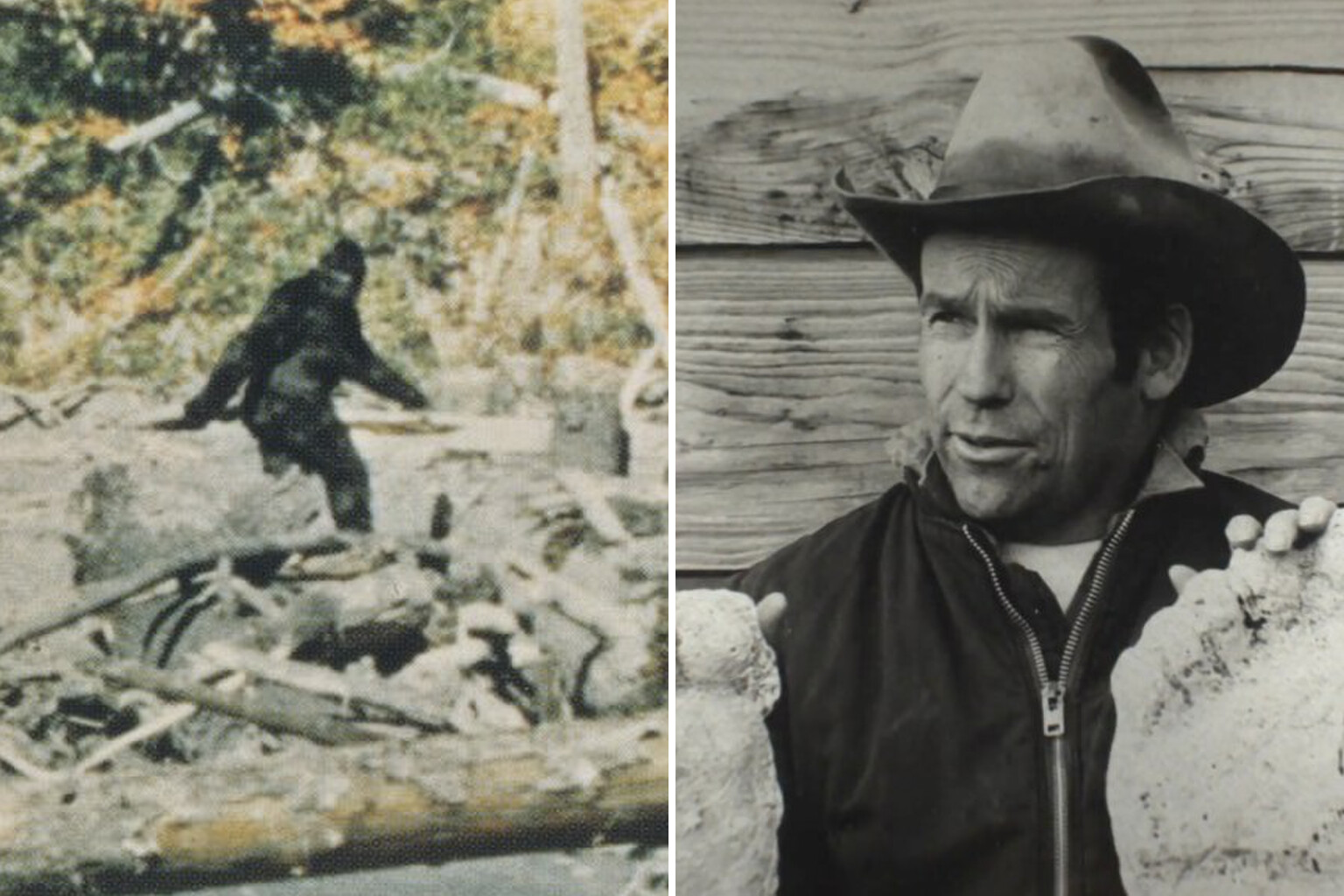
A new documentary claims to have unearthed the smoking gun that proves history’s most famous Bigfoot footage was staged.
“Capturing Bigfoot,” which arrives in theaters and on Prime Video Oct. 20, centers on a 40-second reel of 16mm film that sat locked in a safe for roughly five decades. The clip shows a slimmer, ape-like figure retreating slowly through a lush forest, glancing over its right shoulder in a manner nearly identical to the creature captured in the 1967 Patterson-Gimlin film. Filmmaker Marq Evans, a professor at Olympic College in Washington state, received the footage from colleague Teresa Brooks, 2017.
Brooks discovered the reel that year following the death of her mother. Her father, Norm Johnson, had worked in Boeing’s film department during the 1960s and was allegedly recruited into Roger Patterson’s hoaxing scheme, though he never went public due to pressure from his wife. Brooks inherited the canister and faced her own conflict about revealing it.
“This film has been sitting in a safe for 50 years,” Brooks said in the documentary. “Part of me wanted to keep the family secret.”
The technical evidence linking the two films has drawn particular attention from researchers. Both were shot on the same K-100 Kodak camera, leaving matching edge markings, numbers, and geometric date codes on the film stock itself. Greg Long, author of “The Making of Bigfoot,” studied the rehearsal footage and found the parallels unmistakable.
“So uncannily like the ’67 film. To me it’s a practice,” Long said. “It’s a smoking gun, and thank God someone’s found it.”
Larry Lund, an 80-year-old investigator known as the “Sasquatch Sleuth,” had spent years defending the Patterson-Gimlin footage as genuine evidence. His on-camera reaction to the new material showed visible devastation.
“That’s the answer we’ve been looking for, for years. That’s definitely faked and that’s definitely rehearsed,” Lund said after viewing the 1966 clip. “I feel a deep loss. Look what he’s done to people. The lives he changed.”
Lund specifically cited his friend Rene Dahinden, among the first generation of Bigfoot hunters, who became consumed by the original film. Dahinden lost his marriage and family and died alone, Lund noted, all because of his dedication to pursuing a creature that may never have existed.
The documentary also features Roger Patterson’s son, Clint Patterson, who breaks eight years of silence about what he knows. Clint revealed that his mother, Patty, privately confirmed to him that Bob Heironomus — who has long publicly claimed to be the person inside the 1967 suit — was indeed part of the hoax. This admission shattered Clint’s image of his father.
“That means my dad lied to me,” Patterson said, choking back tears. “He was my hero.”
The younger Patterson explained that his mother cut off contact with him after he expressed wanting to come forward with the truth. He had remained quiet in part because the rights to the Patterson-Gimlin footage represent Patty’s sole source of income.
“I don’t like being a liar. And I’m ready to come clean,” he said in the film.
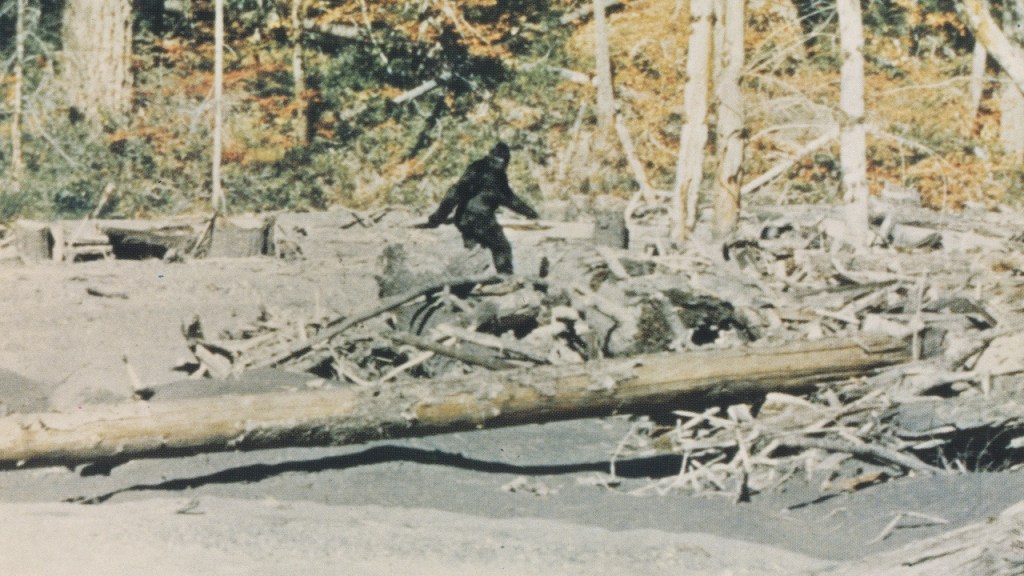
The 1967 footage, allegedly shot at Bluff Creek, Calif., on Oct. 20 of that year, has stood for nearly 60 years as the most celebrated evidence in cryptozoology, cited by enthusiasts worldwide as proof of the creature’s existence. Roger Patterson and Bob Gimlin’s shaky film of a tall, hairy figure striding through a dry, leafless stretch of woods became the definitive image of Bigfoot in popular culture, spawning generations of researchers, television specials, and heated debates between believers and skeptics.
“This is like the Holy Grail or something. This is going to change everything about my dad’s film,” Clint Patterson says in the documentary, capturing the weight of a revelation that threatens to upend one of American folklore’s most enduring mysteries.

“Capturing Bigfoot” premiered at SXSW earlier this year.