

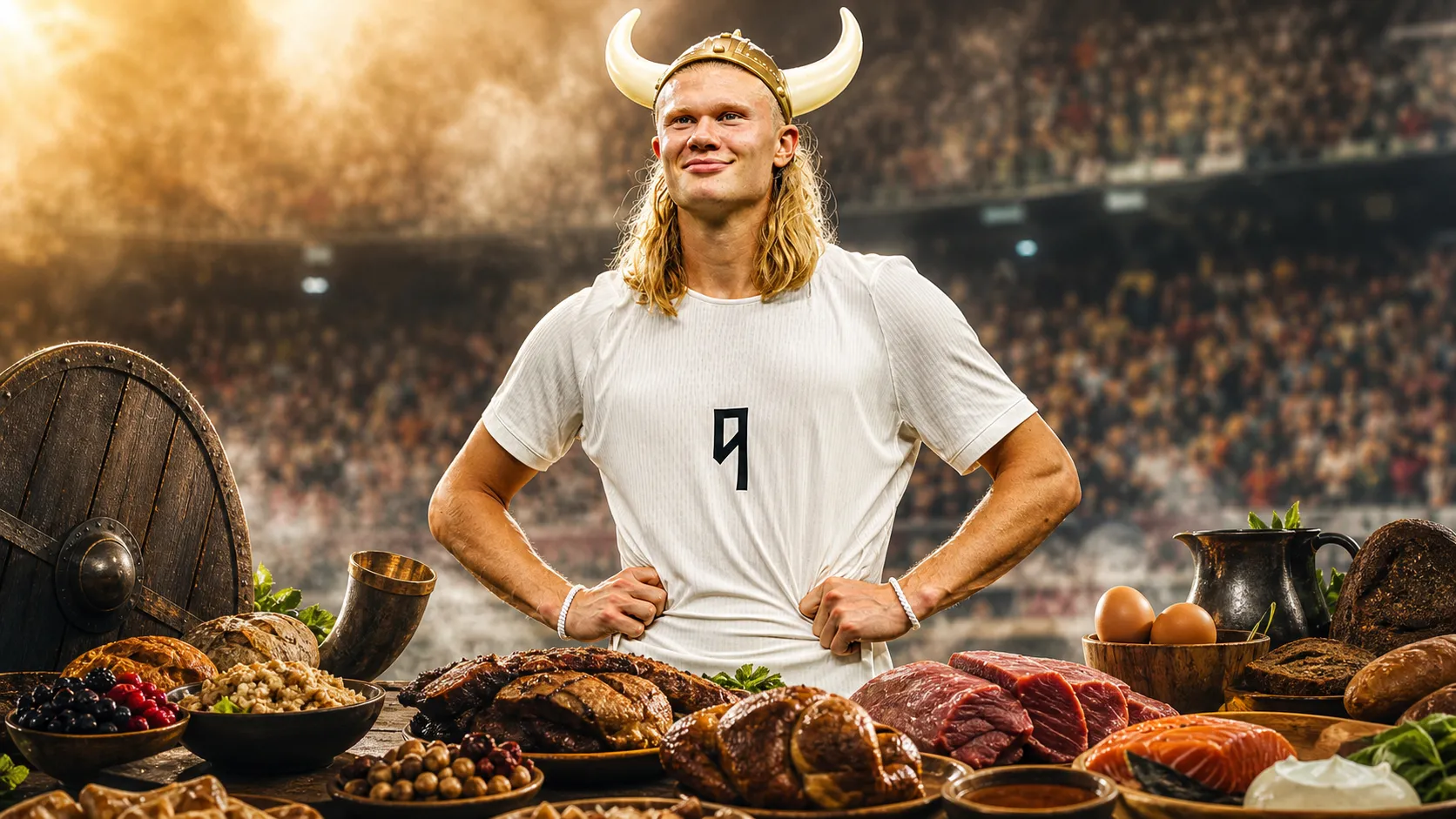
Erling Haaland’s reported 6,000-calorie daily eating plan has attracted huge attention, but a nutrition expert says copying the striker’s so-called ‘Viking diet’ without proper guidance could be a major mistake.
The 6’5″ Norwegian forward has been one of the standout names of the World Cup, playing a key role in helping his side reach a historic first quarter-final before they were beaten 2-1 by England in Miami on Saturday (July 11).
Supporters have long been fascinated by Haaland’s relentless finishing and larger-than-life personality, but during the tournament, another part of his routine has sparked widespread discussion: the food he uses to power his demanding schedule.
Haaland has previously said he targets roughly 6,000 calories per day in order to support the workload that comes with elite-level training and recovery. His meals can reportedly include eggs, red meat, raw milk, bone marrow, yogurt and other high-energy foods.
Even so, specialists say that what suits a world-class athlete should not automatically be treated as a healthy blueprint for everyone else.

Haaland, who plays for Manchester City and Norway, has also helped turn the diet into a talking point far beyond football, with clips and headlines recirculating whenever he shares a glimpse of his food or recovery routine.
Nichola Ludlam-Raine, author of How Not to Eat Ultra-Processed, warned:
“The biggest mistake is forgetting that these diets are designed for one individual with a unique body size, training schedule, genetics and performance goals.
“What works for a Premier League soccer player training for several hours a day is unlikely to be appropriate for someone exercising a few times a week after work.”
She also pointed to certain foods in the plan that may carry health risks, especially if people adopt them without understanding the potential downsides.
“There are also concerns around consuming raw milk, which can carry harmful bacteria such as E. Coli, Salmonella and Listeria,” the dietician said.
“And while bone marrow can be enjoyed occasionally, it’s also very high in fat and isn’t essential for good health or athletic performance.”
Ludlam-Raine said Haaland’s calorie requirements are far beyond those of most adults, meaning an ordinary person attempting to match them could quickly run into problems, including unwanted weight gain.
She added:
“More calories aren’t always better.

“In fact, consistently eating well beyond your requirements can lead to unnecessary fat gain, gastrointestinal discomfort and may even impair performance if it affects body composition or movement.”
She further argued that social media clips often leave out the wider context behind elite athletes’ diets, including the expert support systems around them.
She advised:
“Rather than copying an elite athlete’s exact diet, it’s far more helpful to adopt the principles: eat enough to fuel your activity, prioritize protein, include plenty of fruit, vegetables and wholegrains, stay hydrated and build a pattern of eating that’s realistic and sustainable for your own lifestyle.”
Health experts also routinely warn against drinking raw milk because it can contain dangerous bacteria, including E. Coli, Salmonella, Listeria and Campylobacter. Pasteurisation is widely recommended to reduce that risk.
That means the wider lesson from Haaland’s so-called Viking diet is not that everyone should eat like a record-breaking striker, but that nutrition needs to match the individual, the sport and the level of activity involved.