

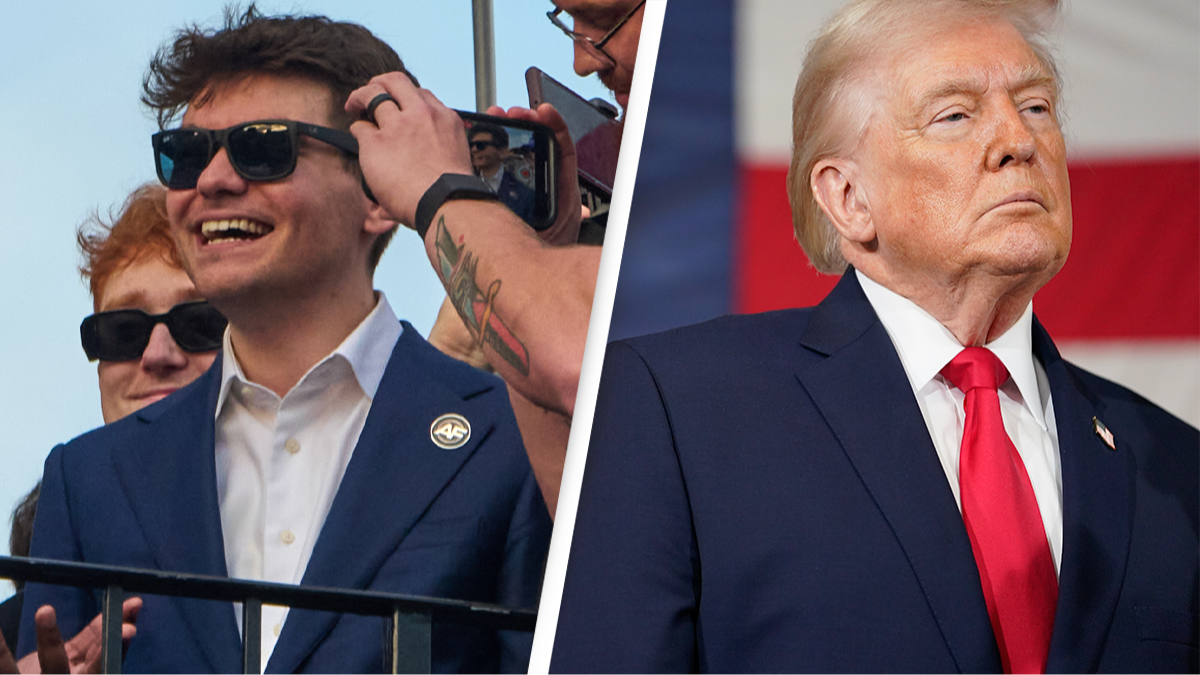
Political commentator and livestreamer Nick Fuentes appears to have sharply shifted his stance on the Trump administration.
Known for promoting Trump and far-right politics, Fuentes is now encouraging his audience to distance themselves from Republicans — at times even suggesting they back Democrats instead.
Some prominent MAGA-aligned voices have recently criticized America’s strikes on Iran. Even longtime Trump supporter Tucker Carlson described them as:
‘disgusting and evil’
Megyn Kelly, who has also publicly supported Trump in the past, likewise condemned the air strikes on her radio show.
“My own feeling is no one should have to die for a foreign country,”
“I don’t think those four service members died for the United States.”
Fuentes has now piled on with his own attacks against the administration.
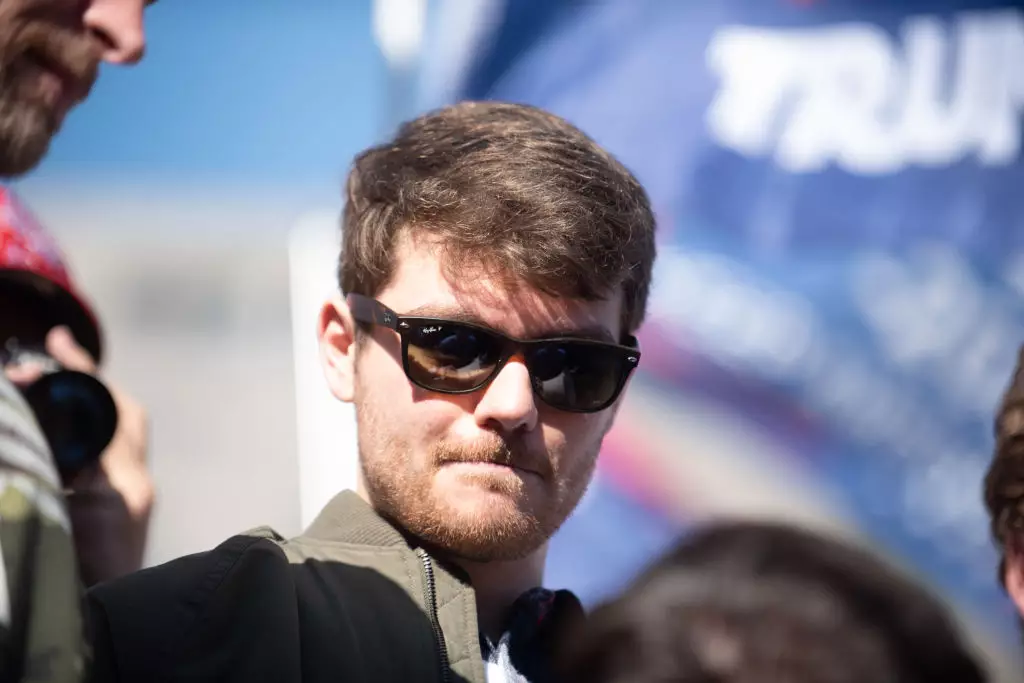
“Something has gone horribly wrong,” the 27-year-old said on a Rumble livestream. “The movement is something else now. And what we need in 2028— this is our last chance. We need in 2026 for this administration to be shut the f*ck down.”
He also made further allegations about Trump’s party.
“What does this administration do, other than cover up the Epstein files, embezzle money through government contracts, and bring us to war for Israel.”
Fuentes went on to argue the Trump administration should be “shut down” right away, and urged viewers to vote Democrat in the upcoming mid-terms.
He’s also taken his complaints to Twitter, accusing Trump, Marco Rubio, and JD Vance of having “sold us out.”
“This is a war of aggression for Israel,” he wrote on March 2. “Americans will die in terrorist attacks and in missile strikes so that Israel can expand its borders in every direction. Trump, Vance, and Rubio sold us out.”
In another post shared Sunday, he claimed the president had betrayed MAGA.
Trump betrayed MAGA and America First. He has lost his mandate to govern.
I cannot and will not vote for the GOP unless they put America and Americans First.
If you keep voting after they dragged us into a regional war with Iran, then you will vote for absolutely anything.
— Nicholas J. Fuentes (@NickJFuentes) March 1, 2026
“I cannot and will not vote for the GOP unless they put America and Americans First. If you keep voting after they dragged us into a regional war with Iran, then you will vote for absolutely anything.”
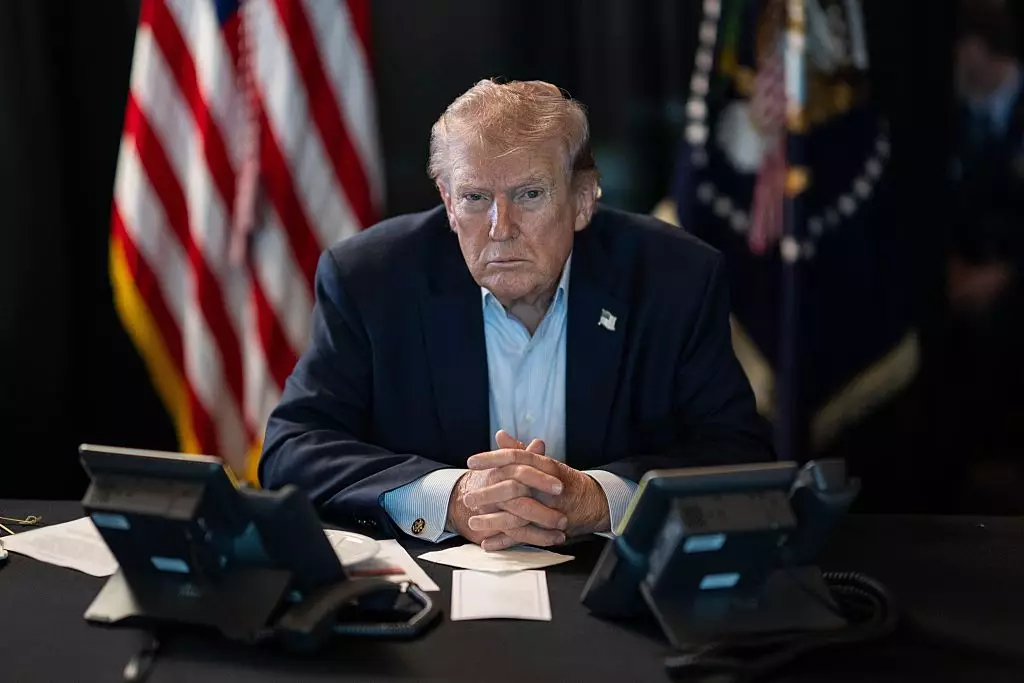
Trump has brushed off criticism from figures such as Carlson, Fuentes, and Kelly.
“I think that MAGA is Trump — MAGA’s not the other two. MAGA wants to see our country thrive and be safe. And MAGA loves what I’m doing — every aspect of it…
“This is a detour that we have to take in order to keep our country safe and keep other countries safe, frankly.”
As the United States and Israel continue military action against Iran — focusing on nuclear sites, military infrastructure, and senior leadership — here’s a condensed look at major moments that shaped decades of tension between Tehran and Washington.
In August 1953, British and American intelligence agencies helped remove Iran’s nationalist prime minister, Mohammad Mosaddegh, in a covert plot known as Operation Ajax, aiming to preserve oil access and curb communist influence — a move that contributed to long-running anti-American sentiment in Iran.
In 1957, Iran received US support to pursue civilian nuclear power through President Dwight D. Eisenhower’s ‘Atoms for Peace’ program.
In 1968, Iran and the US became early signatories of the Treaty on the Non-Proliferation of Nuclear Weapons, which took effect in 1970.
Although ties appeared steady through much of the 1970s, unrest inside Iran grew, culminating in the 1979 Islamic Revolution.
Around that period, the exiled Shah Mohammed Reza Pahlavi was allowed into the US for cancer treatment. This angered Iranian student activists who believed he was avoiding accountability.
In November 1979, they seized the American embassy in Tehran, taking 52 Americans hostage for more than a year and demanding the Shah’s return to face trial.
After a failed April 1980 rescue attempt left eight US servicemen dead, President Jimmy Carter severed diplomatic relations with Iran — ties that have never been formally restored.
Later in 1980, Iraq invaded Iran, setting off an eight-year war that killed hundreds of thousands on both sides. The US backed Iraq with financing, training, and technology.
The hostages were released after 444 days, returning in January 1981 shortly after Carter left office and Ronald Reagan was sworn in.
In 1984, the US designated Iran a state sponsor of terrorism and implemented sanctions.
In 1986, the Reagan administration secretly sold weapons to Iran in an effort to secure the release of Americans held in Lebanon by Hezbollah.
In 1988, the USS Vincennes mistakenly shot down an Iranian passenger plane over the Strait of Hormuz, killing all 290 people aboard.
In the mid-1990s, the US expanded sanctions to include an oil embargo and broader trade restrictions. In 1996, Clinton signed the Iran and Libya Sanctions Act, targeting foreign firms investing more than $20 million a year in Iran’s oil and gas sector.
During his 2002 State of the Union address, President Bush described Iran — along with North Korea and Iraq — as part of an ‘axis of evil’.
The remarks triggered widespread anger in Iran, particularly given Tehran’s role in assisting the US campaign against the Taliban in Afghanistan after the September 11 attacks.
In September 2013, President Obama spoke with Iranian President Hassan Rouhani by phone to ‘offer a new chapter of engagement on the basis of mutual interests and mutual respect’.
Two months later, Iran, Germany, and the five permanent UN Security Council members (China, France, Russia, the UK, and the US) agreed to an interim nuclear accord — the Joint Plan of Action — intended to reduce tensions and keep Iran’s nuclear program peaceful.
In 2015, that framework expanded into the Joint Comprehensive Plan of Action (JCPOA), with Iran agreeing to limits including restrictions on its uranium stockpile.
In 2018, during Trump’s first term, the US withdrew from the JCPOA — a move he had promised during the campaign — calling it the ‘worst deal ever’.
The administration then reimposed sanctions that had been lifted under the deal and pursued a ‘maximum pressure’ policy aimed at driving Iran’s oil exports down to zero.
In 2019, the US designated Iran’s Islamic Revolutionary Guard Corps as a terrorist organization.
Under President Joe Biden in 2021, the US entered indirect talks with Iran, though they produced limited progress.
In 2023, the countries reached a prisoner exchange that freed five detainees and included a sanctions waiver allowing banks to move $6 billion in frozen Iranian funds from South Korea to Qatar for humanitarian use — a step sharply criticized by Republicans.
After returning for a second term, Trump revived his ‘maximum pressure’ approach and ordered stricter enforcement of existing Iran sanctions.
In early 2025, the US joined Israel’s offensive and struck three Iranian nuclear sites. Iran responded by bombing Al Udeid Air Base, a US military facility in Qatar.
Later in 2025, Iran saw major anti-government protests after the currency collapsed, with demonstrators calling for an end to Ali Hosseini Khamenei’s rule. Authorities responded with crackdowns and restrictions on internet and telecom access.
The US-based Human Rights Activist News Agency reported in February that more than 6,000 civilians were killed and over 50,000 people were arrested.
Khamenei died on February 28, aged 86, during a large-scale air attack on Iran by the US and Israel.