

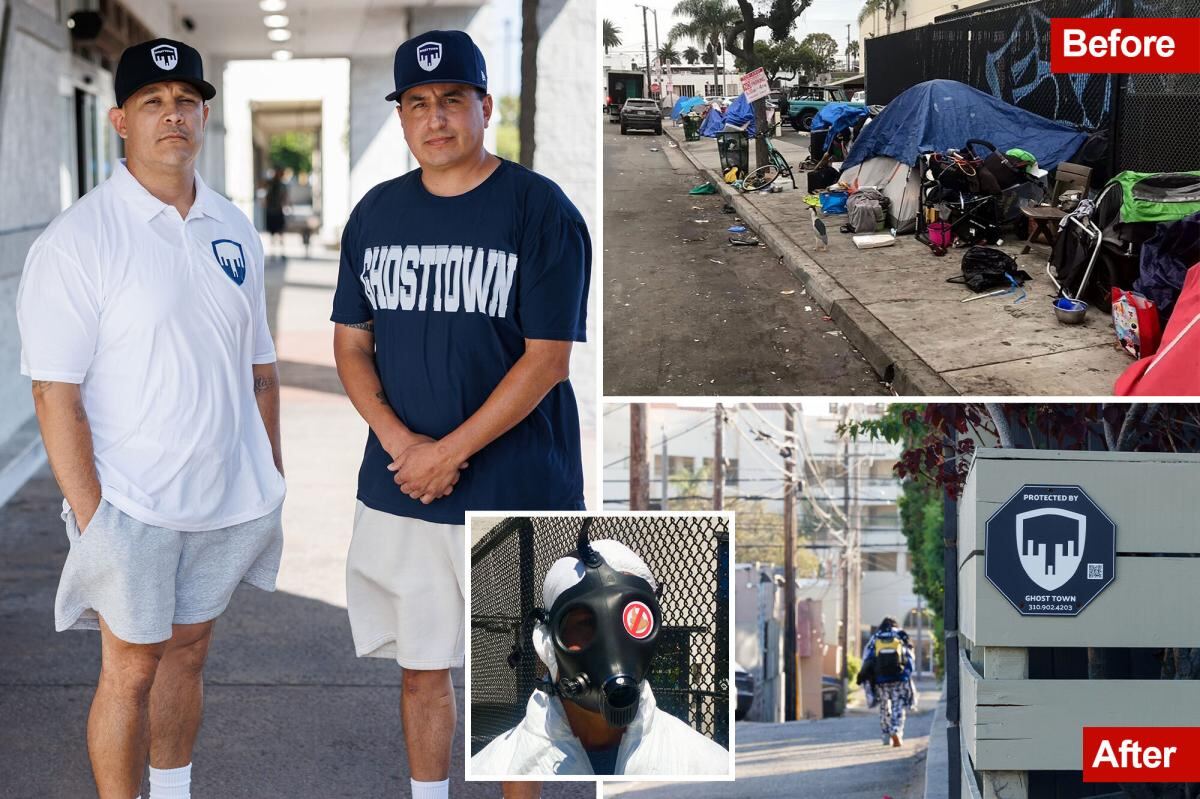
Venice Beach property owners have begun paying a private security firm staffed by former gang members to clear homeless encampments from their streets.
Rick Swinger, a Venice apartment owner, is among roughly 250 locals and businesses who now pay monthly fees starting around $300 to Ghost Town Consultants, a firm founded by reformed locals Bobby Luna and Ricky Myers. “I don’t know what we would do without them,” Swinger told the California Post of the former gangster enforcement.

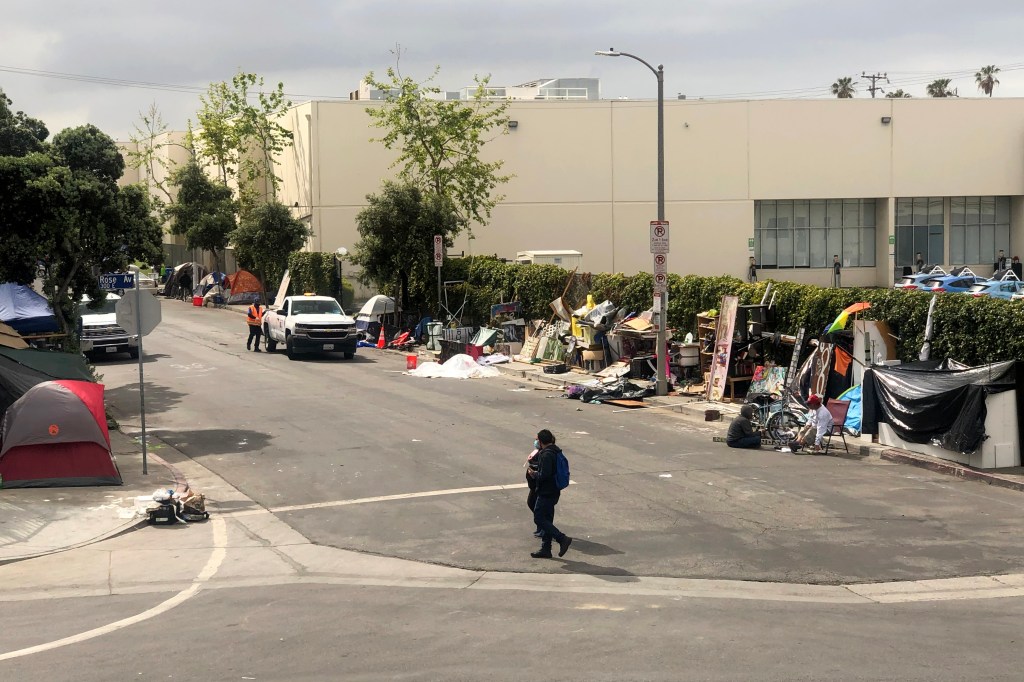
Swinger described life before the patrols as a “war zone” along Rose Avenue, where up to 200 homeless people had established a tent city so large the road was dubbed “Skid Rose.” The encampments spilled onto parts of the world-famous Boardwalk, and Swinger said he and his wife faced direct threats. “I got hurt, my wife got threatened. We called for help — no one showed up,” he said. During weekly city cleanups, he sometimes wore a full HazMat suit with helmet to mimic municipal workers and protest the inadequate response.
Myers, 15 when he first became homeless, grew up in Venice’s Oakwood neighborhood during its gang era. He credited community activist Melvin Hayward with helping him escape that life by rounding up local kids for bicycle rides from Venice Pier to Santa Monica. “I played sports because of him,” Myers said. Luna, a reformed alcoholic who got sober six years ago, reached his breaking point when a drug user tried to steal his son’s bike at Penmar Recreation Center. While coaching children there, Myers had found needles on the ground with users openly doing drugs, forcing parents to clean the area before letting kids play.
“We did it out of our hearts because this is where we grew up,” Myers said of founding the business. The firm now also operates shops on Rose Avenue including Venice Beach Wines. Luna and Myers said their roughly 12-person team uses conversations rather than weapons, relying on personal knowledge of Venice and its homeless population to urge people to move along. “They come by, and they talk to them, and they get them to move,” Swinger said. “If we don’t have the government coming up to the plate like they used to, we have to have businesses come up to the plate.”
The firm’s rise coincides with severe LAPD staffing shortages. Chief Jim McDonnell told the California Post in July that the department had shrunk by about 200 officers since February to 8,550, while the number needed to properly police the city had risen from 12,000 to 12,500. Former LA County Sheriff Alex Villanueva, who cleared homeless encampments during his tenure and is running for office again, said Venice’s status as LA County’s top tourist destination attracts “a nomadic population of drug abusers from the entire nation,” He added: “You get free food, free clothes, no rent, cheapest drugs around, and when you get high and defecate in public, everyone looks the other way. There’s no consequences for illegal behavior.”
Former LA city councilman Dennis Zine, a reserve officer who spent decades with LAPD, said today’s department “bears little resemblance” to the one he joined nearly 50 years ago. “It’s a far cry from what we used to do,” he said. “You talk about defund — these people have been deflated.” Zine blamed both officer shortages and restrictions leaving cops reluctant to intervene for pushing residents toward private security. “It’s basically, ‘Back off,’ ‘Don’t, stop this,’ ‘Don’t, stop that,’ ‘Don’t do this,'” he said. “There’s more ‘don’ts’ than dos.”
Luna and Myers said they regularly encounter break-ins, trespassers, and people behaving erratically on methamphetamine and fentanyl. “We have a 24-hour policy at this office,” Luna said. “If you want to get off the street and you want to get help, come here.” They described helping a mother stranded in an RV with three children, including a 6-month-old baby, find housing in the San Fernando Valley. The firm also distributes burritos, water, and dog food, with Luna noting, “We give out burritos and waters all day long.”
Swinger’s HazMat-suited protests and the “Skid Rose” nickname captured national attention as residents documented encampments overwhelming one of California’s most iconic beach destinations. The situation grew so dire that business owners reported customers being accosted at doorways, and parents routinely found drug paraphernalia where children played. Ghost Town’s emergence represents one neighborhood’s attempt to fill what residents see as a vacuum left by city services.
Critics question the firm’s methods. Homeless advocate Peggy Kennedy called it “thug security” and claimed she was harassed, while advocate Mel Tillekeratne noted Ghost Town employees are still obtaining state certification and licenses to legally carry firearms and provide security. “This is not a state-sanctioned agency,” he said. “Where do these people go?” Luna denied paying people to leave or using disrespect, saying, “Never has that happened. We don’t operate like that.”
Ghost Town now serves more than 350 clients with fees ranging up to $1,000 monthly for large businesses Los Angeles. Luna told the station, “We want the best for our children, and we want the best for our community. We knew that we can step in and help.” Business owner Kismet Salem praised their approach: “The way they deal with everybody, it’s really amazing and beautiful and very human-to-human.”