

In a significant victory for gun control advocates, a federal appeals court on Thursday upheld Illinois’ ban on semiautomatic weapons, overturning a lower court’s ruling that had struck down the law as unconstitutional. The 2-1 decision by the U.S. Court of Appeals for the Seventh Circuit found that the state’s restrictions on AR-15s and 30-round rifle magazines are consistent with the nation’s historical tradition of firearm regulation and do not violate the Second Amendment.
The decision keeps in place a law that was passed largely in response to a deadly Independence Day parade shooting in Highland Park in 2022, when a gunman killed seven people and injured more than three dozen others using an AR-15-style semiautomatic rifle.
The appellate panel, consisting of judges appointed by both Republican and Democratic presidents, split on ideological lines regarding gun rights. The majority opinion was authored by Judge Amy St. Eve and joined by Judge Frank Easterbrook. St. Eve was appointed by President Donald Trump, while Easterbrook was appointed by President Ronald Reagan. Chief Judge Michael Brennan, also a Trump appointee, dissented.
In their majority opinion, St. Eve and Easterbrook argued that Illinois’ restrictions are “consistent with the principles that underpin our Nation’s tradition of firearm regulation.” The judges pushed back against claims made by gun rights advocates that semiautomatic weapons are not responsible for mass shootings, noting that “the presence of assault weapons and large-capacity magazines is strongly correlated with the severity of the societal problem.”
The ruling overturned a November 2024 decision by U.S. District Judge Stephen McGlynn, who had declared the Illinois law unconstitutional, leaning on recent Supreme Court rulings that strictly interpret Second Amendment protections for firearm ownership.
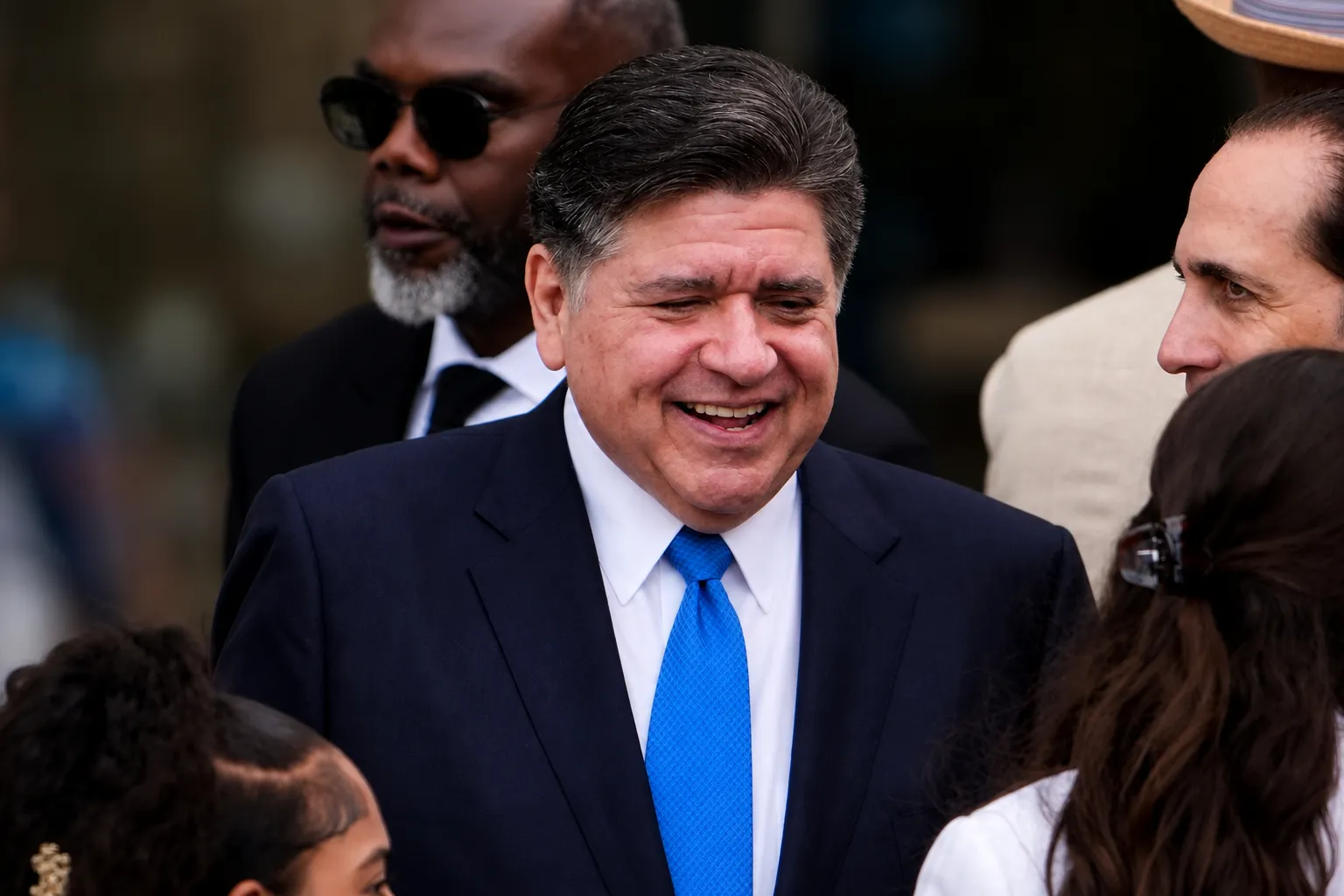
The law at the center of the dispute, formally known as the Protect Illinois Communities Act, was signed into law by Democratic Governor JB Pritzker in January 2023, roughly six months after the Highland Park tragedy. The legislation bans the sale of more than 100 kinds of semiautomatic firearms and limits magazine capacities to 10 rounds for long guns and 15 for handguns. The law took effect on January 1, 2024, but gun owners and Second Amendment advocates immediately filed lawsuits challenging it in both state and federal courts.
When McGlynn issued his injunction blocking enforcement of the ban, Attorney General Kwame Raoul quickly filed an appeal, which led to a stay that allowed the law to remain in effect while the case proceeded through the courts.
Raoul celebrated Thursday’s appellate decision, saying the ruling “enhances public safety.” He stated: “We have seen the damage that assault weapons and large-capacity magazines can inflict, and these weapons of war have no place in our communities.”
Governor Pritzker also weighed in on the decision, posting on X that the ruling was “a victory in the fight to end gun violence that helps keep our communities safe.”
Gun rights advocates expressed disappointment with the outcome. The National Shooting Sports Foundation, the firearms industry trade association opposing the ban, said it was disappointed with the decision and plans to ask the U.S. Supreme Court to review the case. Chief Judge Brennan’s dissent argued that because Americans have overwhelmingly chosen the AR-15 rifle and its magazine as their weapon of choice for self-defense, they are protected by the Second Amendment. Brennan wrote that Illinois has “banned the best-selling rifle in America and its standard magazine.”
The timing of the appellate court’s decision is particularly significant, as it comes just one week after the U.S. Supreme Court announced it would take up cases concerning Cook County’s own assault weapons ban and a similar law in Connecticut. The high court, which has expanded gun rights in recent years, is expected to hear oral arguments in the fall and will ultimately address the core constitutional question: whether the Second Amendment protects semiautomatic rifles in common use for lawful purposes.
The Supreme Court’s ruling is expected to be delivered around the five-year anniversary of the 2022 Highland Park shooting. Legal experts say the high court is likely to have the final word on whether Illinois’ ban ultimately survives constitutional scrutiny, as the Seventh Circuit decision may be superseded by the Supreme Court’s own determination on this contentious issue.
The law prompted immediate resistance from some county sheriffs who said they refused to enforce what they considered an unconstitutional statute, while gun owners filed numerous legal challenges across multiple court systems. Despite these obstacles, the law has remained in effect throughout the legal proceedings.