

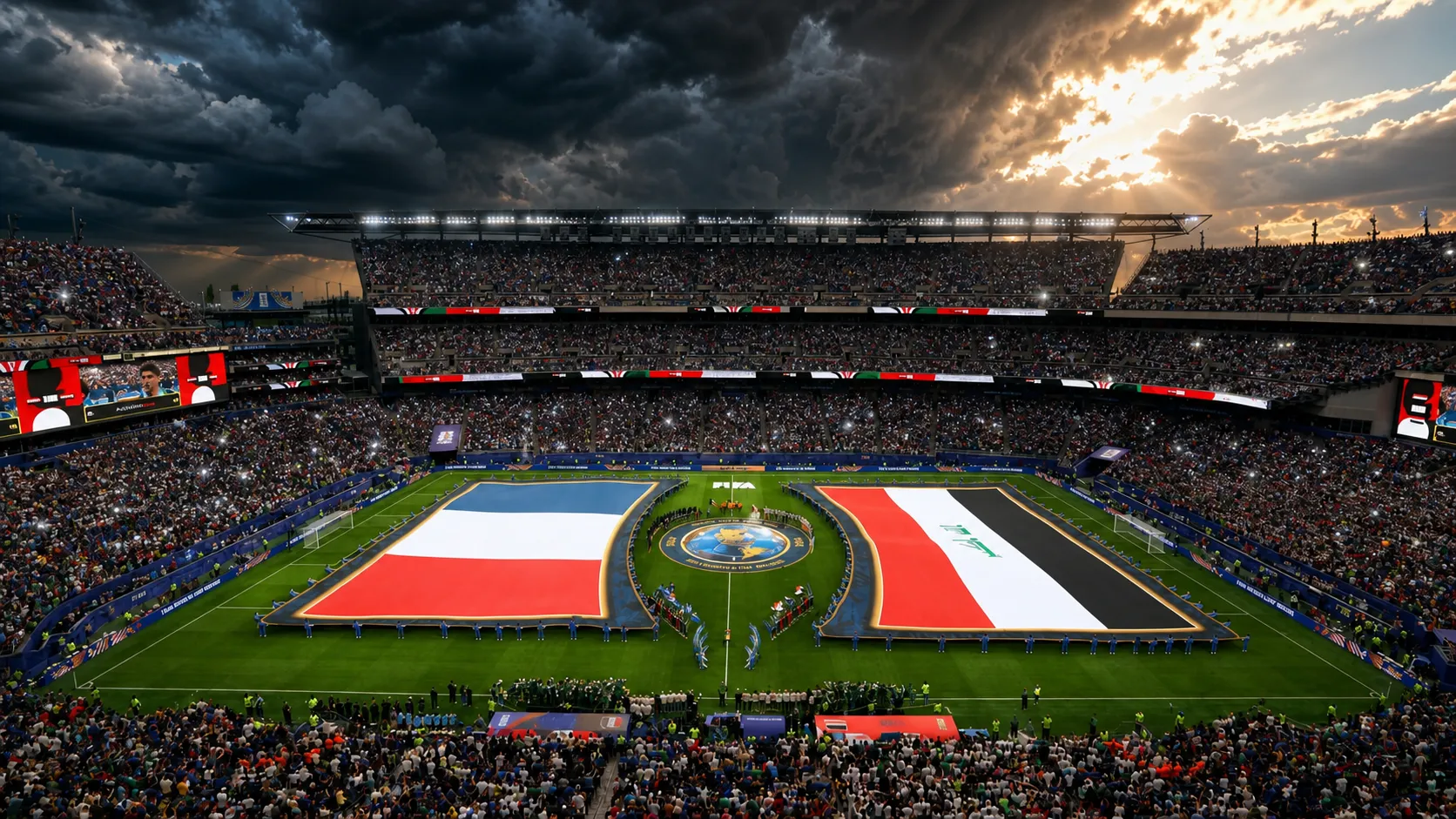
The FIFA World Cup is underway, and weather is already shaping the tournament.
Supporters have reacted angrily to FIFA’s plan for mandatory hydration breaks at this summer’s World Cup in the United States, Canada, and Mexico, where extreme heat has forced officials to take player welfare seriously from the opening round.
The idea is for teams to be given a three-minute pause midway through each half in all 104 matches, regardless of venue.
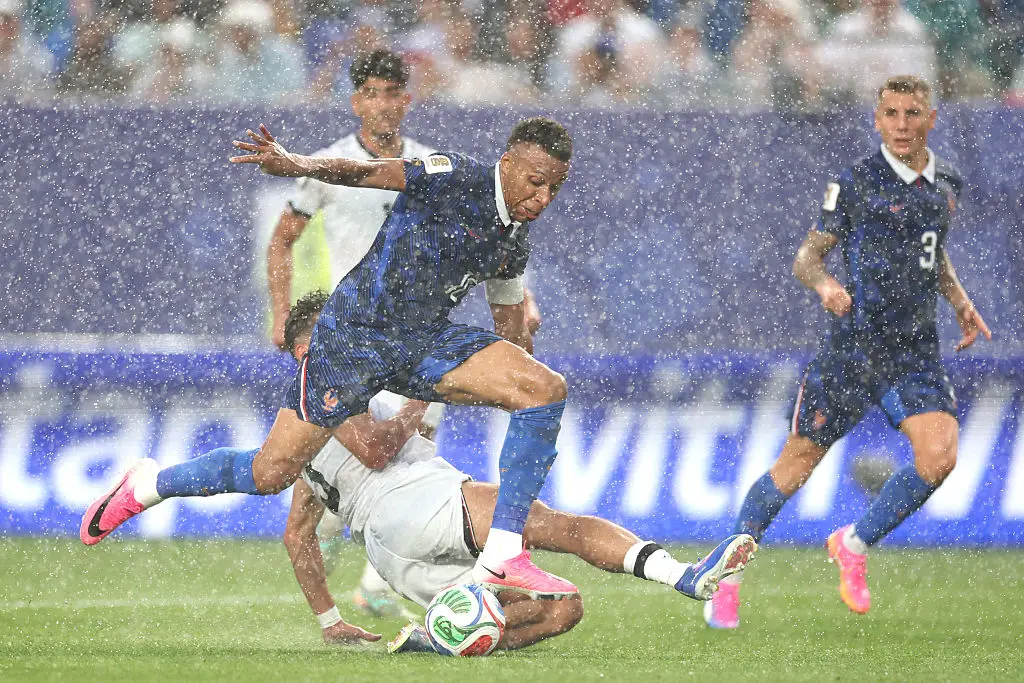
On Tuesday night, France booked their place in the Round of 32 with a 3-0 win over Iraq, although the match was far from straightforward.
The second half could not resume for nearly two hours because of intense rainfall and the threat of thunderstorms around Philadelphia Stadium.
France had already gone 1-0 up before the stoppage, and the interruption did little to halt their momentum. Kylian Mbappe added a second in the 54th minute, before Ousmane Dembélé wrapped things up just 12 minutes later.
Because of the lengthy weather suspension, FIFA did not stage a hydration break during the final 45 minutes.
“No hydration break in the second half,” a spokesperson said.
So why has the rule caused so much frustration?
FIFA says the move was agreed in December after discussions with coaches, broadcasters, and player welfare experts ahead of a tournament that has been repeatedly flagged for dangerous heat conditions.
However, criticism grew once it emerged that commercial breaks could be inserted during those pauses. Some fans have also objected to managers being able to use the stoppages to pass on tactical instructions.
Others dislike what they see as a shift toward a four-quarter style, arguing that it interrupts the rhythm of the game and gives football a format more commonly associated with American sports.
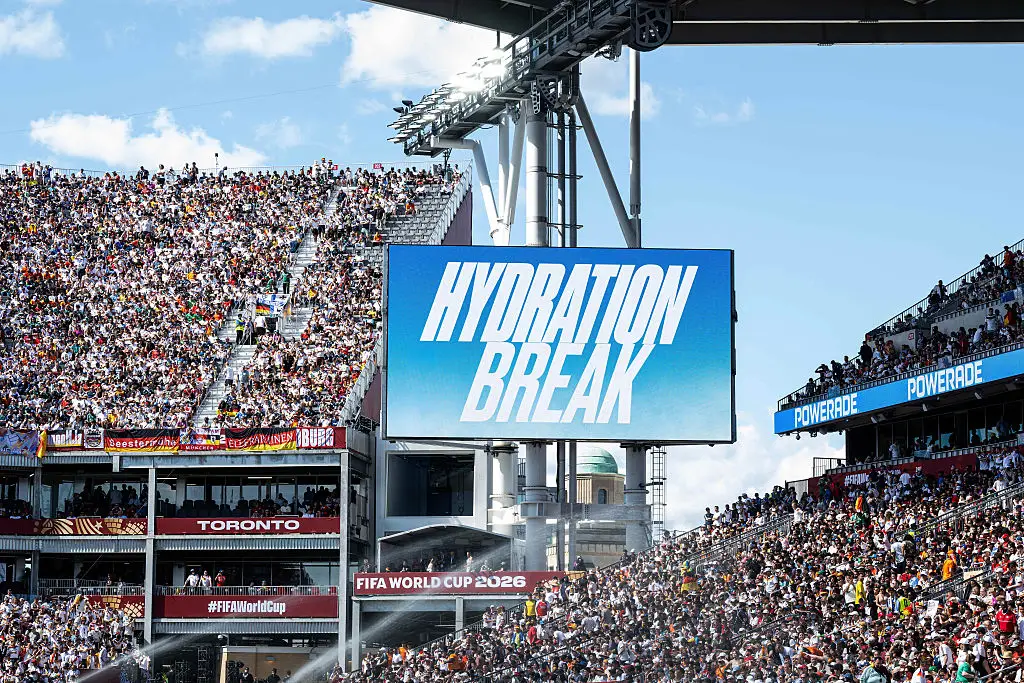
There has been little disagreement, though, over the need to protect players, especially with heat and humidity expected to affect a large number of the 16 host venues during the tournament.
“The use of hydration breaks is part of a focused attempt to ensure the best possible conditions for players, drawing upon the experiences of previous tournaments, including the recent FIFA Club World Cup, which took place in the United States last summer,” the organization previously said in a statement.
The competition will run until July 19, when the final is scheduled to take place at New York New Jersey Stadium in East Rutherford, New Jersey.