

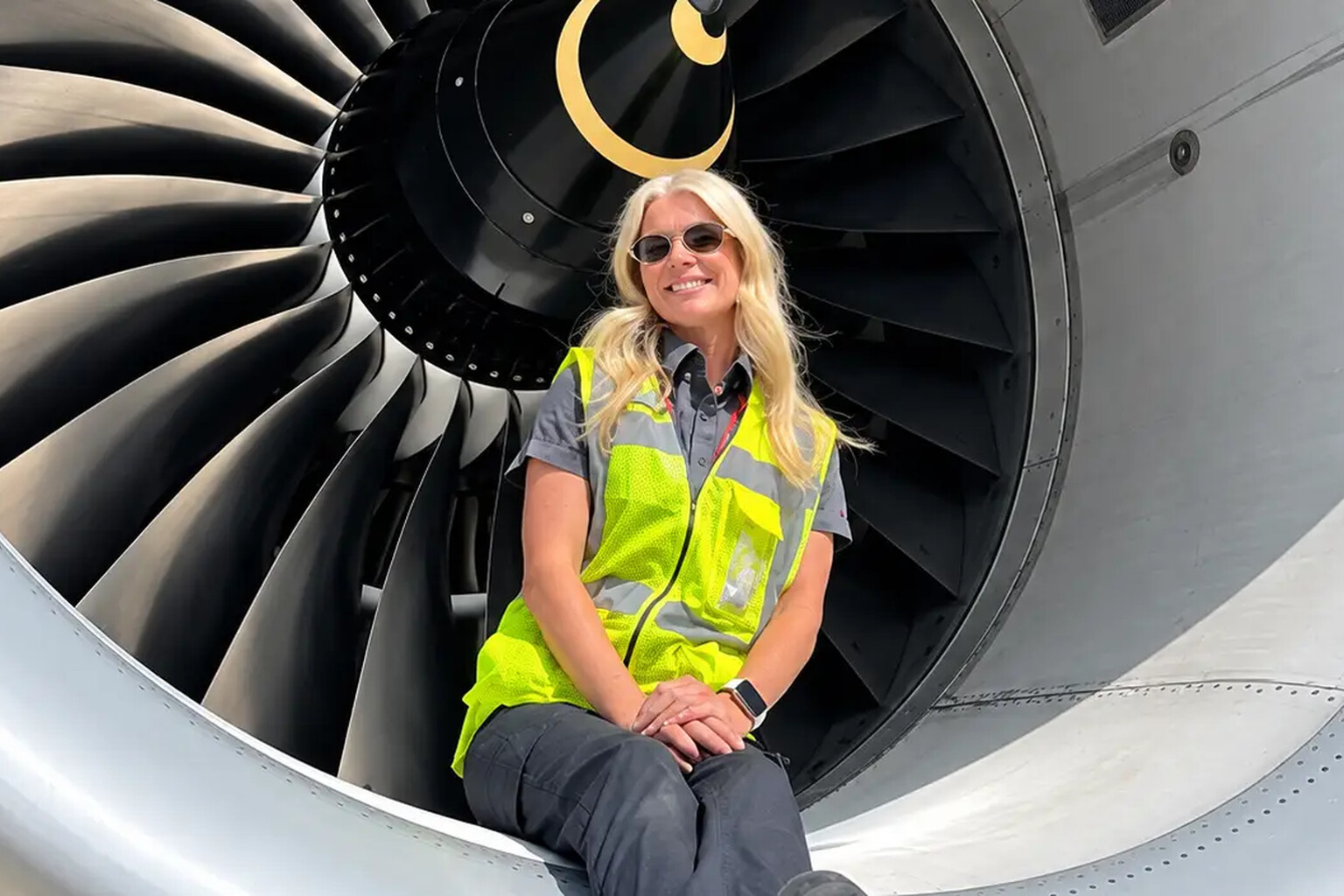
Kate Lynn, a former Ryanair cabin crew member turned aircraft maintenance technician, is reassuring nervous flyers that the alarming sounds and sensations they experience shortly after takeoff are almost always routine mechanical operations rather than signs of danger.
Lynn, who spoke on behalf of SlotsLV, has spent years both in the cabin and on the tarmac, giving her a rare dual perspective on what actually happens during those tense first minutes of flight. Her breakdown addresses the moments when passengers grip their armrests hardest: the stomach-dropping lurch and the heavy metallic bang from below.
That sinking feeling in your gut, Lynn explained, has little to do with turbulence or altitude loss. “One thing passengers often notice shortly after take-off is a sensation that the aircraft is dropping,” she said. “It doesn’t necessarily mean the aircraft is suddenly losing altitude. It’s often just the aircraft transitioning from the take-off configuration into its normal climb configuration.”
Pilots accomplish this transition by pulling back engine thrust from maximum takeoff power to a more sustainable climb setting, while simultaneously retracting the wing flaps that provided extra lift during departure. The abrupt shift in engine pitch and aerodynamic profile can fool the inner ear into registering a fall, even as the aircraft maintains its upward trajectory.
The other frequent source of mid-air panic comes with an even more dramatic soundtrack. “Shortly after take-off, passengers may hear a fairly loud banging or clunking noise,” Lynn noted. “This can be the landing gear retracting. As the gear comes up, there can be a noticeable change in the aircraft’s sound and feel, and the noise you hear can be the landing gear doors and the uplocks engaging to secure the gear in its retracted position.”
What sounds like a mechanical failure is actually the opposite: the heavy thud marks the successful stowing of the aircraft’s wheels, the sealing of outer aerodynamic doors, and the locking of everything into place for efficient high-speed cruising. Each component must engage firmly to withstand the forces of flight, and that firmness produces the very clunk that sends anxious passengers scanning for exits.
Lynn’s broader message centers on demystification through knowledge. The same sensory information that triggers anxiety can become a source of confidence once its mechanical purpose is understood. “Once you know what you’re hearing and feeling,” she observed, “it can actually make flying a lot more interesting rather than worrying.”

Her credentials bridge both sides of the airline operation. As former Ryanair cabin crew, she witnessed passenger reactions firsthand at tens of thousands of feet; as a current aircraft maintenance technician, she handles the systems that produce those reactions. That combination lends authority to her reassurances about what qualifies as genuine cause for concern versus routine aviation procedure.
The timing of her comments aligns with broader industry efforts to address flight anxiety, which surveys consistently show affects a significant minority of travelers. Airlines and aviation organizations have increasingly turned to operational transparency as a tool for reducing passenger stress, moving away from the historical approach of offering minimal explanation for in-flight occurrences.
For Lynn, the landing gear retraction and climb configuration shift represent just two entries in a longer catalog of normal operations that sound abnormal to untrained ears. Her breakdown suggests that the gap between passenger perception and mechanical reality is where most flight anxiety lives, and that closing that gap requires specific, technical information rather than blanket reassurances.
The aircraft maintenance technician’s explanations stop short of claiming all in-flight sounds are benign, acknowledging that genuine emergencies do occur. Her focus remains on the most common triggers of passenger alarm, the ones that repeat on virtually every commercial flight without indicating any system malfunction.
SlotsLV, the platform through which Lynn shared her expertise, regularly features insider perspectives from various industries, though aviation maintenance represents a less common specialty in its content lineup.