

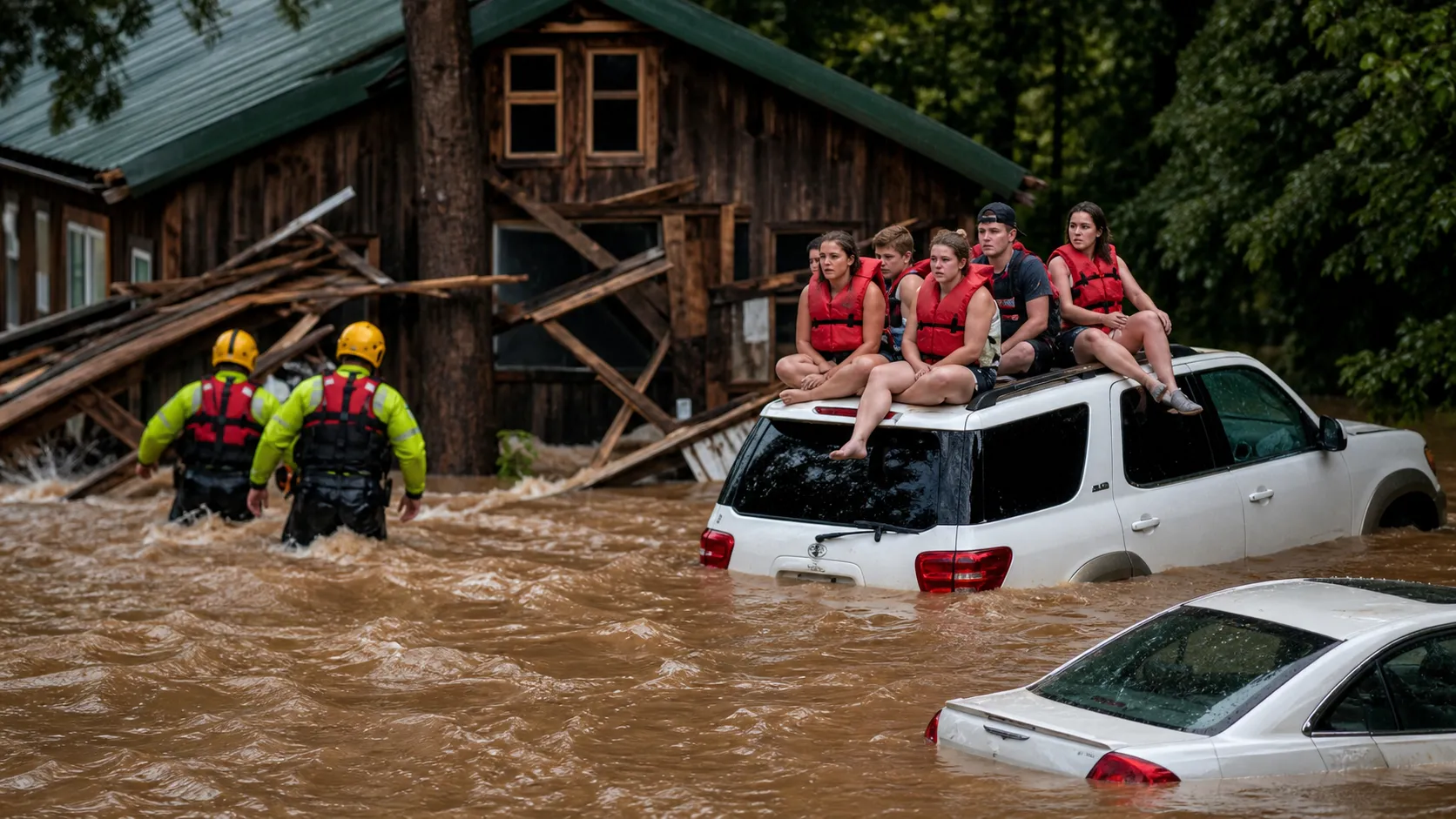
Dozens of people have been rescued from catastrophic flooding in southeastern Missouri after a rare, extreme rainfall event triggered an emergency situation across multiple counties on Friday. The disaster prompted authorities to declare a state of emergency as emergency crews worked throughout the day in treacherous conditions.
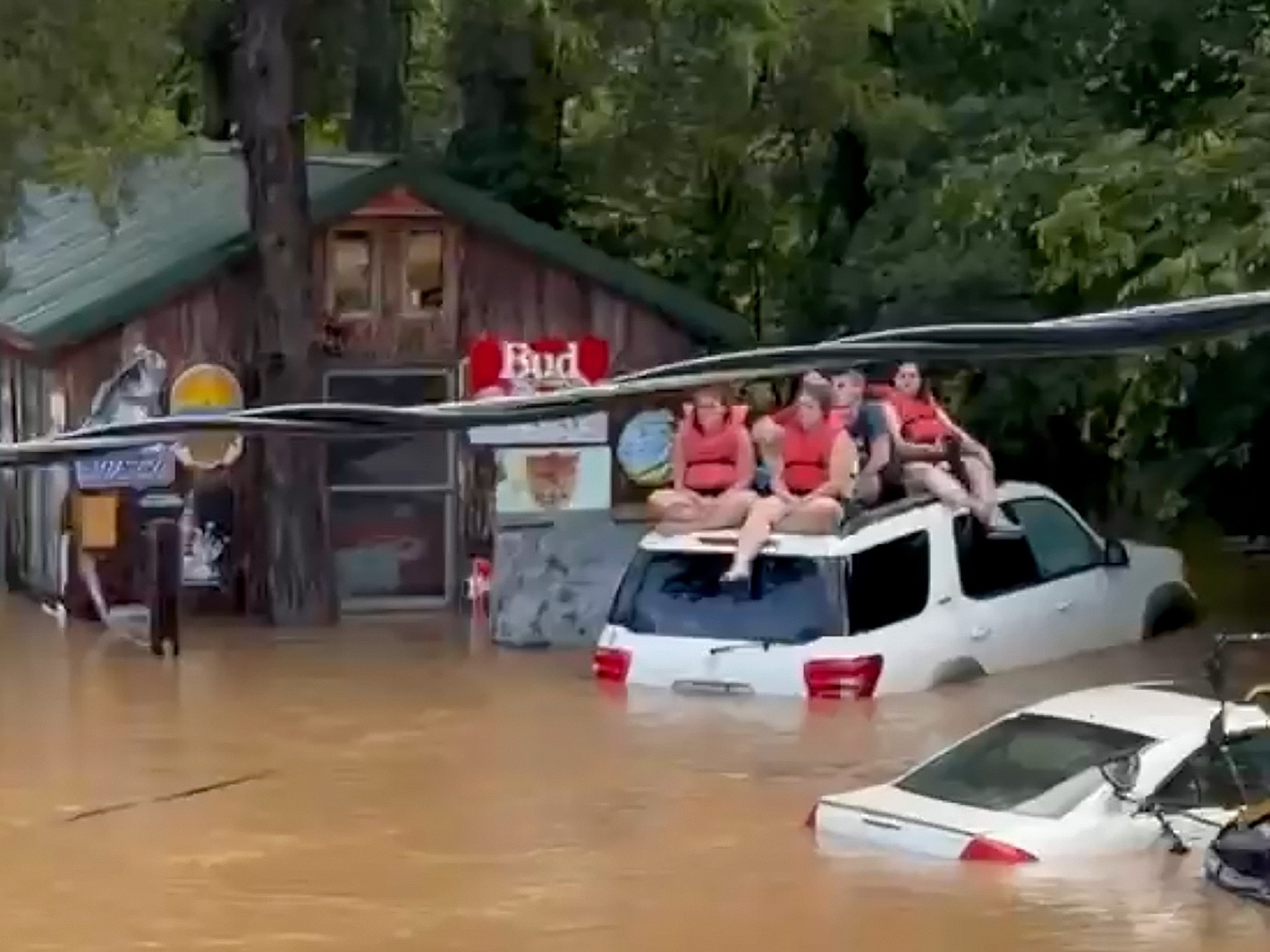
A building collapse at Bearcat Getaway Campground in Reynolds County became the focal point of emergency response efforts on Friday afternoon. Initial reports indicated that 10 to 17 people may have entered the floodwaters after the building collapsed, with those individuals having sought refuge on the roof while awaiting rescue from rising waters. The Missouri State Highway Patrol later reported that everyone involved in the building collapse had been accounted for and rescued. Five campers who were previously reported missing from the same campground were also located and brought to safety.
The wider rescue operation proved massive in scope. Emergency crews conducted over 90 water rescues involving residents, campers, and motorists throughout Reynolds and Iron counties on Friday. Around 10 additional people required rescue from the rooftop of the Black River Lodge as rising waters trapped them. Rescues also took place at multiple campgrounds along the Black River, including Twin Rivers Landing and Riversedge, in addition to Bearcat Getaway.
The disaster unfolded amid catastrophic weather conditions that emergency crews described as extremely dangerous. During rescue operations, two rescue boats carrying emergency responders capsized in the floodwaters due to the dangerous and rapidly changing conditions. All responders aboard both vessels were safely recovered downstream by fellow emergency personnel. No serious injuries were reported from Reynolds County as of Friday afternoon, though the hazardous conditions complicated the rescue mission.
The underlying cause of the flooding was extraordinary rainfall that hit southeastern Missouri overnight Thursday into Friday morning. The National Weather Service reported that between 6 and 12 inches of rain fell in parts of Iron and Reynolds counties, with some locations measuring over 12 inches. A measurement site near Redmondville, Missouri, about 70 miles southwest of St. Louis, recorded 12.25 inches of rain since Thursday evening. This massive rainfall in such a short timeframe qualified as a 1-in-1,000-year flood event, meaning such rainfall occurs with only a 0.1 percent chance in any given year under normal circumstances.
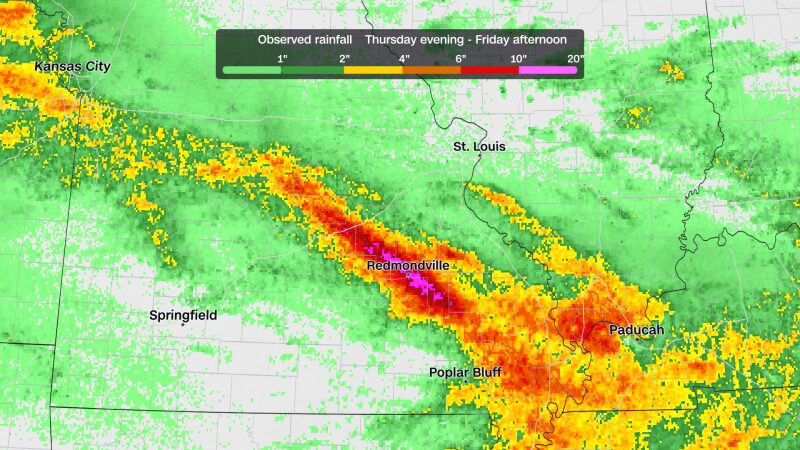
The deluge sent the Black River to an unprecedented crest of 28.7 feet, shattering the previous record set in 1993. The river at Lesterville rose 8 feet in just one hour, pushing the floodwater toward Annapolis and beyond. The Black River inundated areas across its floodplain, overwhelming campgrounds that were especially busy during the summer season and trapping residents in their homes and vehicles.
The National Weather Service issued a flash flood emergency—the highest level of flood warning—for more than 4,000 people in parts of Reynolds and Iron counties early Friday morning. This rare alert urged residents to seek higher ground immediately and warned that conditions were “extremely dangerous and life-threatening.” The emergency encompassed multiple communities, including Viburnum, Annapolis, Glover, Oates, Bixby, Lesterville, Black, Hogan, Chloride, and Sabula, as well as Johnson’s Shut-Ins State Park and Taum Sauk Mountain State Park.
Missouri Governor Mike Kehoe declared a state of emergency on Friday afternoon in response to the flooding. The emergency declaration activated Missouri’s State Emergency Operations Plan, enabling state agencies to coordinate directly with local jurisdictions to expedite assistance. Missouri Task Force 1 was deployed to the affected areas with 50 specially trained members equipped with rescue boats and specialized equipment.
Multiple roads and highways sustained damage from the floodwaters, closing numerous routes and making travel through the area extremely dangerous. Highway 21 in Reynolds County sustained major damage and was closed until further notice. A road collapse was reported just east of the Highway N and Highway 21 junction. Highway K and the Big Creek Bridge in Annapolis became impassable due to flooding. At least six area highways in Iron County alone were closed.
The emergency response came amid warnings about the dangers posed by floodwaters. State officials emphasized that driving through floodwaters is particularly hazardous, noting that six inches of floodwater can sweep a person off their feet and as little as one foot of water can move most cars off the road. Governor Kehoe warned that more than half of flood deaths in Missouri are victims in vehicles, with nighttime severe weather presenting especially severe dangers due to reduced visibility.
The worst conditions may not be over. The National Weather Service predicted additional rounds of heavy rain and thunderstorms would continue through Friday evening and into the weekend, with another 2 to 4 inches of rainfall possible in already hard-hit areas. A flood watch remained in effect for over 21 million Americans, spanning from Pennsylvania to Tennessee and west to Missouri. The multiday flood threat was expected to impact areas from the Mid-Mississippi, Ohio, and Tennessee valleys to the central Appalachians through the weekend.
Scientists attribute the increasing frequency of such extreme rainfall events to climate change. Warmer air from rising global temperatures holds more moisture, making the release of exceptional amounts of rain more common despite the statistical rarity of any single event. The Missouri flooding underscored how warming is changing weather patterns and making historic storms become more frequent.