

—
China’s top anti-corruption watchdog announced on Sunday that Ouyang Weimin, a former president of the China Development Bank, is under investigation on suspicion of serious violations of party discipline and the law. The Central Commission for Discipline Inspection, working alongside the National Commission of Supervision, made the announcement but provided no additional details about the specific allegations or the scope of the inquiry.
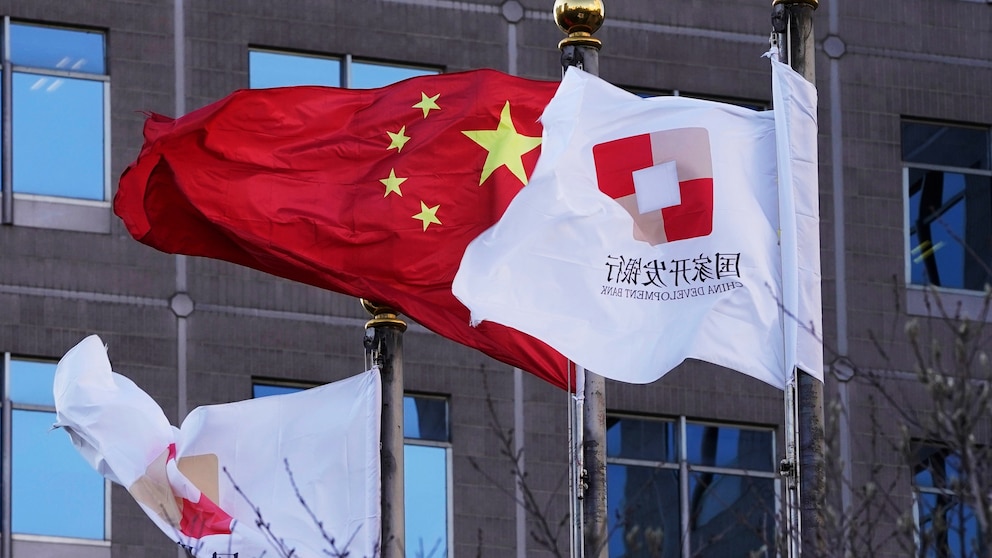
The China Development Bank, founded in 1994, is a state-funded and state-owned development finance institution that operates directly under China’s State Council. Its mandate is to support the nation’s economic development across key industries and underdeveloped sectors of the country.
Ouyang began his career and joined the Chinese Communist Party in 1986. He spent much of his early career at the People’s Bank of China before advancing to higher-profile positions within the government. He served as vice-governor of Guangdong, an economic powerhouse province near Hong Kong, before being appointed as the president and deputy party secretary of the China Development Bank in 2019. Ouyang stepped down from the presidency in 2023.
The investigation represents the latest development in China’s sweeping anti-corruption campaign under President Xi Jinping. Since Xi took power, China has conducted widespread enforcement actions targeting officials and military generals across government agencies, state-owned enterprises, and financial institutions. Critics have suggested that the campaign has also been used to remove political rivals from positions of power, though authorities defend the initiative as essential to combating corruption and reinforcing discipline across key sectors.
The financial sector has been a particular focus of the anti-corruption effort in recent years. In 2024, a former vice president of the China Development Bank was sentenced to 12 years in prison and fined for accepting bribes, marking a previous high-profile case at the institution. Former China Development Bank Chairman Hu Huaibang was sentenced to life in prison in 2021 for taking 85.5 million yuan in bribes, demonstrating the severity with which authorities have pursued corruption cases at the highest levels of the bank.
The pattern of investigations into financial sector officials reflects concerns within China’s leadership about the concentration of power and resources in banking and financial institutions. Officials have emphasized that corruption in the financial sector is particularly problematic, as it carries the potential to create systemic risks, reduce the efficiency of resource allocation in markets, and threaten overall economic stability. The Central Commission for Discipline Inspection has indicated that investigations into senior financial figures will continue as part of its broader campaign to strengthen oversight and prevent misconduct in institutions that control significant capital flows.
The commission announced that the investigation into Ouyang Weimin is ongoing, with further details expected to be released as the inquiry progresses. The specific allegations against him have not been disclosed, nor has information been provided about the timeframe of any alleged misconduct or the severity of the violations suspected.