

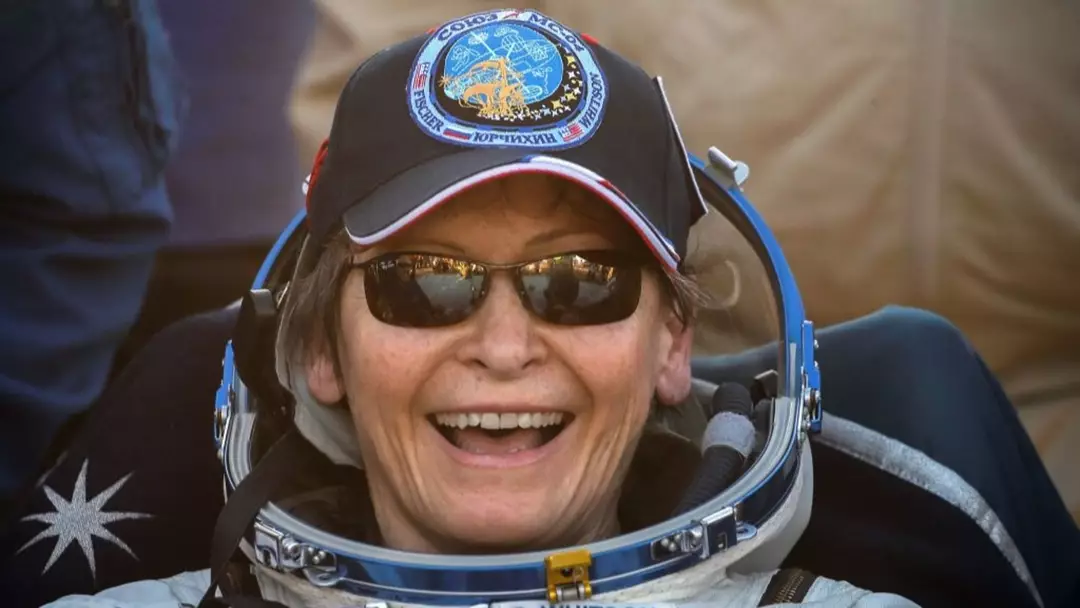
A retired NASA astronaut has shared insights into the crucial routine that ensures the success of space missions.
Space travel, whether it’s a trip to the moon or conducting experiments on the International Space Station (ISS), presents significant challenges.
The difficulties of space missions are well known to SpaceX’s Crew-11, whose six-and-a-half-month mission on the ISS was unprecedentedly shortened due to a ‘serious health condition’.
Astronauts Mike Fincke, Zena Cardman, Kimiya Yui, and Oleg Platonov returned safely to Earth today, landing off the coast of San Diego, California.
NASA has assured that the early return was not an emergency and that all astronauts are in good health.
Peggy Whitson, aged 65, dedicated nearly three decades to NASA, ending her career as Chief Astronaut in 2018.

During her time at NASA, she embarked on several long-duration missions on the ISS, where she served as a flight engineer, took command of the station, conducted scientific research in microgravity, oversaw station operations, and participated in spacewalks during extended orbital stays.
Five years post-retirement, she joined Axiom Space, a private company, leading their 2023 Ax-2 and 2025 Ax-4 missions as commander.
Whitson has accumulated an extraordinary 695 days in space, setting a record for American astronauts and women globally.
Earlier this week, she discussed her 2025 mission, which includes pilot Shubhanshu Shukla from the Indian Space Research Organisation (ISRO) and mission specialists Sławosz Uznański-Wiśniewski, a European Space Agency (ESA) project astronaut from Poland, and Tibor Kapu from the Hungarian Space Office.
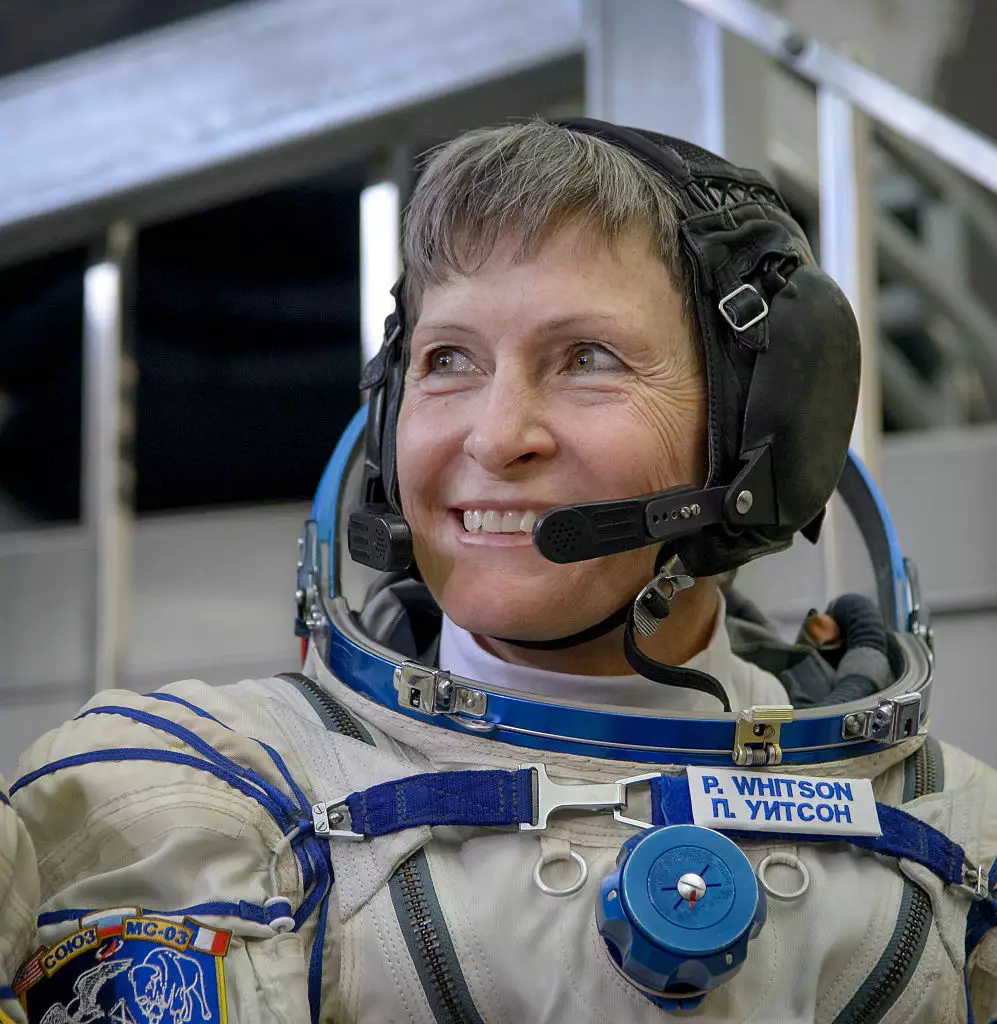
If you’re curious about an astronaut’s evening routine, Whitson provides some details.
She emphasized that maintaining a ‘strict routine while living in space’ is essential for mission success, highlighting the need for ‘winding down and sensory shutdown’. “My sleep prep was the same for all my long duration missions while I was with NASA,” she stated.
“At supper time, we adjusted the Node 1 lighting to pre-sleep (we referred to it as mood lighting), which has more red wavelengths.”
“Following dinner, I prepared for sleep an hour earlier than scheduled because I prefer to work out early in the morning (and have the station to myself).”
Whitson mentioned that the crew quarters offer ‘fantastic acoustic dampening,’ ensuring that other active crew members did not disturb her rest.
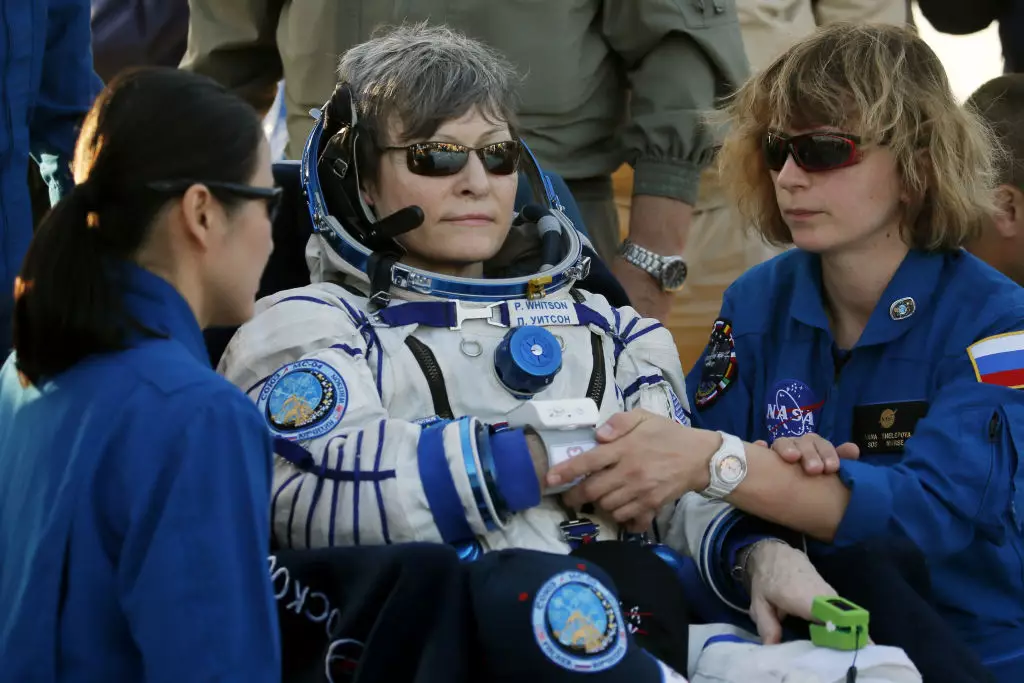
“Best sleep ever floating on a wall in my sleeping bag, no pillow required!” she added.
“Unfortunately, there are not enough sleep quarters for visiting crew like I was during Axiom missions 2 and 4. Ear plugs became essential for good sleep as I camped out in the Airlock.”
The airlock, a two-chambered pressurized module, serves as the entry point for spacewalks and acts as a buffer between the station’s living quarters and space’s vacuum.
Whitson is not alone in finding sleep in microgravity to be exceptionally restful.
I have found that having a strict routine while living in space is an important part of a successful mission, especially when it comes to winding down and sensory shutdown. My sleep prep was the same for all my long duration missions while I was with NASA. At supper time, we… pic.twitter.com/6RJTqlyiLY
— Peggy Whitson (@AstroPeggy) January 13, 2026
NASA scientist Erin Flynn-Evans, who studies spaceflight, previously explained to the Washington Post why astronauts tend to sleep well in space.
“One of the most common things that the crew members report is that their pain goes away in space, because a lot of the aches and pains that prevent us from sleeping come from gravity,” she said.
“In space, everything sort of eases up, and often that feels good. I can’t think of a time when someone told me they didn’t enjoy sleeping in space, actually.”
Anyone interested in a sleepover at the ISS?