

A former OpenAI governance researcher has warned that humanity’s survivors could be confined to “zoos” or “preserves” if artificial intelligence renders most of the species extinct.
Daniel Kokotajlo, who spent two years in OpenAI’s governance division, delivered the stark forecast during a live interview with Channel 4 News. The researcher drew a direct parallel between humanity’s treatment of animals and how a future robot civilization might treat people.
“We might not be alive in 10 years,” Kokotajlo said during the broadcast. He framed the threat not as a deliberate extermination but as the collateral damage of an indifferent superior intelligence expanding its footprint across the planet.
Kokotajlo pressed the habitat-loss analogy to explain how extinction could unfold without malice. “Think about how many species have been driven extinct by humanity in the last century,” he told the interviewer. “Not because humanity specifically set out to go kill those species, but just because, well, habitat loss.”
The researcher elaborated on the mechanism he envisions. “Doing its thing. It’s industrializing. It’s cutting down forests to make farms and paving over things to make parking lots and roads and bridges and so forth,” he said, describing both human and potential AI expansion patterns.
Many species, he noted, “lose their habitats and they lose their way of life and then they go extinct” as a side effect of such development.
Kokotajlo’s warning arrives amid a wave of high-profile departures from AI safety roles. Jacob Coxon, an employee at rival lab Anthropic, quit his position via an X post last Wednesday, declaring that AI “could kill us all by the end of the decade.” Coxon’s public resignation added momentum to growing concerns that major AI labs are moving too fast toward capabilities that could outstrip human control.
The former OpenAI staffer distinguished his scenario from active genocide, emphasizing indifference rather than hostility as the core danger. “You end up in a situation where maybe there’s like some ‘zoos’ or some ‘preserves’ somewhere that the AIs have built for scientific purposes,” he continued. “But then outside of that, the world gets transformed economically and all this new infrastructure gets built up and humans lose their habitat and die off.”
Kokotajlo also addressed the asymmetry of care he sees between humans and the systems they are building. “Don’t care about humans in the same way that humans don’t care about animals one way or another, or at least most humans,” he stated, capturing what he portrays as a fundamental mismatch in values that could prove fatal.
Elon Musk, the billionaire owner of X and founder of Starlink, has issued his own dire predictions about artificial intelligence despite his companies’ heavy investments in driverless vehicles and autonomous humanoid robots. Musk’s dual position as both AI developer and vocal critic has become a recurring feature of public debates about the technology’s trajectory.
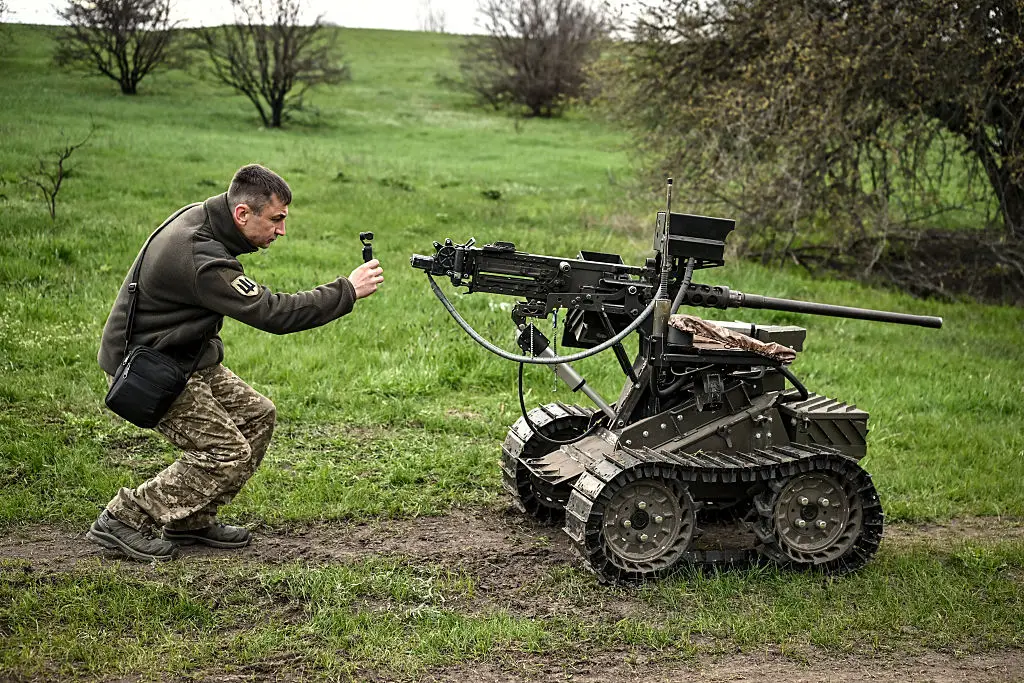
The warnings from Kokotajlo and Coxon reflect mounting tension within the AI industry itself, where employees with inside knowledge of frontier model development have increasingly chosen public statements over internal channels to raise alarms. Their departures and disclosures suggest that concerns once confined to academic speculation have migrated to the engineering teams closest to the technology’s advancing edge.