


A former Milwaukee County judge faces sentencing today on her conviction for obstructing federal immigration agents in a case that has become a flashpoint in the Trump administration’s immigration crackdown.
Hannah Dugan, 67, will be sentenced by U.S. District Judge Lynn Adelman at the federal courthouse in downtown Milwaukee. The sentencing marks a critical moment in a high-profile legal battle that has raised questions about judicial independence and the scope of federal immigration enforcement authority.
Dugan was convicted in December of felony obstruction for her actions on April 18, 2025, when she led Eduardo Flores-Ruiz, a Mexican national in the country illegally, out of her courtroom through a private door while federal immigration agents waited in the corridor to arrest him. Flores-Ruiz was scheduled to appear for a hearing on misdemeanor battery charges. She was acquitted on a separate charge of concealing an individual to prevent arrest.
The case marked the first time a state judge in Wisconsin went to trial on charges of obstructing immigration agents. It drew national attention as an early test of how courts would respond to President Donald Trump’s sweeping immigration crackdown, with his administration branding Dugan an activist judge while her supporters said she was being unfairly targeted.

According to court filings, immigration officers arrived at the Milwaukee County courthouse after learning Flores-Ruiz had reentered the country illegally and was scheduled to appear before Dugan. When Dugan learned agents were in the corridor outside her courtroom, she confronted them and told them their administrative warrant was not sufficient grounds to arrest Flores-Ruiz, then directed them to the chief judge’s office. After the agents left, she moved Flores-Ruiz’s case to the top of her docket and led him and his attorney through a private jury door.
Agents spotted Flores-Ruiz in a public hallway, followed him outside, and arrested him after a brief foot chase. According to courtroom audio, Dugan told her court reporter she would “take the heat” for letting Flores-Ruiz go. Flores-Ruiz was deported in November 2025.
The jury’s six-hour deliberation resulted in conviction on the felony obstruction charge, which carries a maximum penalty of five years in prison and a $350,000 fine. However, legal experts and analysts have said prison time is unlikely for a first-time, nonviolent offender like Dugan.
The case has since become more complicated following a June 2026 federal appeals court decision that overturned a similar Virginia immigration case, finding that an ICE action did not constitute a “pending proceeding” as required under federal obstruction law. Dugan’s attorneys argued this ruling should invalidate her conviction, but a federal judge rejected those arguments and upheld the conviction on June 16.
Prosecutors have suggested in sentencing documents that Dugan deserves a “serious sentence” reflecting the “serious nature of her conduct.” Federal sentencing guidelines call for 15 to 21 months in prison, with the average sentence for obstruction cases being 16 months. Prosecutors noted that Dugan abused her judicial authority and violated her oath by allowing personal beliefs about immigration enforcement to override her legal duties. They emphasized that judges are entrusted with tremendous discretion but cannot cross the line into criminal conduct.
Dugan’s defense team has submitted nearly 20 letters of support and argued for a sentence of “time served,” contending that she has already been punished enough. They point to her unprecedented public humiliation, the loss of her nine-year career on the bench, and the threats she has faced. The defense argues the case was overcharged and that Dugan should not receive prison time given her clean criminal history, decades of public service with organizations including Legal Aid Society of Wisconsin and Catholic Charities of Milwaukee, and the impossibility of her repeating the offense.
Before her arrest in April 2025, Dugan had spent nearly 20 years working in legal aid and other public service roles. Former Milwaukee County District Attorney E. Michael McCann, a Democrat, wrote to the court praising Dugan’s service to poor and disadvantaged clients. Dugan resigned from her position in January after Republicans threatened impeachment and the Wisconsin Supreme Court suspended her judicial duties.
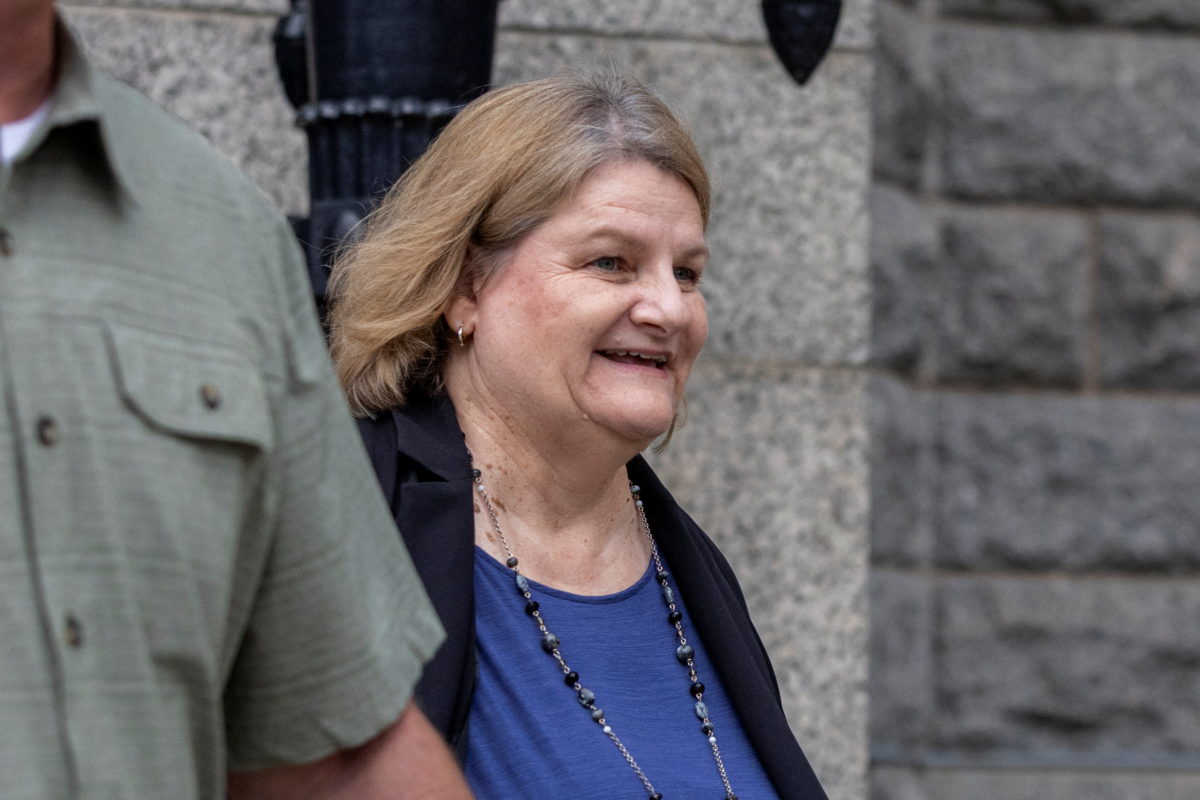
Dugan is expected to speak during today’s sentencing hearing, marking her first public statement since her arrest more than a year ago. She did not testify during her trial. Judge Adelman is not bound by sentencing guidelines and has a reputation for sentencing below guideline ranges, though not consistently.
Regardless of today’s sentence, Dugan’s legal team has indicated plans to appeal the conviction to the 7th Circuit Court of Appeals, continuing a legal fight they believe is fundamentally about judicial independence and federal overreach.