

A fruit fly’s digitized brain checkmated a leading AI chess model in 11 moves, its creator revealed.
Maxime Labonne, a machine-learning engineer, wired the newly mapped connectome of an adult male fruit fly to a chess engine and watched it demolish Claude Opus 5, one of the most advanced commercial AI models available. The full neural map, cataloguing all 166,000 neurons and 25.6 million connections, was released September 3 by HHMI Janelia Research in Virginia and Google Research after years of microscopic imaging.
Labonne shared the results on X, where he posted that the fly had discovered compression and solving techniques beyond human comprehension. “The fly figured out ways to solve and compress chess that are far beyond what we could possibly comprehend,” he wrote. “I had to stop training it because it was destroying Opus 5,” He added that demos and models were available on Hugging Face, the AI model-sharing platform.
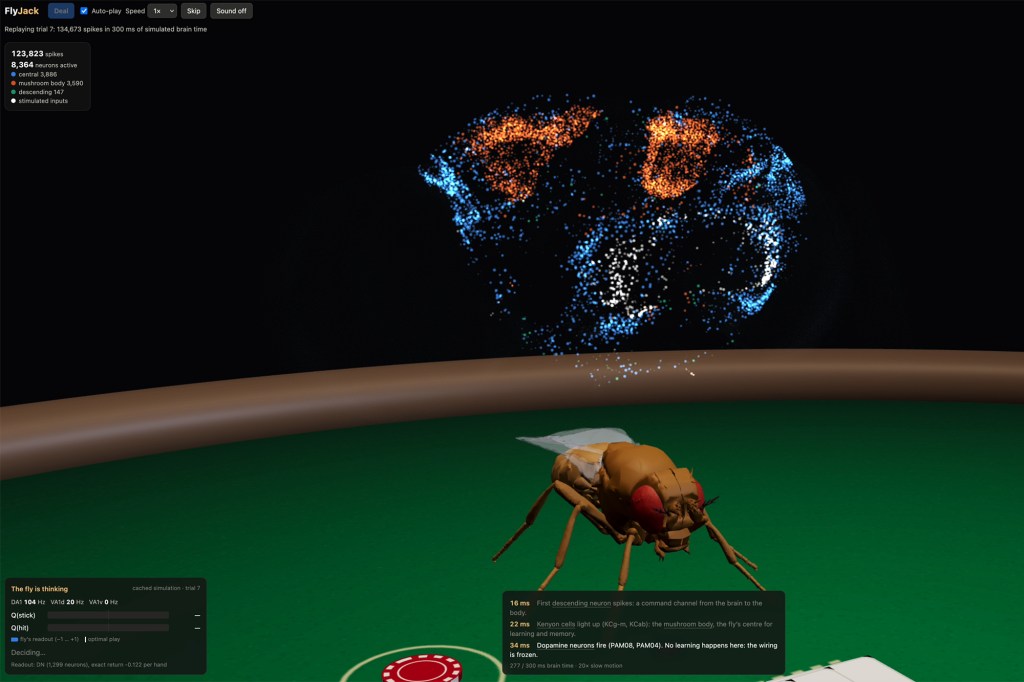
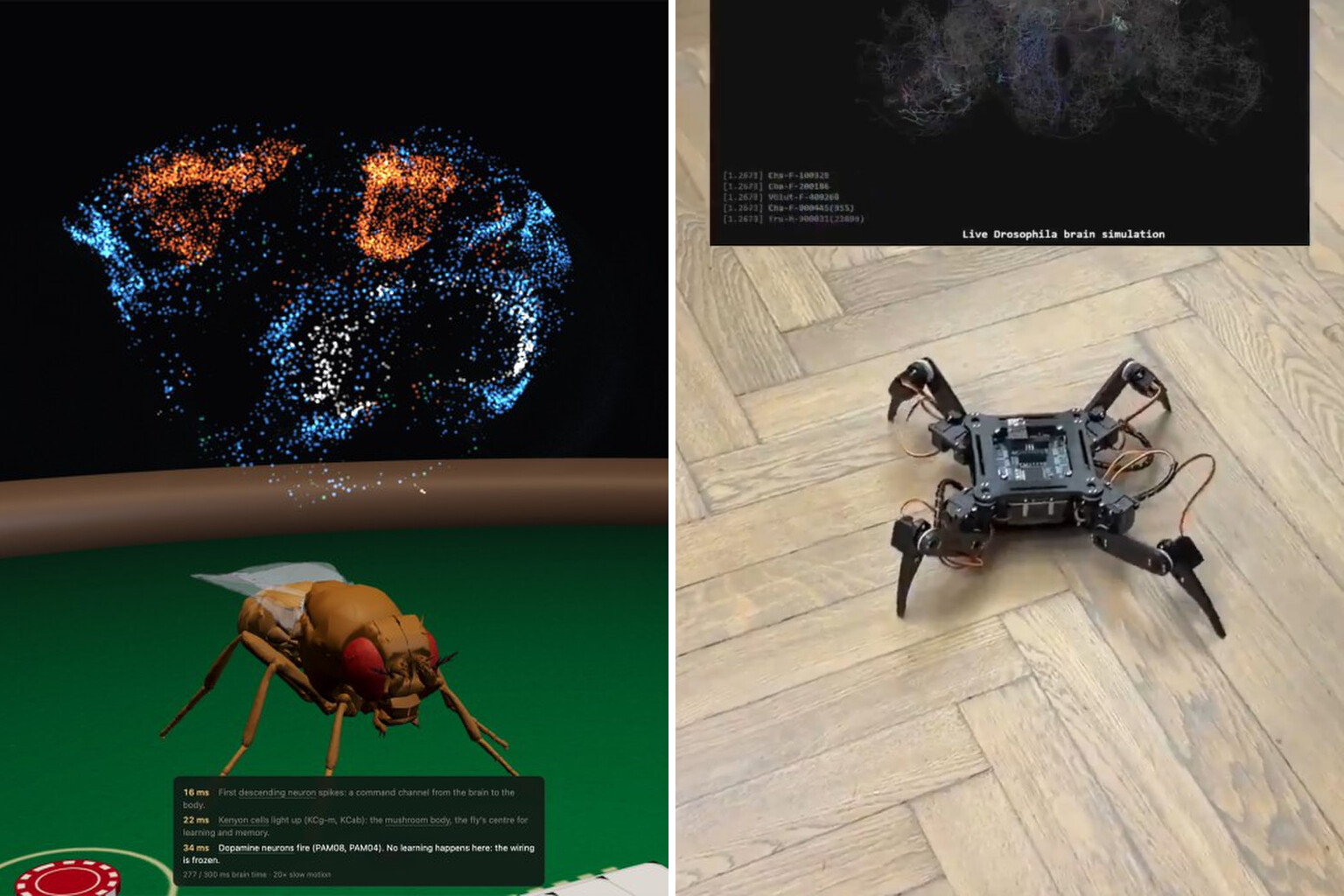
The threshold-crossing dataset, small enough to fit on the head of a pin in biological form, became downloadable fodder for a wave of inventive experiments across social media and coding platforms. One engineer launched Stonkfly, handing the neural network a $100 portfolio and programming simulated dopamine rushes to reward profitable crypto trades. Another project, FlyJack, put the fly brain to work at the blackjack table against a computerized dealer, though results varied with each run.
A Stanford student built a fighting game around the connectome, wiring 166,700 neurons exactly like the male fly’s mapped pathways. “No training,” she wrote on X. “It chases its opponent using the same circuit male flies use to chase females.” She controlled one digital fighter while the fly brain commanded another in king-of-the-hill combat.
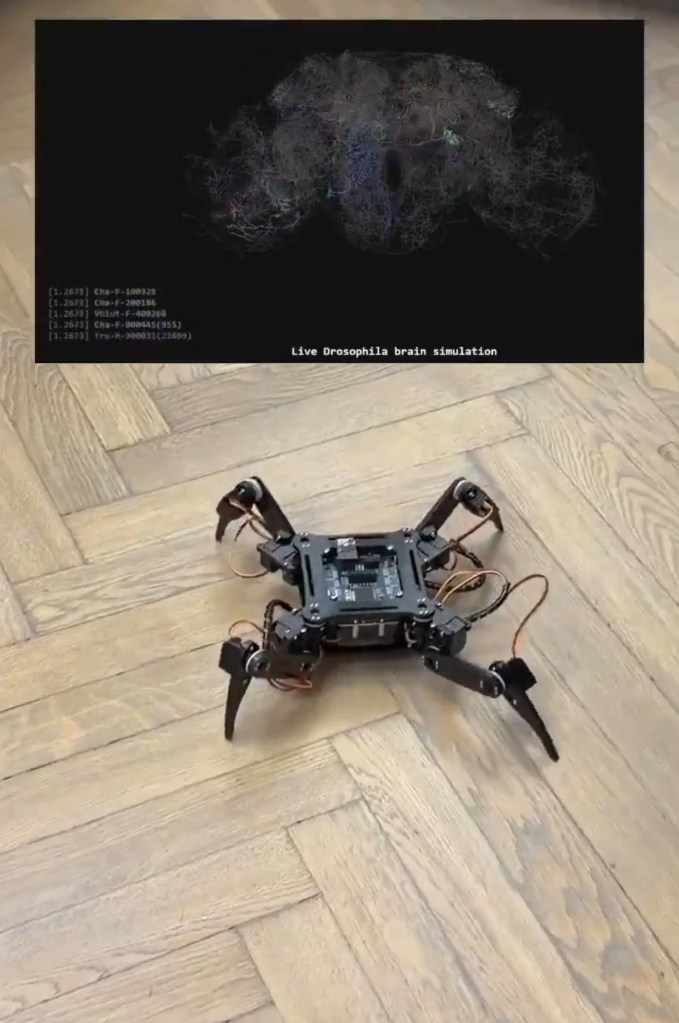
The student shared video of the matchup alongside a link to her project, noting the behavior emerged directly from the biological wiring without machine-learning training. Other hobbyists plugged the neural data into homemade animatronic cats, crab-like walkers, and small aerial drones, testing how far the pinhead-sized brain could stretch beyond its evolutionary purpose.
The original mapping project by HHMI Janelia and Google represented the first complete connectome of an adult animal with complex behavior, tracing every synapse in the roughly sesame-seed-sized brain. That granular blueprint, now public, let coders treat the fruit fly not as a biological curiosity but as a plug-and-play neural architecture for tasks its species never encountered in 100 million years of evolution.
Labonne’s chess experiment stood out for the speed and dominance of its results. Eleven moves to checkmate against a model positioned near the top of commercial AI rankings suggested that evolution had packed problem-solving efficiency into the tiny network that scale-heavy modern systems still struggle to match. His decision to halt training implied the gap was widening, not narrowing, as the fly brain adapted.
The dopamine-simulation in Stonkfly and the chase-circuit repurposing in the fighting game both highlighted how directly the mapped neurons translated across contexts. What evolved to track mates in flight now tracked opponents on screen; what reinforced foraging now reinforced portfolio gains. The blackjack and crypto experiments added gambling and financial speculation to the list of domains the fly brain had entered in its first weeks of digital afterlife.