

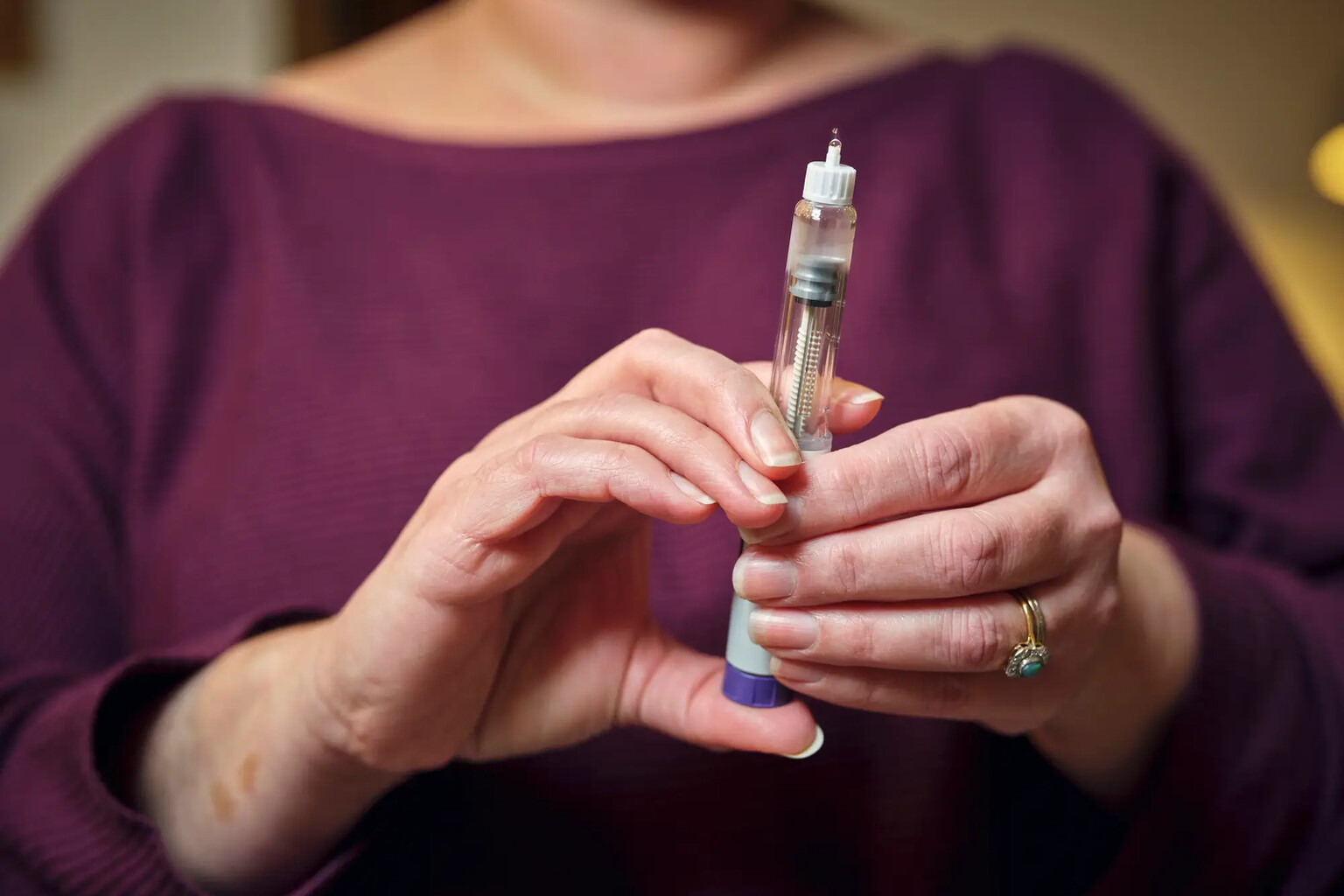
GLP-1 medications are being called a “fountain of youth” by a leading Yale cardiologist who says the drugs’ wide-ranging health effects go far beyond weight loss.
Dr. Harlan Krumholz, 67, a cardiologist and professor at the Yale School of Medicine, told TODAY that GLP-1 drugs are “generational breakthrough medications” with “profound benefits” for multiple organ systems. His comments come as research piles up showing the medications may extend lifespan, cut cancer risk, improve heart health, and treat conditions from sleep apnea to liver disease.
“If it’s about reducing risk, if that’s what a fountain of youth is — I mean, it sort of is helping you live longer and better. I guess you’d have to say it is,” Krumholz said in the interview.
He continued: “This thing somehow has such wide-ranging health benefits that it does seem to be turning back the clock in some ways.”
The GLP-1 market has exploded in recent years. Gallup estimates between 10 and 15 million Americans now use the drugs, which were first developed to control blood sugar and appetite. GLP-1 stands for glucagon-like peptide-1, a naturally occurring hormone produced by the small intestine after eating that triggers insulin release, slows stomach emptying, and signals fullness to the brain.
Animal studies have fueled excitement about longevity. Researchers at the University of California, Berkeley found that semaglutide — the active ingredient in Ozempic and Wegovy — helped mice live approximately 100 days longer than usual after just three months of treatment, roughly a 12 percent lifespan boost. The treated mice also showed improvements in blood sugar, appearance, and behavior.
Rafael de Cabo, a senior investigator at the National Institute on Aging, tied the findings to broader health outcomes. He noted that chronic disease is closely tied to aging, and extending life means providing benefit across multiple body systems.
Krumholz calls GLP-1s the “heart drug” for their apparent ability to reduce heart attacks and strokes in people with heart disease and obesity. The FDA has approved Eli Lilly’s Mounjaro to lower major cardiovascular risks in adults with Type 2 diabetes, and Novo Nordisk’s Wegovy is already approved to reduce heart attack and stroke risk in that population. The drugs cut risk partly by reducing obesity and insulin resistance.
Blood pressure drops significantly too. Krumholz said tirzepatide, Mounjaro’s active ingredient, lowered systolic blood pressure by almost seven points — a reduction he claims beats current blood pressure medication.
Zepbound, another GLP-1 drug, became the first FDA-approved medication for obstructive sleep apnea, a condition where a person’s upper airway collapses during sleep. The FDA said the drug improves the condition through weight reduction.
Kidney disease risk may fall as the drugs target high blood sugar, high blood pressure, and excess weight. For liver health, Wegovy is FDA-approved to treat metabolic dysfunction-associated steatohepatitis (MASH) in adults with substantial fibrosis, or excessive scar tissue. Obesity and Type 2 diabetes are key risk factors for this fatty liver disease.
Cancer prevention has emerged as another potential benefit. A 2026 study found GLP-1 use was associated with a 41 percent lower risk of obesity-related cancers — including breast, kidney, bowel, endometrial, pancreatic, thyroid, ovarian, esophageal, gastric, liver, and gallbladder — in non-diabetic participants.
Respiratory conditions may also respond. Researchers at the European Respiratory Society Congress found that people with asthma and COPD who took GLP-1s had fewer attacks and flare-ups.

“The effect was strongest with semaglutide,” said lead author Chloe Bloom, clinical associate professor in respiratory epidemiology at the National Heart & Lung Institute, Imperial College London, UK, in a statement. “Especially in people with asthma, where use of semaglutide appears to be associated with nearly 40% reduction in asthma attacks. Semaglutide also led to a 20% reduction in COPD flare-ups.”
Other emerging research points to benefits for alcohol addiction and fertility problems linked to polyendocrine metabolic ovarian syndrome, previously known as PCOS.
Despite the mounting evidence, researchers caution that translating mouse longevity data to humans remains a major hurdle. The Berkeley team stressed there is still a long way to go to determine how semaglutide could extend human lifespan.