

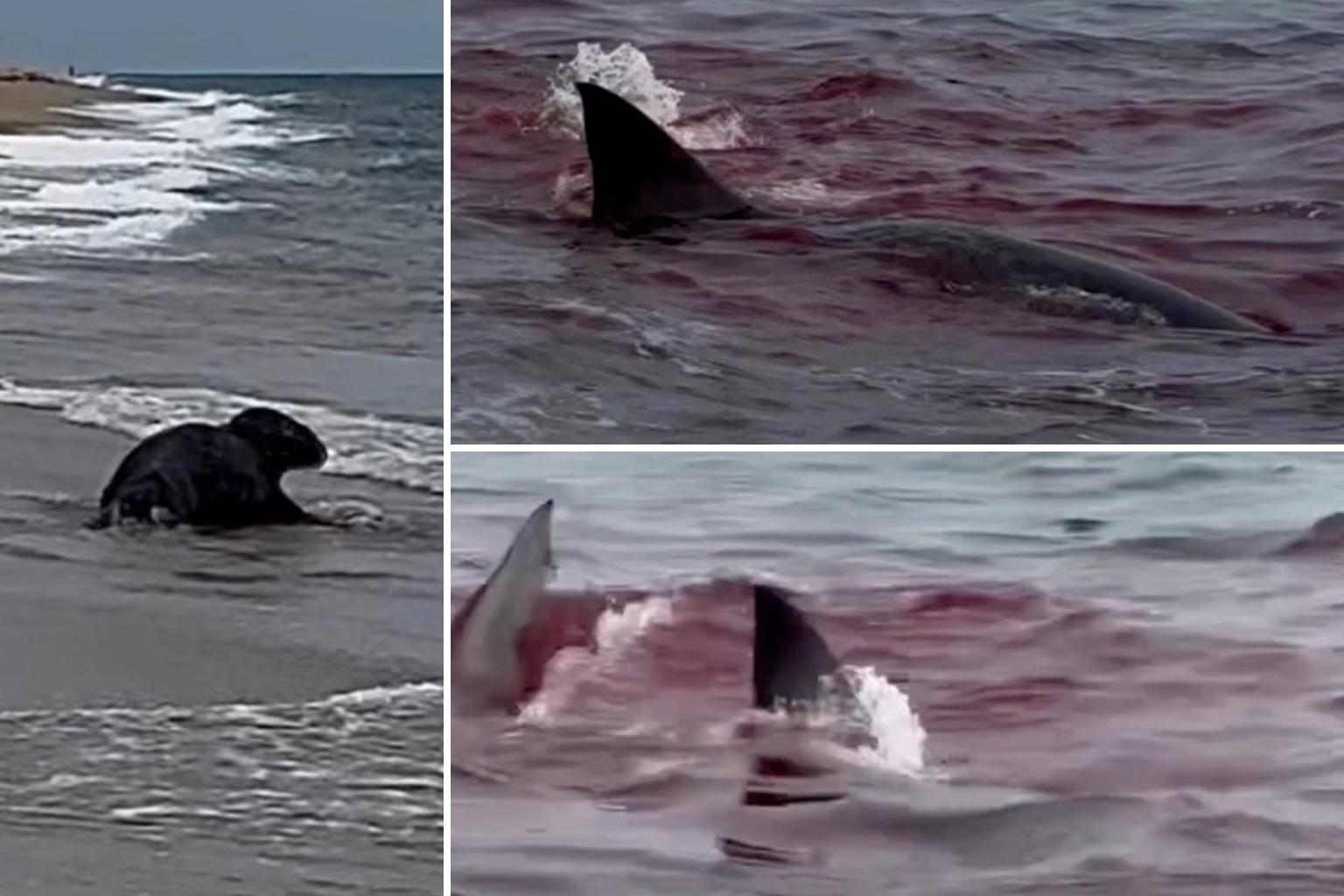
A lifelong Nantucket resident captured rare footage of a great white shark tearing apart a seal just feet from shore.
Carrie Drayton, a local who recorded the attack, was driving past Great Point Beach with her boyfriend around 10:30 a.m. Sunday when they spotted a seal rushing out of the water. The couple quickly noticed shark fins cutting through the surface, and it became clear the seal was in serious trouble.
“It was truly wild. I could have reached out and touched it,” Drayton said.
The video shows the massive predator tearing at what remained of the seal mere feet from the seashore, turning the tranquil beach into a gruesome scene. Another seal visible deeper inland appears to watch helplessly before attempting to move closer to the ocean, the footage reveals.
“Stay out of the water, dude. You’re gonna get it,” Drayton is heard calling out to the second seal in the recording.
The encounter was unprecedented for Drayton, who said she’d “probably have a greater chance of winning the lottery” than witnessing such an event.
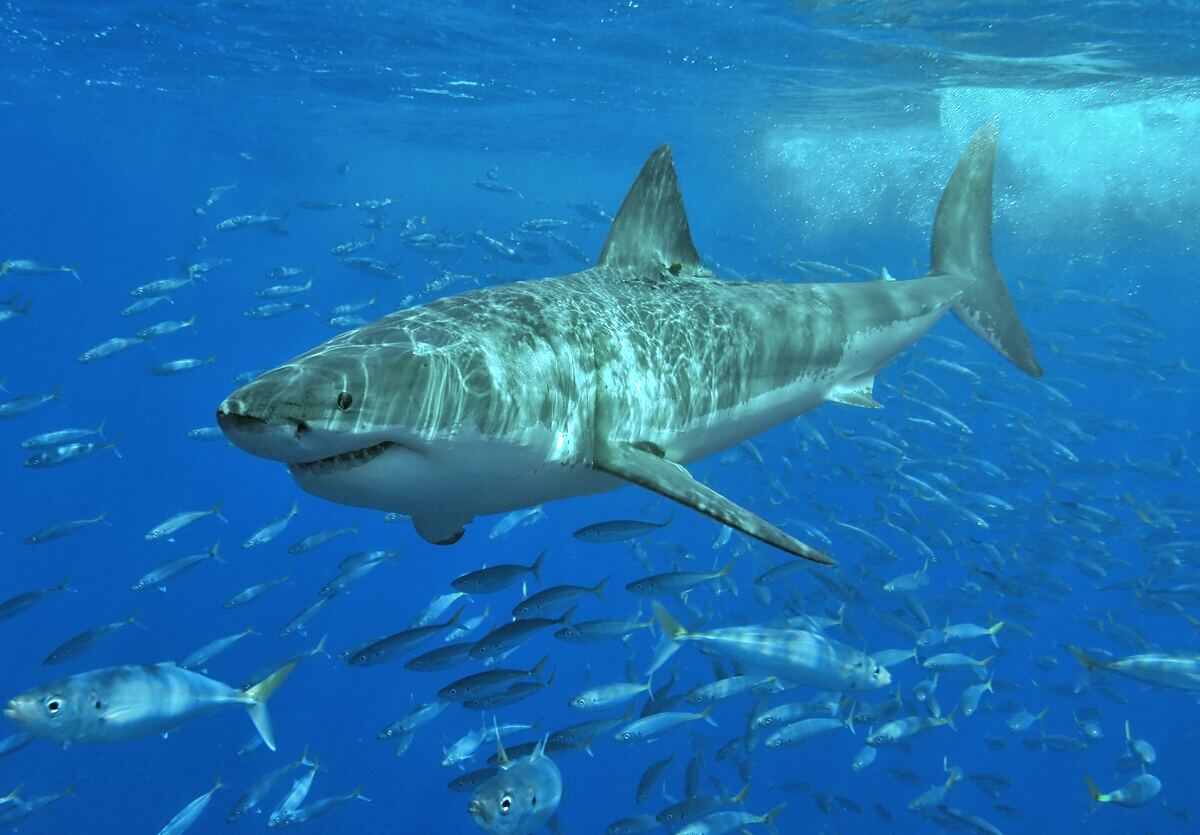
Despite the bloody display unfolding so close to land, experts emphasized the behavior is not cause for alarm. Sharks regularly pass through Nantucket waters during migration, and the seal population at Great Point represents a natural food source for the predators.
Fisheries scientist Gregory Skomal noted that the seals at Great Point are a “viable source of food” for the region’s shark population.
The attack highlights the ongoing ecological dynamics along Cape Cod and the islands, where growing seal populations have drawn increased shark activity closer to beaches in recent years. While such dramatic predation events remain rare to witness directly, they reflect established feeding patterns rather than anomalous aggression.
Drayton’s proximity to the attack—close enough to have physically reached toward the predator—underscores how near these interactions can occur without human involvement or injury.