

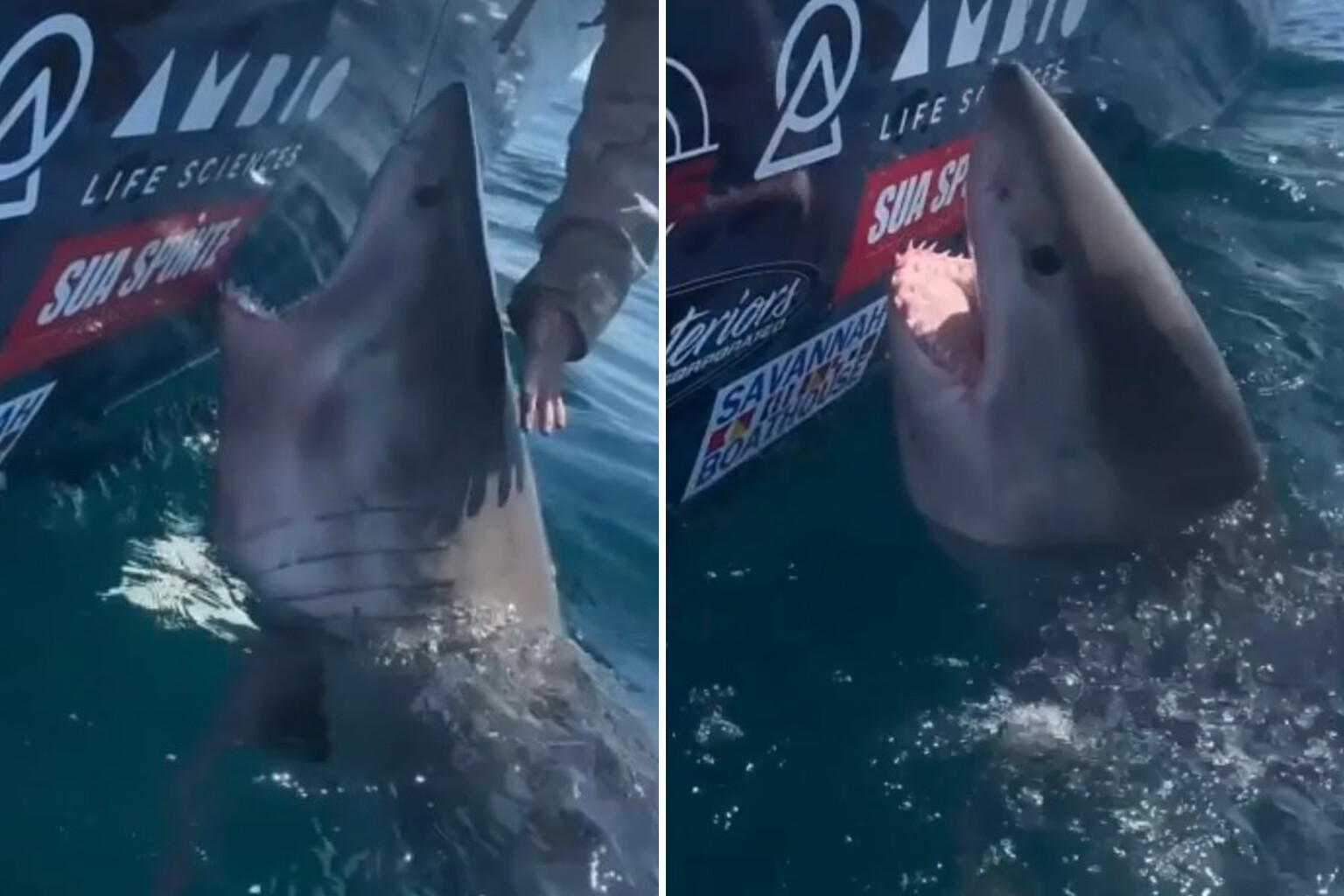
A woman who reached off a boat to pet a great white shark was nearly bitten when the predator whipped around and lunged at her.
The close call unfolded during a tagging run off Tybee Island, Georgia, with Knot Lucky Fishing, a Savannah-based nonprofit that takes veterans, active duty service members and their families on free fishing trips. Jimmy Armel, 47, the group’s founder, told FOX Weather the crew had the shark under control throughout the encounter and the woman was never in real danger.
“One second Jen, one of our veterans, is laying her hand on a wild white shark like it’s the family dog, and the next second that shark whips around and lunges toward her,” the organization said in a Facebook post.
“Everybody on the boat felt that one in their chest.”
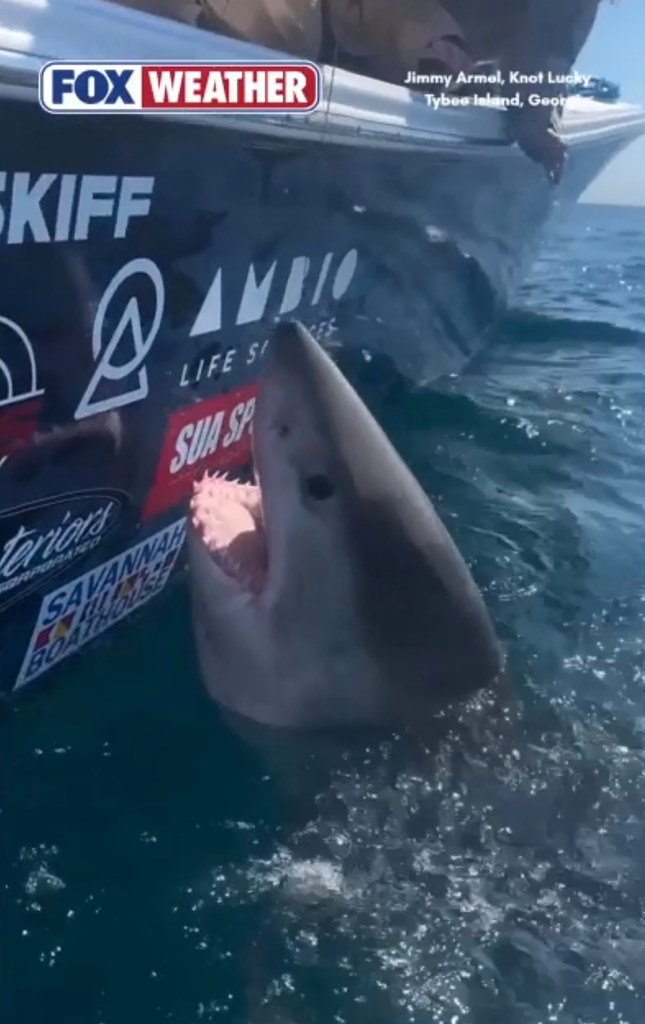
The footage comes from Knot Lucky Fishing’s White Shark Tagging Program, which operates in partnership with Starbrite, Project SeaSafe and Gray FishTag Research. The initiative focuses on catching, tagging and releasing great white sharks to collect migration data off the Georgia coast.
Armel explained the deeper mission behind each catch. “We name each one after a fallen Ranger or service member, collecting real migration data while keeping our brothers’ names alive,” he told FOX Weather. “We’ve tagged ten so far, and with the whites heading back to Tybee now, more are coming this winter.”
The shark in the video, however, was unable to be tagged due to safety concerns for both the crew and the animal. The lunge that startled the veteran and her fellow passengers also made continuing the procedure too risky.
The nonprofit has built its reputation on combining conservation science with veteran support, offering participants hands-on experience with one of the ocean’s most feared predators while contributing to research. The trips are offered at no cost to service members and their families, funded through partnerships with marine research organizations and fishing industry sponsors.
The great whites that pass through Georgia waters seasonally represent a significant research opportunity, as the species’ migration patterns along the Atlantic coast remain incompletely understood. Each tagged shark provides satellite data that helps scientists track movement, depth preferences and temperature ranges.
Armel’s crew has now tagged ten animals since launching the program, with winter bringing renewed activity as the sharks return to the Tybee Island area. The naming tradition after fallen service members adds a memorial dimension to the scientific work, connecting each data point to an individual military life lost.
The veteran identified only as Jen had apparently grown comfortable enough during the excursion to attempt physical contact with the restrained shark, a moment of familiarity that turned volatile in an instant. The reaction of the other passengers, described by the organization as feeling the lunge “in their chest,” underscored how quickly the dynamic shifted despite the animal being secured.
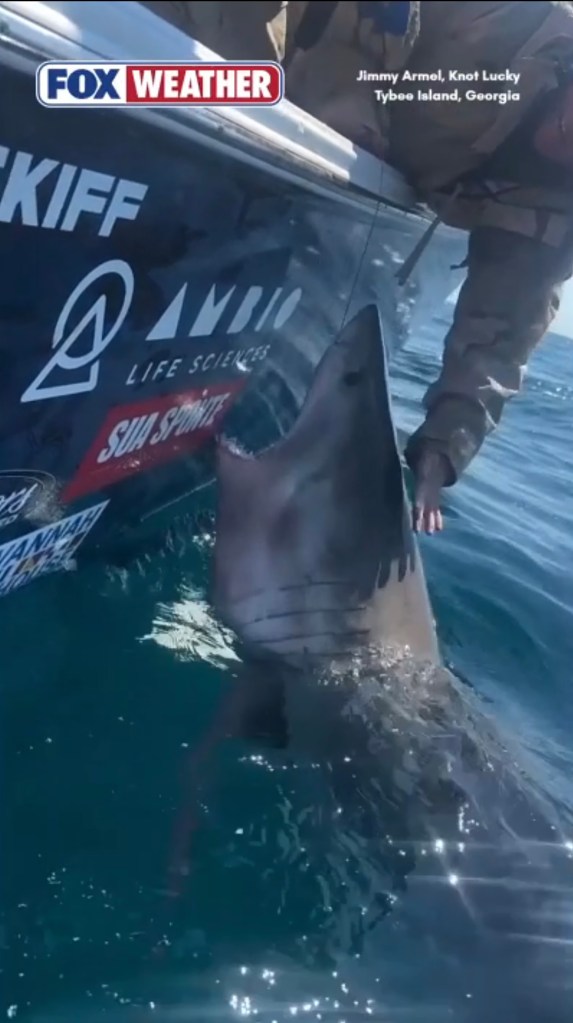
The nonprofit continues its work as the seasonal shark migration brings more animals within reach of its tagging operations off the Georgia coast.