

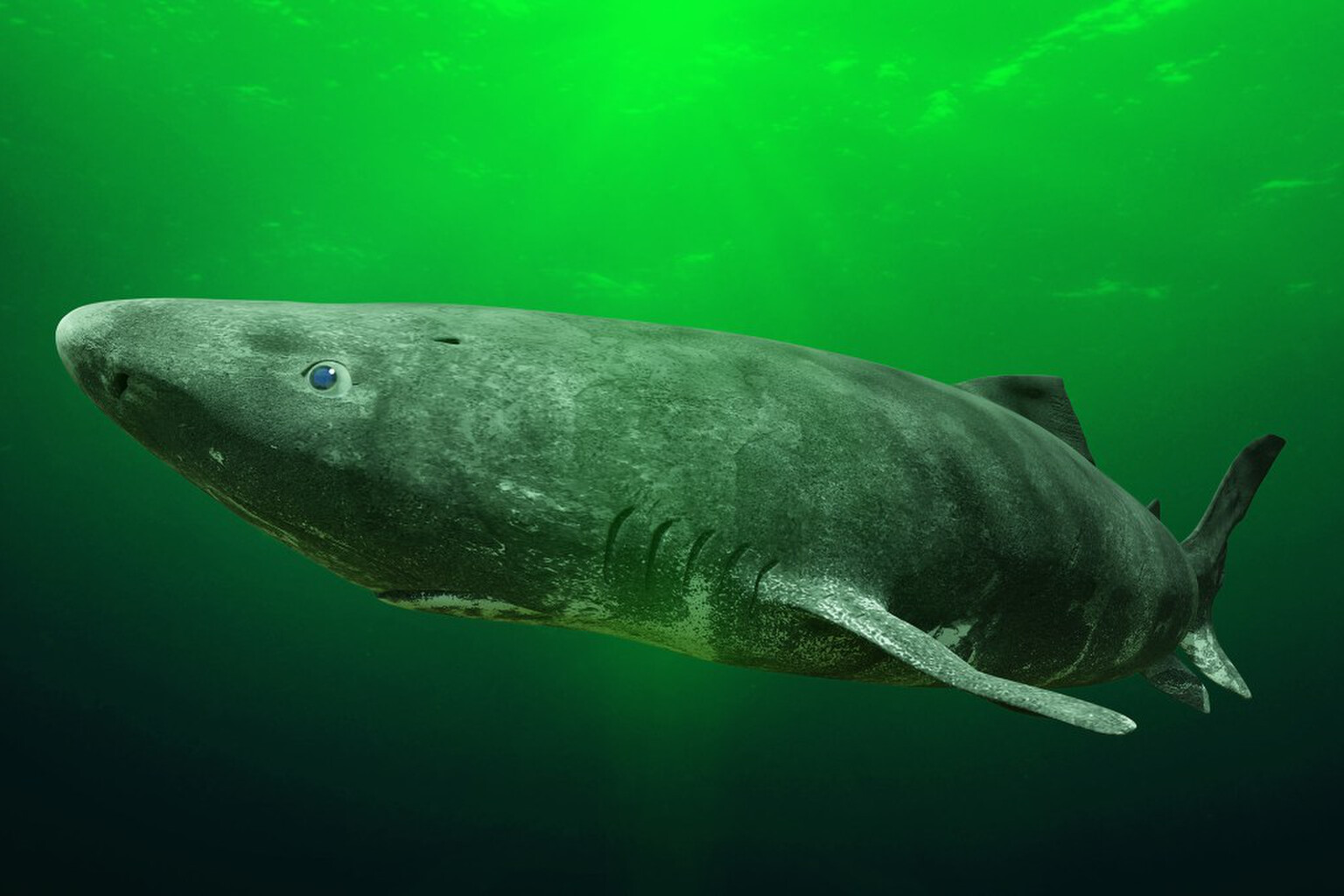
A Greenland municipality’s plan to pay fishermen $45 for each Greenland shark heart they collected has been halted after sparking alarm among marine scientists and conservation groups.
The Avannaata municipality on Greenland’s west coast approved the mass culling in February, aiming to eliminate roughly 1,000 of the deep-water predators. Local leaders acted on complaints from fishermen who said the slow-moving, 20-foot sharks were destroying their livelihoods by tangling in lines and devouring bait.
“This year I’ve lost around 6,000 hooks in total. Sometimes we lose 30,000 Danish krone a day,” fisherman Henrik Jensen, 27, said. Those losses translate to about $4,500 in gear vanishing in a single day.
Lars Erik Gabrielsen, the Avannaata mayor, defended the measure as necessary for survival in a region where fishing traditions stretch back generations. “We need to safeguard the income of fishers and the catch so that we can continue to eat the foods that we have relied on for generations,” he said.
The Greenland shark holds a remarkable place in the animal kingdom. These lumbering Arctic dwellers can live more than 400 years, making them the longest-living vertebrates on Earth. They do not reach sexual maturity until approximately age 150, and researchers believe their gestation period extends beyond a decade. Those biological realities mean any population collapse would require centuries, not decades, to reverse.
Nick Dulvy, a marine conservationist at Simon Fraser University, warned of exactly that outcome. “They are probably — biologically — the most sensitive species in the ocean to overfishing,” he said.
The International Union for Conservation of Nature added to those concerns in 2020 when it listed Greenland sharks as “vulnerable,” a classification indicating they face a high risk of extinction in the wild.
The species inhabits cold coastal waters circling Greenland, northern Canada and Europe, with individuals traveling roughly 1,240 miles annually. That mobility became a central argument against the cull from Oceans North Kalaallit Nunaat (ONKN), a Greenland-based marine conservation organization. The group contended that killing sharks locally would prove futile because new animals would simply migrate into the cleared waters.
“Initiating a bounty system of this magnitude is a risky path,” ONKN said of the proposal. The organization cautioned that while the plan was blocked this time, it could resurface.
Jenseeraq Poulsen, ONKN’s director, framed the shark as a symptom rather than the disease itself. “The shark is the visible, tangible version of a problem whose real drivers are structural,” he said. Poulsen pointed to overfishing and an oversupply of boats across Greenland’s fisheries as the underlying issues that the cull would have failed to address.
The $45-per-heart bounty represented an unusually direct approach to human-wildlife conflict, one that pitted immediate economic survival against the preservation of a species whose life span exceeds that of any nation-state on Earth.