

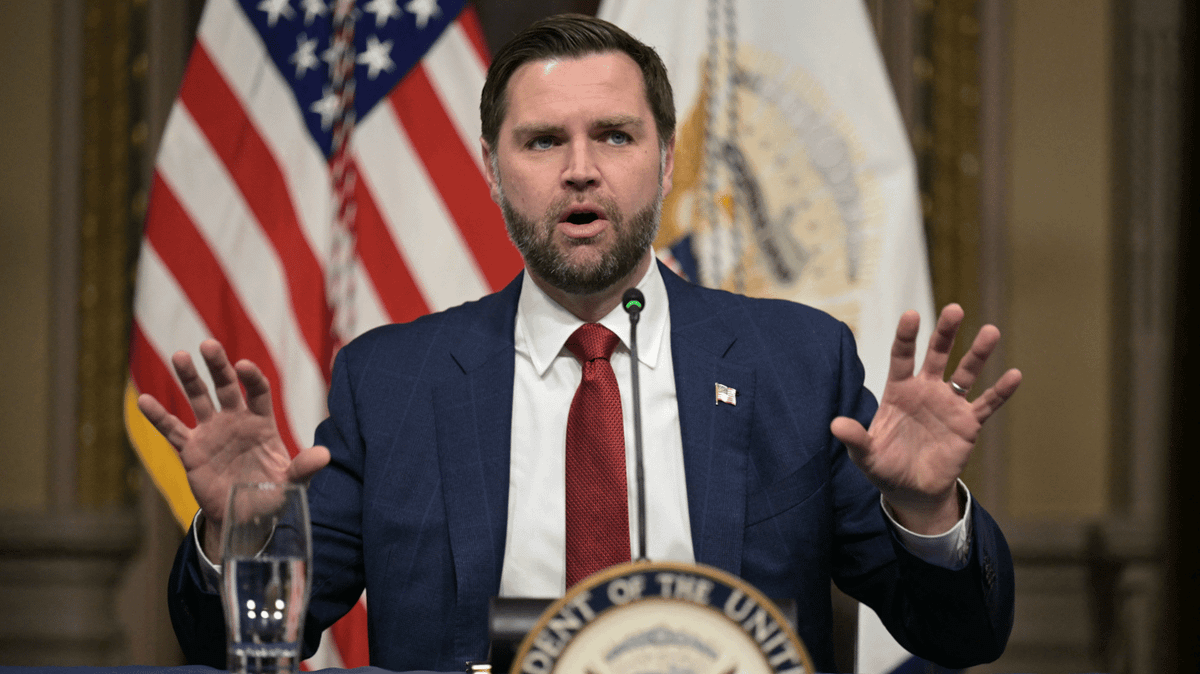
Harvard scientist, Avi Loeb, has weighed in on Vice President JD Vance’s recent remarks about UFOs, after he suggested the beings involved are “demons”.
Vance discussed the topic while appearing on The Benny Show with host Benny Johnson, telling him he’s been particularly fixated on the mystery surrounding the government’s UFO material.
When Johnson asked whether he planned to “release the UFO files”, Vance replied: “We’re working on it… I will get to the bottom of the UFO files.
“I have not been able to spend enough time on this to understand it… I’m obsessed with this, I’ve had a couple of times where I’ve been like, we’re going to Area 51, we’re going out to New Mexico, we’re going to get to the bottom of this.
“… I don’t think they are aliens, I think they’re demons anyway.
“I think that celestial beings who fly around to do weird things to people. I think that the desire to describe everything celestial, as otherworldly, to describe it as aliens…
“When I hear about extra natural phenomenon, that’s where I go to is the Christian understanding that there’s a lot of good out there, but there’s also some evil out there. I think that one of the devil’s great tricks is to convince people he never existed.”
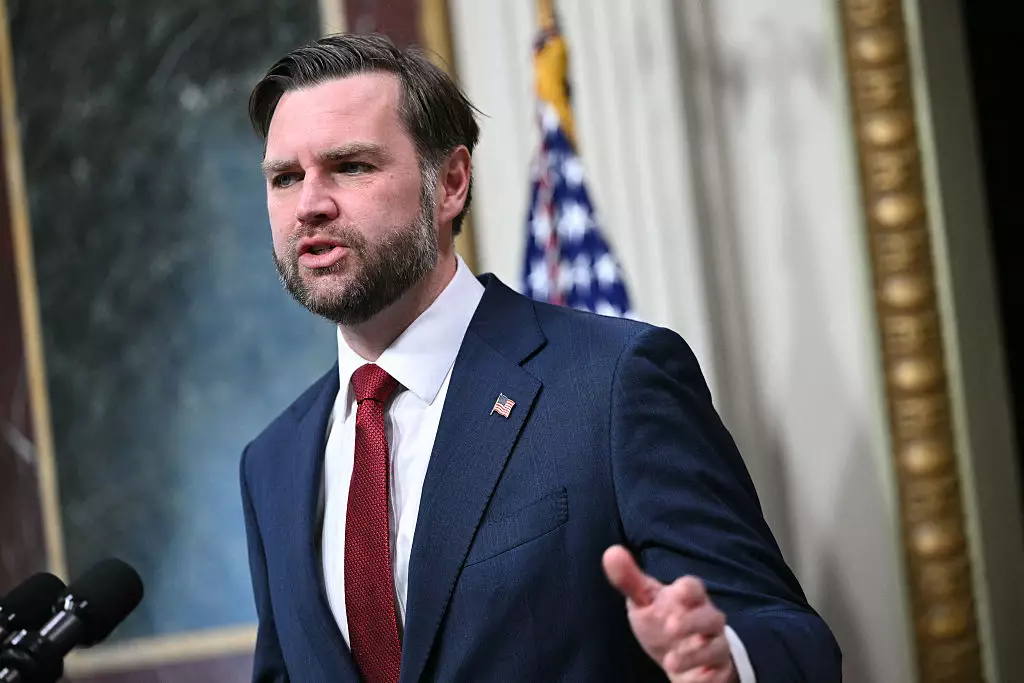
The comments have since drawn responses from figures in the scientific community, including Harvard theoretical physicist Avi Loeb. In an interview with NewsNation’s Jesse Weber, Loeb was asked: “Could his demon theory be shaped not just by his personal beliefs, by some things he’s seen, something he’s heard? What do you think?”
Loeb responded by pointing to the long history of overlap—and tension—between faith and scientific inquiry, saying: “This is not new in the context of science and religion. We, for example, now know – scientifically speaking, that the universe started in a Big Bang. We don’t know what happened before that. And that is a kind of theory that appeared in Genesis and has been the foundation for the Judeo-Christian religion in particular. And so, I don’t see necessarily a conflict between religious beliefs and science as long as everyone agrees that we should attend to the evidence. That should guide us.”

He also stressed that any serious conclusions about possible extraterrestrial or unexplained activity require stronger evidence and better measurements.
“Let’s figure out what these things are. And my guess is that in situations where there is a lot of uncertainty, for example, if the U.S. government cannot figure out what these objects are, then, of course, people have their own speculations or theories or they connect it to some past traditional thoughts,” he added.
“I have no issue with that as long as everyone agrees that we should get more data and figure these things out.”
Loeb went on to argue that humanity should remain open to the possibility of learning from advanced developments elsewhere, adding: “Why not be optimistic? We can learn from new technologies. We only had science and technology for a hundred years, and most stars formed billions of years before the Sun.”