


The Trump administration has launched the new year with a set of revised dietary guidelines for the American public, but these changes have raised concerns among experts who question their health benefits.
On January 7, Health Secretary Robert F. Kennedy Jr introduced the updated healthy eating guidelines as part of the ‘Make America Healthy Again’ initiative.
The revised guidelines recommend prioritizing red meat, cheese, vegetables, and fruits, while also including saturated fats, which were previously considered unhealthy.
This comprehensive revision of dietary advice significantly diverges from the guidelines that have been in place since 2011, which saw the introduction of the circular MyPlate system. MyPlate replaced the 1992 Food Guide Pyramid, which grouped foods into five categories.
Previously, the foundation of a healthy diet was comprised mostly of grains, followed by vegetables and fruits, with smaller portions of dairy and protein, and minimal fats, oils, and sweets.
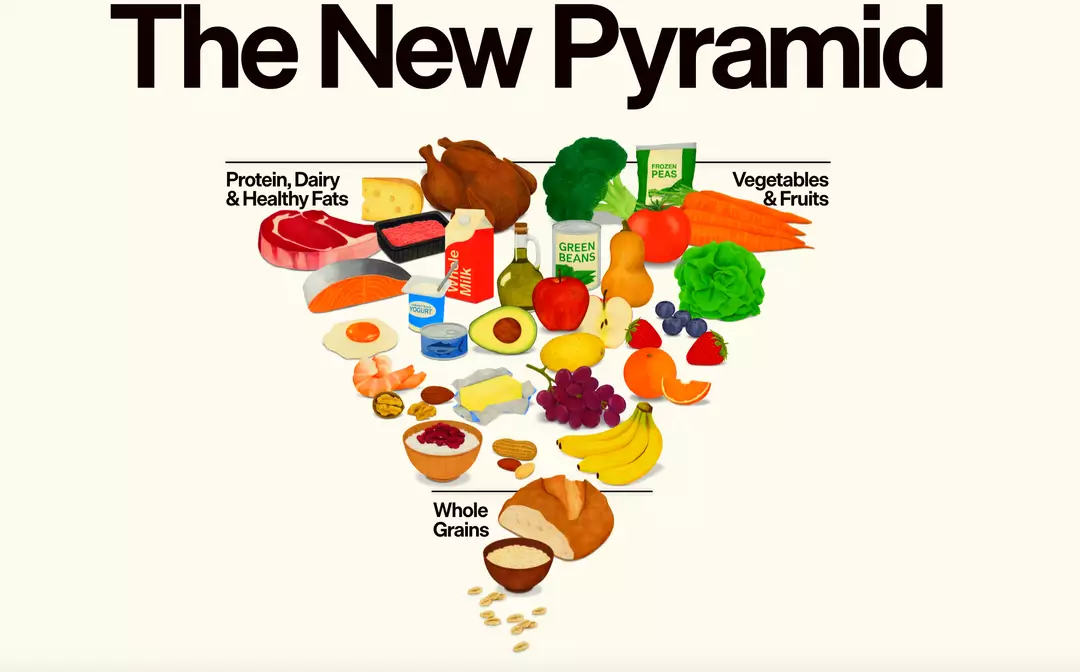
However, Kennedy’s revised model redefines these priorities, elevating protein, dairy, and healthy fats alongside vegetables and fruits, while whole grains are reduced to a minor component of the diet.
The changes aim to encourage Americans to increase their protein consumption, with recommendations now suggesting 1.2-1.6 grams per kilogram of body weight daily, up from the previous 0.8g/kg minimum.
This new dietary approach also aims to reduce the consumption of ultra-processed foods, encouraging more natural and minimally processed choices. The message is essentially to “Eat real food.”
At a press conference, Kennedy stated, “Protein and healthy fats are essential and were wrongly discouraged in prior dietary guidelines. We are ending the war on saturated fats.”
Previously, USDA guidelines advised replacing saturated fats with unsaturated fats to reduce LDL cholesterol and the risk of heart disease and stroke. This is no longer the case under the new guidelines.
This policy shift has alarmed many health experts, who argue it contradicts decades of research supporting previous dietary advice.

Christopher Gardner, a nutrition expert at Stanford University, expressed his concerns to NPR, saying, “I’m very disappointed in the new pyramid that features red meat and saturated fat sources at the very top, as if that’s something to prioritize. It does go against decades and decades of evidence and research.”
Similarly, increasing saturated fat intake contradicts advice from the American Heart Association and American Stroke Association, which have cautioned, “Diets high in saturated fat, trans fat, and cholesterol can raise blood cholesterol levels. Those high in sodium (salt) can increase blood pressure. And those with high calories can lead to obesity.”
These factors are preventable risks for heart disease and stroke. Previously, these organizations recommended limiting saturated fat intake to 6% of daily calories, but the new guidelines increase this limit to 10%.
Kennedy also suggested using olive oil, beef tallow, and butter instead of ‘seed oils,’ which he claims are a leading cause of obesity in the US.
However, a 2012 study found that high saturated fat intake may actually contribute to obesity by being calorie-dense and promoting weight gain through inflammation, altering gut microbiota, and stimulating fat storage.
The updated guidelines also modify alcohol recommendations, removing specific daily limits for men and women. Previously, the guidance suggested one drink per day for women and two for men, but now advises the more general: “Consume less alcohol for better health.”