

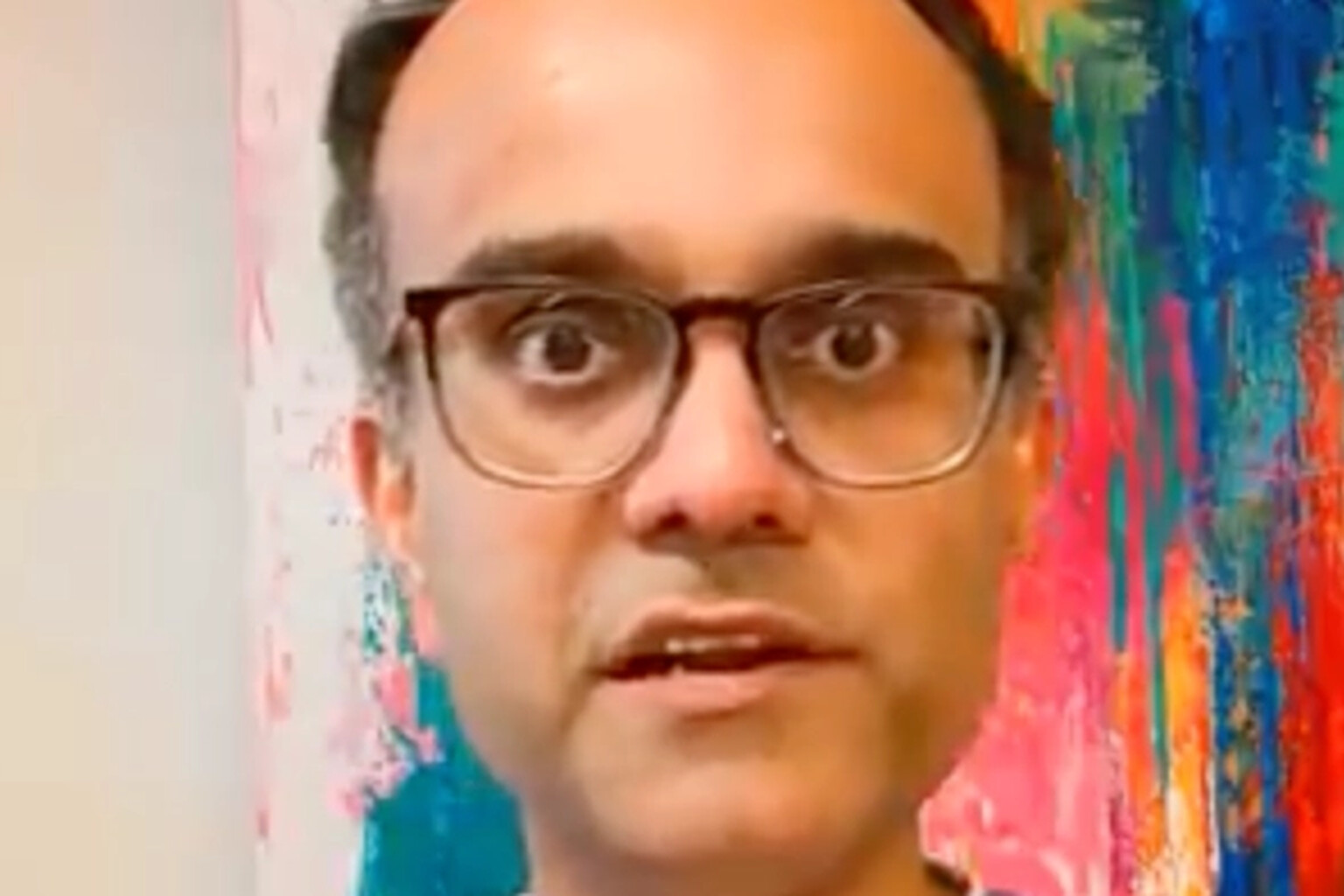
Neal K. Shah has posted a 60-second home screening test for early dementia risk on YouTube.
Shah, 29, who calls himself America’s Chief Elder Officer, is the CEO of CareYaya, a platform that matches families with college students in healthcare fields for in-home elder care. The Johns Hopkins-backed expert based his video on National Institute on Aging research tying early Alzheimer’s signs to subtle speech pattern changes rather than memory lapses.
Those speech shifts include longer pauses before answering, swapping specific words for vague placeholders like “thing” or “that stuff,” and losing track of a sentence midway through only to restart it, Shah explained in the video. He stressed that these patterns matter most when they worsen progressively, not when they appear as lifelong habits.
The exercise Shah demonstrated is already used by professional clinicians. “Ask your spouse or aging parent who you’re concerned about to name as many animals as they can in 60 seconds,” he instructed viewers. Scoring fewer than 15 animals in that minute is clinically suggestive of potential dementia risk, while 15 or more falls within normal range. “All it takes is one minute and it costs nothing,” Shah added, urging anyone with concerning results to consult a doctor.

The video drew mixed reactions in comments, with some viewers immediately identifying with the described symptoms. “Been calling things thingamajig since childhood,” one person joked. Another wrote: “I have lost my keys and forgotten names since I was a kid.” A third viewer defended their own deliberate pause habit, noting, “I pause long enough before answering any questions. That saves me a lot of trouble. It gives me time to think about the consequences and filter out any statements that can be misconstrued,” They added: “Not all long pauses are signs of dementia.”
Other commenters praised the animal-naming test as less humiliating than standard clinical assessments. “An excellent cognitive early exam that reserves the dignity of an aging person as opposed to drawing clocks and given 5 random words to remember and recall minutes later,” one user wrote. That comparison referenced the clock-drawing test, a common medical screening where patients sketch a clock with hands set to a specific time, scored on number sequence, placement, and hand position. According to medical references, that test simultaneously measures attention, hearing comprehension, visual memory, and motor skills.
Shah’s own attempt at the animal test yielded 22 names in 60 seconds, which he noted as a personal benchmark. The video arrives as families gather for the holiday season, a period when adult children often spend extended time with aging parents and may notice cognitive changes that phone calls obscure.