

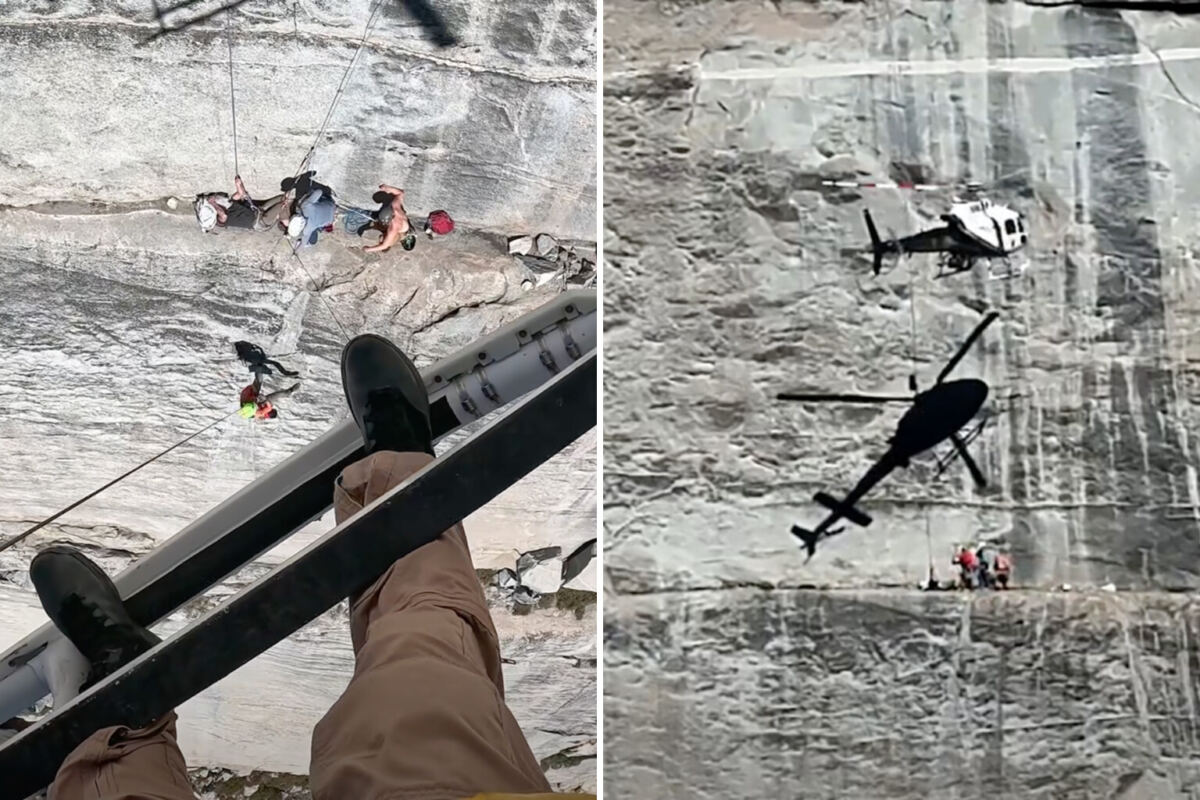
A helicopter crew pulled an injured rock climber from a 700-foot California cliff face after a fall left them stranded on the notorious formation known as “Power Dome.”
The rescue unfolded around 12:45 p.m. Friday at Courtright Reservoir, a remote alpine destination east of Fresno in the Sierra Nevada foothills. The climber, whose name and condition have not been released, required medical assistance following the fall on the massive granite dome.
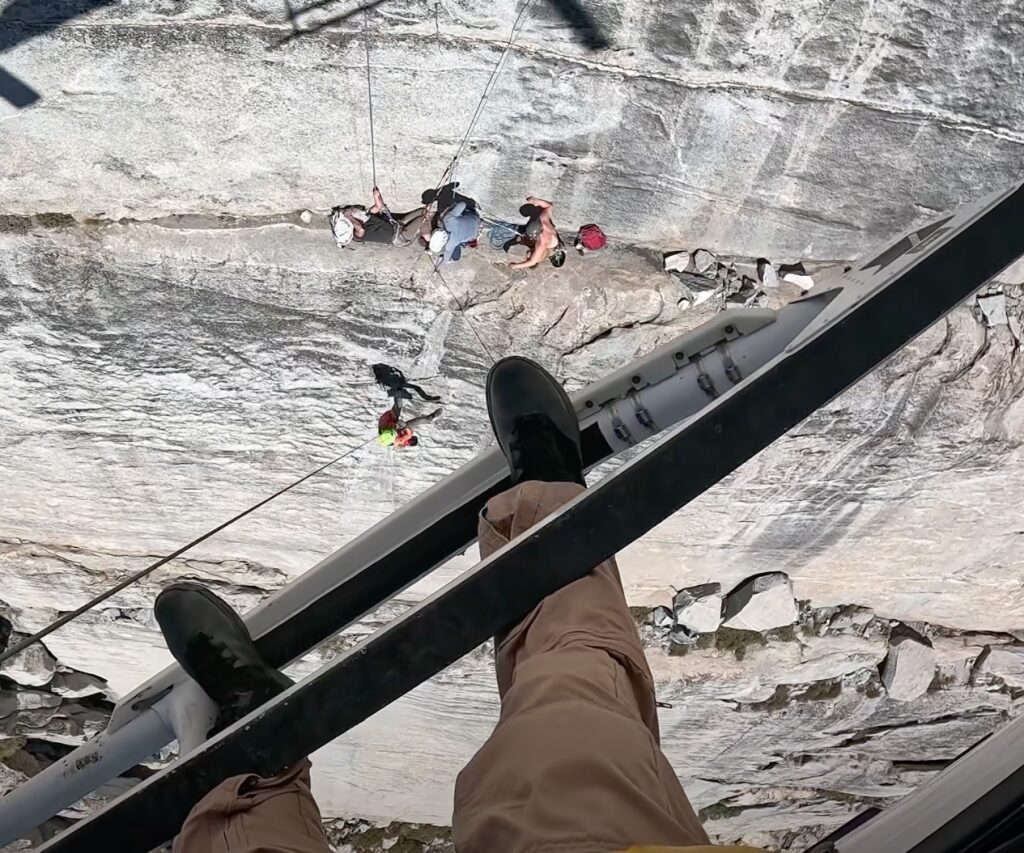
Rather than execute a complex 500-foot rope rappel, crews determined a helicopter hoist offered the safest extraction method, according to the Shaver Lake Fire Department. The decision likely saved hours of risky technical work on an exposed vertical face where a second accident could have compounded the emergency.
A CHP Coastal Division Air Operations helicopter based in Paso Robles made the roughly 90-mile flight northeast with a two-person crew. A rescue technician from the Fresno County Sheriff’s Office rode aboard to manage the aerial extraction.
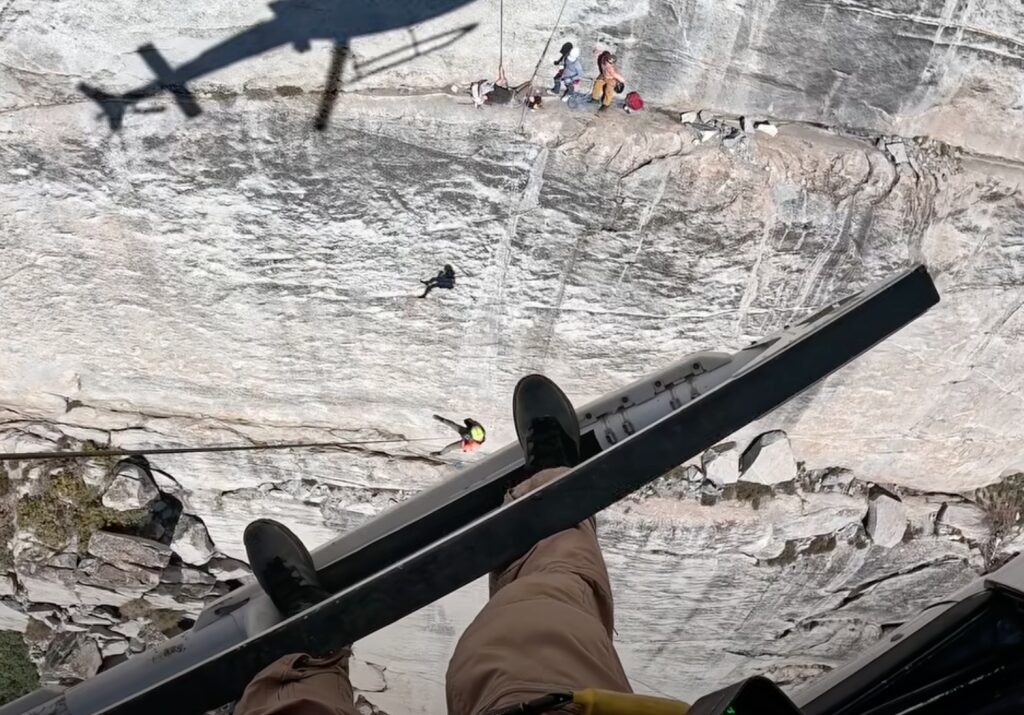
The operation demanded coordination across six separate agencies. The Fresno County Search and Rescue Mountaineering Team contributed technical climbing expertise, while CHP’s Central Division Air Operations provided additional aviation support. Fresno Cal Fire, the Fresno County Sheriff’s Office, and the U.S. Forest Service’s Sierra National Forest all had personnel on scene or supporting logistics.
Power Dome rises above Courtright Reservoir, a man-made lake popular with climbers drawn to its concentration of granite domes and faces. The formation’s smooth, steep characteristics have made it a destination for experienced climbers, though the same features complicate rescues when accidents occur far from standard access routes.
The climber reached a waiting ambulance following the successful hoist and was transported for medical care. Authorities have not disclosed the nature or severity of their injuries, nor whether they were climbing alone or with partners who summoned help.
Friday’s rescue marked the latest in a series of high-angle extractions California agencies have performed in the state’s increasingly popular climbing areas. The involvement of both CHP Coastal and Central Division air units underscored the limited helicopter resources available across vast rural terrain, where response times can stretch even in life-threatening circumstances.
The Shaver Lake Fire Department noted that the 500-foot rope rappel alternative would have required extensive setup time and exposed additional rescuers to the same hazardous conditions that injured the climber. Helicopter hoists, while carrying their own risks including rotor wash and limited hover stability near rock faces, have become the preferred option for many Sierra Nevada climbing rescues when weather and aircraft availability permit.