

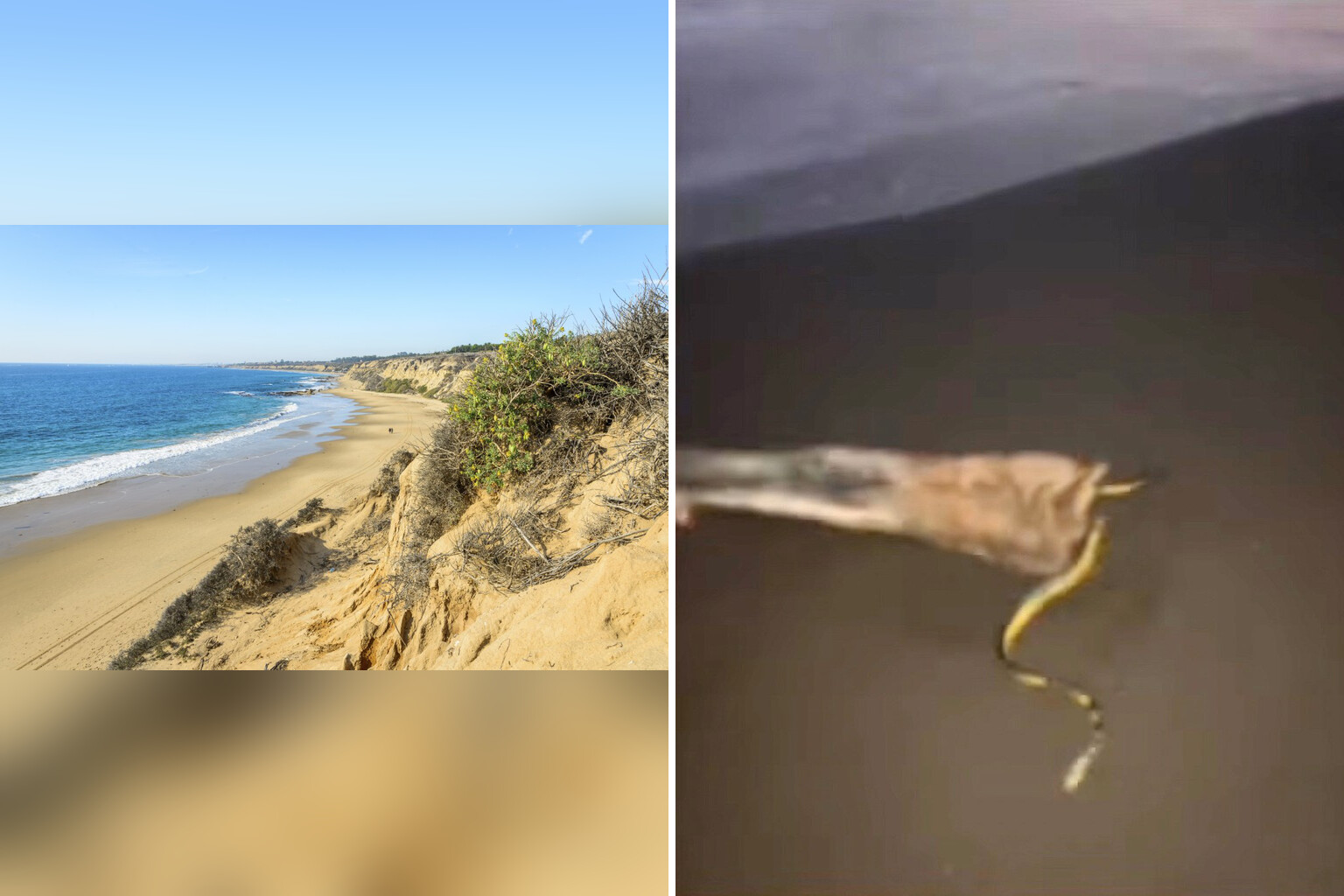
A beachgoer in Orange County has spoken out after discovering she had handled one of the most venomous sea snakes in the world.
Jackie Aguilar, who was walking with her family along Crystal Cove State Beach on the night of September 11, initially mistook the creature for a harmless reptile. Video of the encounter shows her using a palm frond to pick up the snake, which she later identified as a yellow-bellied sea snake through her own research.
Aguilar’s casual approach turned to alarm once she understood what she had encountered. “What? A venomous sea snake on the beach!” she said LA. “They’re all telling me like it’s one of the most poisonous ones. And then I started researching it and I found out it was like the yellow belly one,” she added.
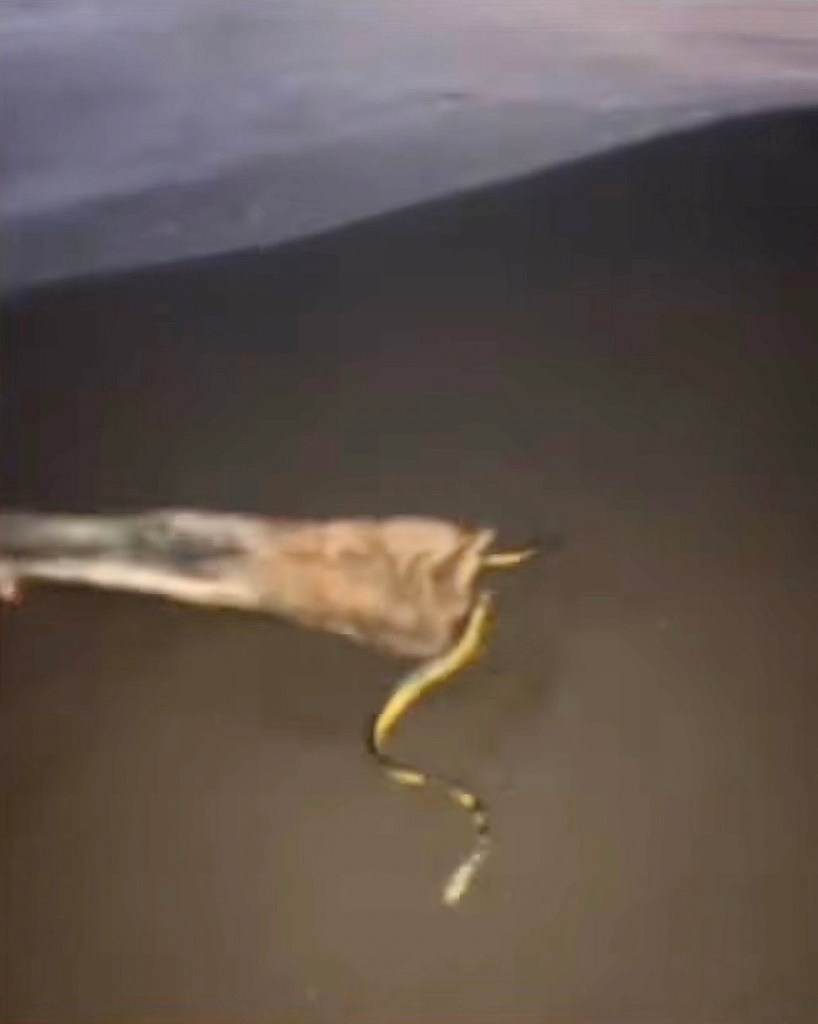
The species Aguilar encountered carries enough venom to kill a human, according to certified marine naturalist Capt. Chad Steffen, who identified the animal from footage. “They are very venomous, this particular sea snake, but they’re also very clumsy and sluggish out of the water,” he said. “They’re not inclined to bite at all. They’re not aggressive.”
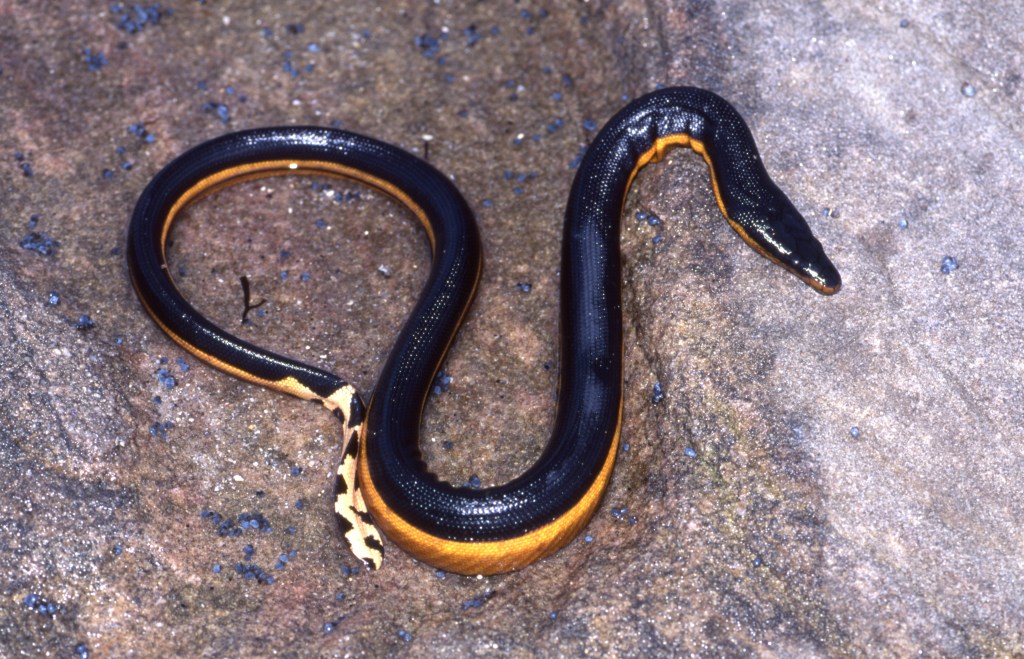
The yellow-bellied sea snake is fully aquatic and rarely comes ashore. It has a distinctive two-tone appearance, with a dark brown or black back and bright yellow underbelly, along with a flattened, paddle-shaped tail adapted for swimming.
These snakes are typically found much farther south, in tropical waters of the Pacific and Indian Ocean. Their appearance in Southern California represents a significant geographical anomaly that experts have linked to shifting ocean conditions.
Steffen pointed to warming temperatures as the likely cause of this unusual visitation. “We’re having a very warm water year this year,” he observed. “A lot of interesting things this year.”
The warmer conditions are associated with El Niño, a natural climate phenomenon marked by higher-than-average ocean surface temperatures in the central and eastern tropical Pacific. This pattern has previously drawn unusual marine life toward the California coast.
The last confirmed sighting of a yellow-bellied sea snake in the region came during the 2018-2019 El Niño period, marking a nearly decade-long gap between appearances. Aguilar’s encounter represents the first documented instance since that previous warm-water event.
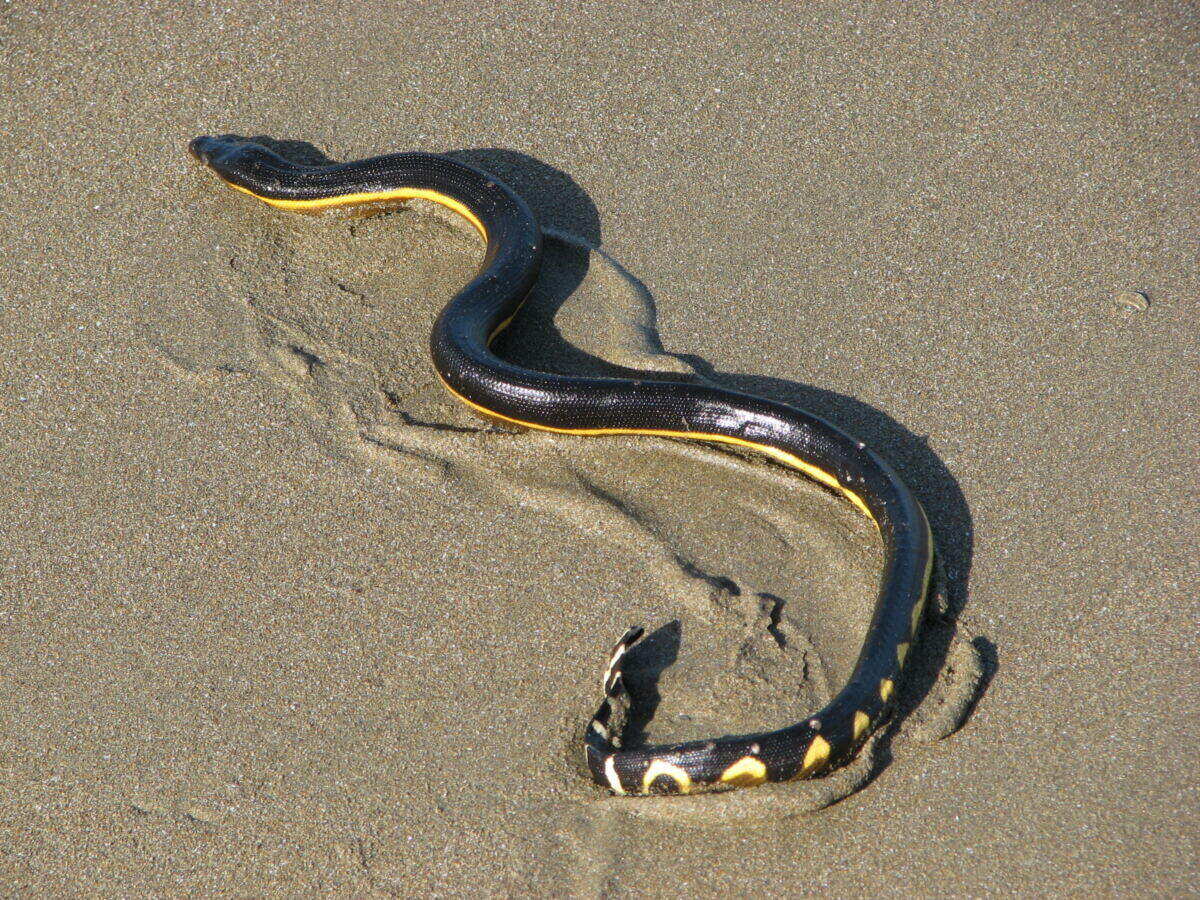
Despite their lethal potential, the snakes pose limited danger to humans who observe them from a distance. Their physical limitations on land make them slow and uncoordinated, and they lack aggressive tendencies toward people.
Aguilar’s experience serves as a cautionary example of how a moment of curiosity can nearly turn dangerous when unfamiliar wildlife is involved. Her decision to research the creature after the fact, rather than before handling it, highlights the risks of casual interaction with unknown species in coastal environments.