

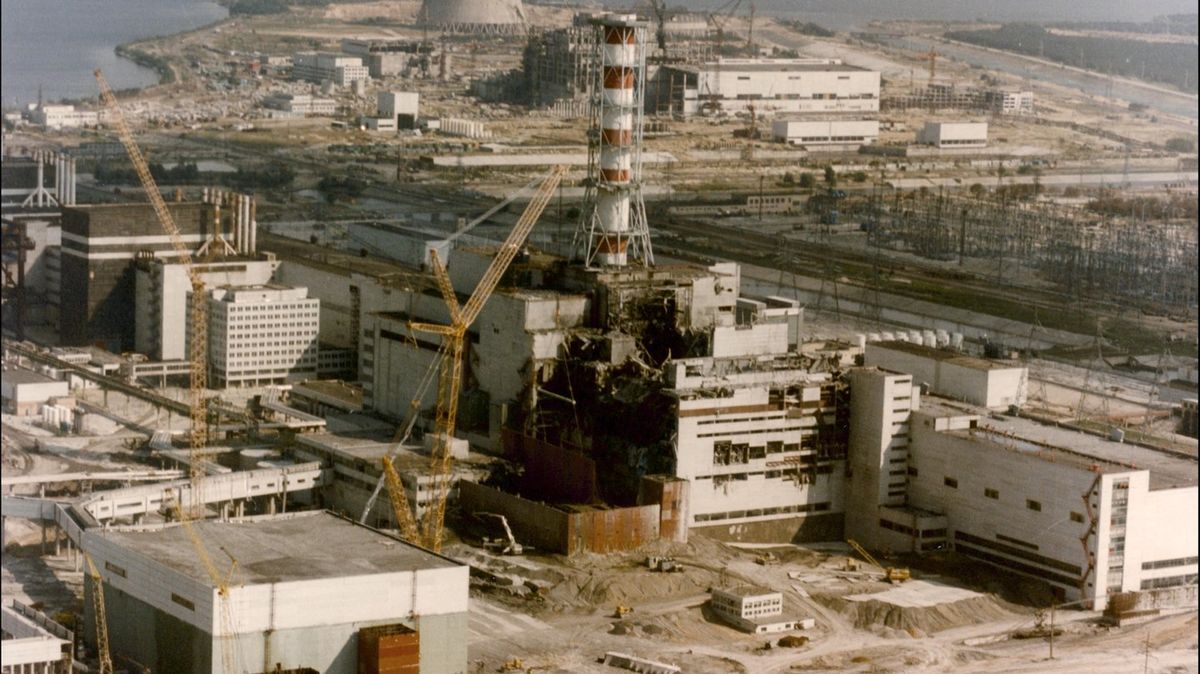
Four decades ago, a single night at a nuclear plant triggered one of the worst disasters the modern world has ever faced.
On April 26, 1986, an ill-fated safety test at Reactor No. 4 of the Chernobyl Nuclear Power Plant in what is now Ukraine spiralled out of control. The explosion and fire pushed radionuclides high into the atmosphere, with contamination carried across large parts of Europe and fear spreading just as fast.
Roughly 30 people were killed in the immediate aftermath, while many more deaths have since been linked to radiation exposure over the years that followed.
For many, Chernobyl slowly receded from public attention. That changed dramatically in 2019, when HBO and Sky released the five-part miniseries Chernobyl, created by Craig Mazin.
Reviewers praised the show for turning an immense tragedy into gripping television, and viewers responded in kind. Visits to the Chernobyl Exclusion Zone, already rising before the series aired, jumped further as people sought to witness the site firsthand.
Yet a far more unnerving piece of Chernobyl lore circulated online long before the drama reignited interest—and it doesn’t rely on scripts or reenactments.
In 1989, Alexander Kupny worked at Reactor No. 3 as a health physics technician. Years later, amid a period when trespassing at the site had become more common, he and a friend, Sergei Koshelev, made a decision few would consider: they aimed to get inside Reactor No. 4 itself.
They weren’t reckless about it. They wore the most protective equipment they could obtain—and they recorded their journey.
At first, the video could be mistaken for exploration footage from an abandoned industrial building: stained surfaces, damaged machinery, heavy shadows. Then the image begins to shimmer with a persistent speckled distortion.
That flicker isn’t a camera glitch or a corrupted file.
It’s radiation striking the camera sensor in real time—tiny intrusions on the image created by an environment so hazardous that what can’t be seen by human eyes becomes visible as noise.
When the clip later resurfaced on Reddit, it drew a flood of reactions from people transfixed by what they were seeing.
“Every time the camera goes over something dark, the invisible death becomes visible with all the little speckles showing on the camera,” one user wrote. “That is the radiation interacting with the sensor.”
“Crazy how it affects the camera sensor,” said another.
A third comment captured the dread behind the mundane visuals: “You basically just see some dirty factory basement, until you realise you’re looking at one of the most hazardous places on earth and its invisible death.”
Kupny and Koshelev returned from the venture.
But many of the people who laboured in and around the ruined reactor in 1986—often for months—were not as fortunate.
In the first hours after the blast, Soviet authorities tried to contain the story as tightly as they tried to contain the reactor—silence, they believed, would protect their international standing.
For more than 40 hours, no official acknowledgment was made. When a statement finally arrived, it downplayed the scale of the catastrophe, reporting only two deaths and the formation of a committee—far from the true severity of the event.
Meanwhile, the radioactive plume moved northwest into Belarus and expanded across Europe. Elevated radiation readings appeared hundreds of miles away within hours.
Later, plant chief scientist Valery Legasov told international investigators the disaster resulted from human error—an explanation that, conveniently, sidelined the fact that the reactor design had more than 30 known flaws.
Legasov died by suicide on the eve of the disaster’s second anniversary, reportedly devastated that officials would not act on his warnings about safety and accountability.
With the reactor still dangerously active and radiation levels extreme, the priority became brutally simple: entomb what was left.
In a feat of speed carried out at tremendous human cost, engineers and crews built a massive casing of steel and concrete around the destroyed unit.
The structure took 206 days to complete and used more than 400,000 cubic metres of concrete. It became known as the sarcophagus.
It was never intended as a forever solution. By 1988, experts were already warning the enclosure might last only 20 to 30 years.
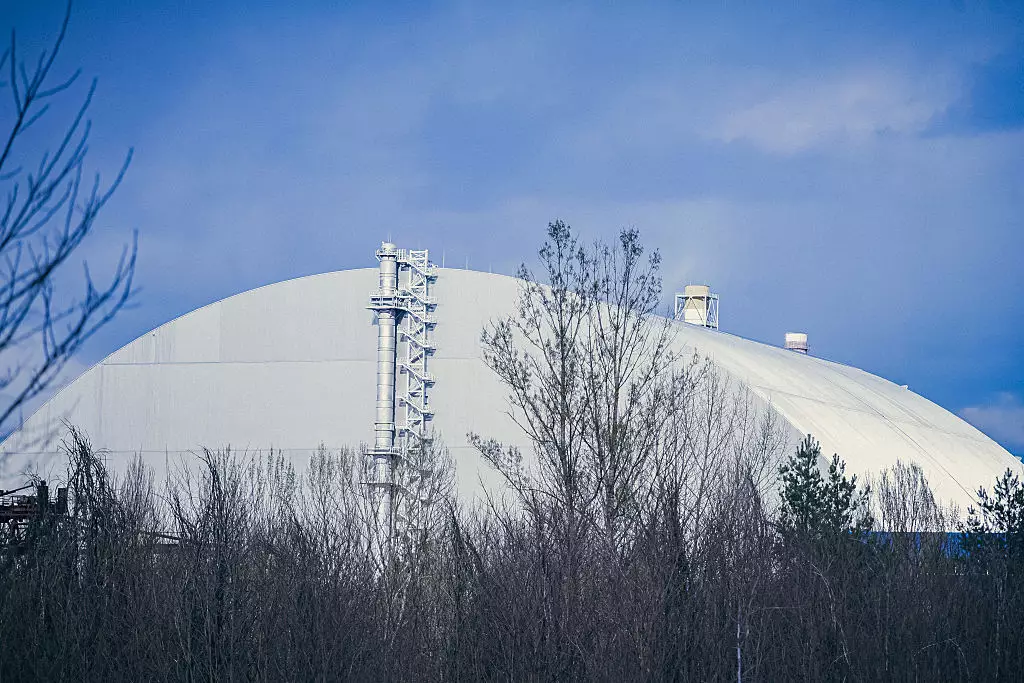
Eventually, a long-term replacement was constructed: the New Safe Confinement, a colossal arch described as roughly comparable in scale to the Stade de France. In November 2016, it was slid into place over the original shelter at a cost of $1.6 billion, with an intended lifespan of 100 years.
Now, that newer barrier faces serious concern. In February 2025, a Russian drone strike pierced the dome’s inner and outer layers. Greenpeace has warned that repairs are not yet fully complete and that a failure could send four tonnes of highly radioactive dust into the air.
When reactor no.4 detonated during the failed steam test, the initial release of radiation was on a scale that stunned the scientific world.
Contamination spread widely, with traces detected well beyond Ukraine’s borders—including as far away as Sweden.
The area where reactor no.4 had stood became a poisoned ruin, and within that ruin formed one of the most infamous remnants of the entire disaster. Here’s how it happened.
As the core overheated, uranium fuel melted. The blast opened the reactor and drove heat and debris downward, where molten fuel and superheated materials forced their way through the concrete into lower levels. There, the mass cooled and hardened into a grotesque solid.
Researchers later gave it a name that matched its appearance: the “Elephant’s Foot,” for its bulky, wrinkled look.
The formation was found months after the catastrophe by volunteers who entered the damaged reactor. At the time, it remained extremely hot and was estimated to weigh about 2.2 tons.
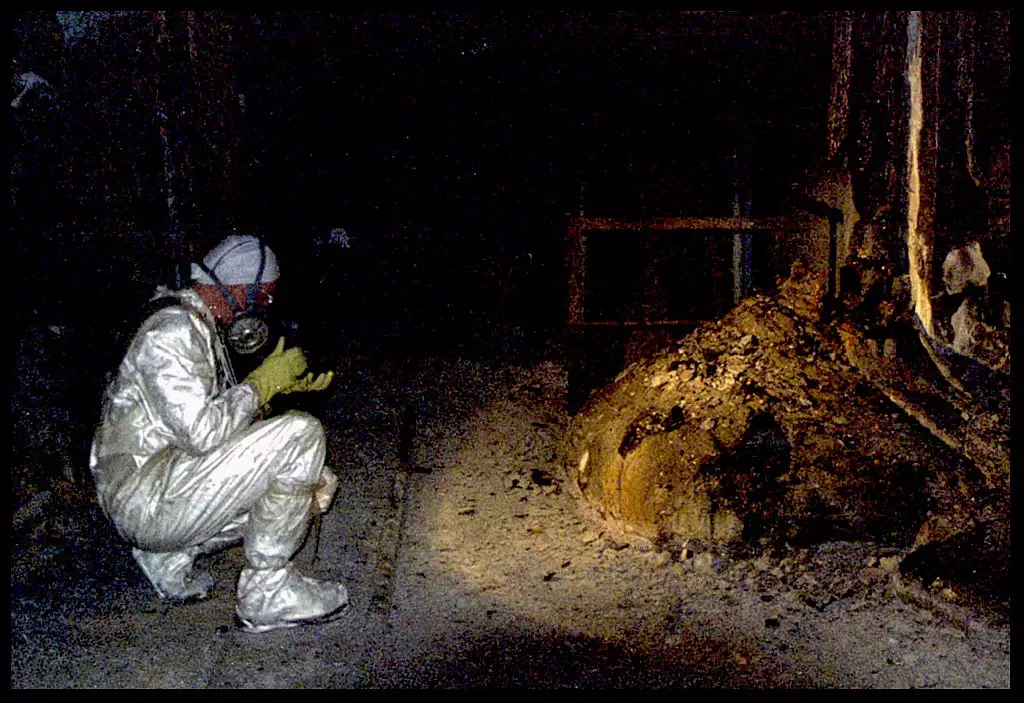
It was so hard and compact that scientists reportedly used a Kalashnikov assault rifle to break off fragments for testing.
Measurements at the time suggested it emitted close to 10,000 roentgens per hour—often compared to the radiation of about four and a half million chest X-rays in a single hour.
Nautilus magazine described the toll of exposure in stark terms: after 30 seconds near it, cells would begin haemorrhaging; after four minutes, severe vomiting and diarrhoea would set in.
It is also believed that spending five minutes beside the mass could leave a person with only two days to live.
According to IFLScience, its intensity has reduced in the decades since due to natural radioactive decay, which eventually made limited visits by scientists, clean-up crews, and photographers possible under controlled conditions.
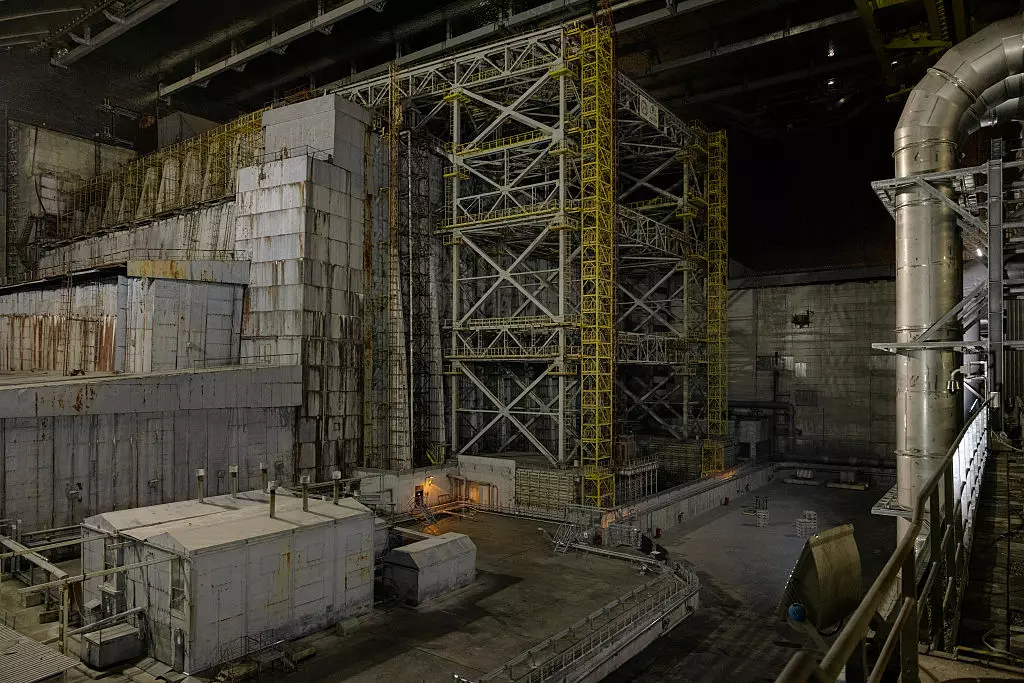
Exactly how much radiation it is producing today isn’t publicly certain, in part because it remains shielded inside the Shelter Object enclosing the remains of reactor no.4.