

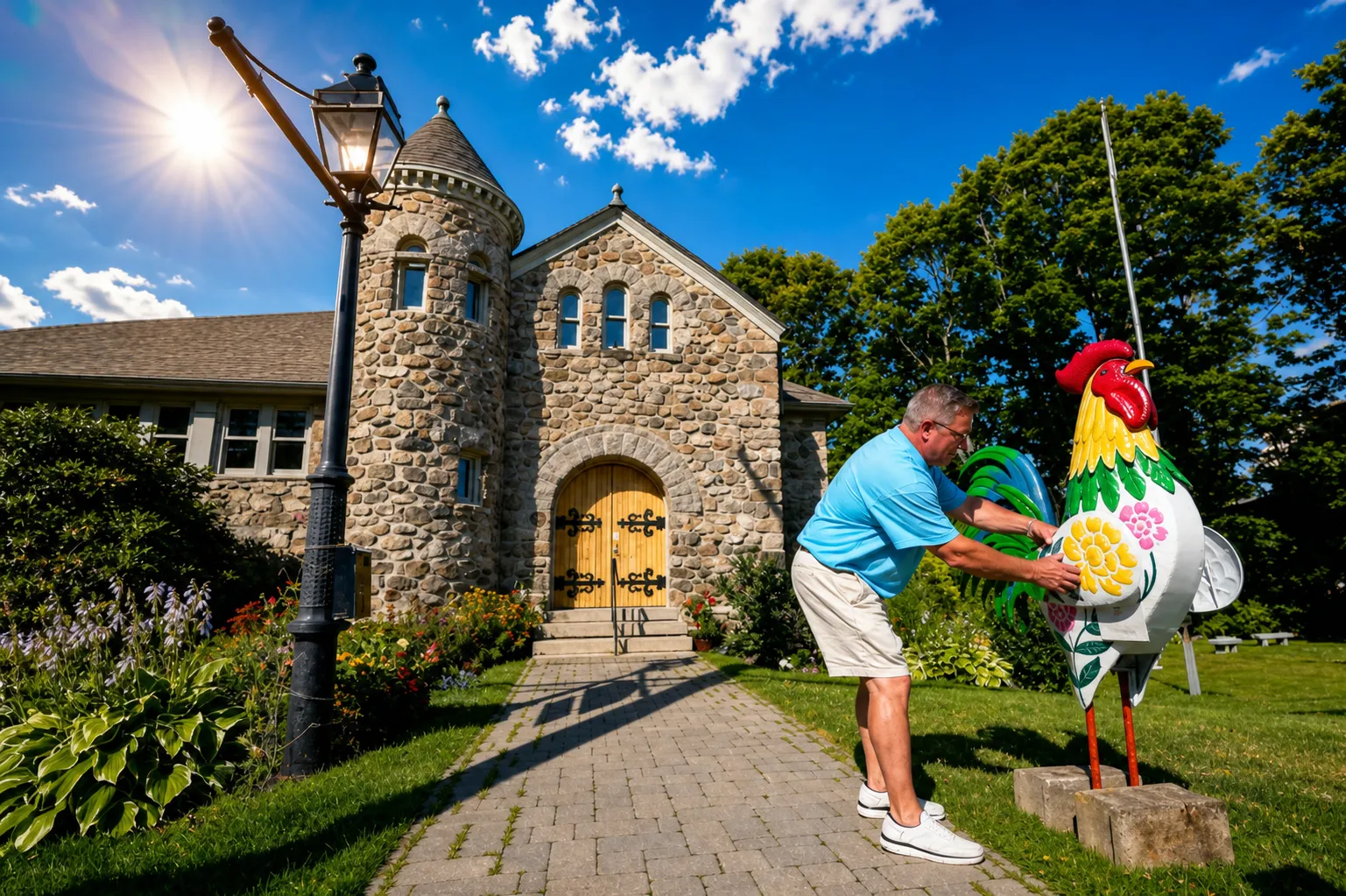
Giant metal roosters have become symbols of autism acceptance in a small Maine community following a zoning dispute that has captured national attention and sparked support from as far away as New Zealand.
The roosters belong to David and Sara LeBlanc of Ogunquit, Maine, owners of The Omelette Factory restaurant attached to their home. They displayed the roughly six-foot-tall ornaments on their lawn to comfort their adopted daughter Pyper, a six-year-old with autism who developed a strong attachment to the metal birds. But in April, code enforcement officer Tyler McOsker issued the couple a $450 fine, ordering them to remove what the town deemed impermissible advertising in violation of local sign ordinances.
The LeBlancs initially resisted, insisting the roosters served a therapeutic purpose for their daughter, not a commercial one. “Roosters don’t lay eggs,” David LeBlanc said when explaining his defiant stance. Eventually, the family reached an agreement with the town allowing them to keep two roosters, though the arrangement requires the birds to be part of a railing, and the couple has faced an additional $500 fine for noncompliance.
The dispute centers on whether the roosters constitute signage. McOsker pointed to a May 2025 newspaper article describing the roosters as a “fun and unconventional way to announce that The Omelette Factory is officially open for business.” LeBlanc contended the reporter misinterpreted a customer’s joke about the birds functioning as an “Open” sign. The couple emphasized they purchased the sculptures for their home, not their business, and noted that the roosters sit in front of their personal residence, though they can be seen from the restaurant’s outdoor seating area.
The roosters hold genuine importance for Pyper. The LeBlancs adopted her from foster care three years ago, and she arrived with a stuffed rooster, which sparked her fascination with the birds. When her father took her to a Tractor Supply Store to see baby chicks, she spotted a large rooster sculpture and asked what it was saying. “I think he wants to come home,” he told her. Over time, their collection grew to more than two dozen roosters displayed in rotating seasonal and holiday arrangements.
Pyper uses the roosters as a comfort tool, hiding behind one each morning while waiting for the school bus, a ritual her parents say helps her regulate her emotions and navigate transitions. Research supports the importance of such objects for people with autism, which rely on them to support the need for sameness, familiarity, and well-being, according to scientific literature on the topic.
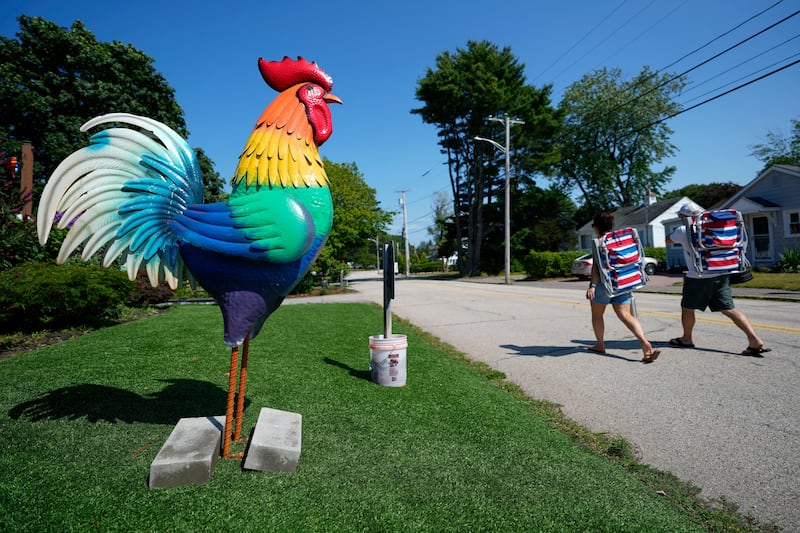
What emerged from the enforcement action, however, was an unexpected outpouring of community and global support. The family created a “foster” program, distributing roosters to friends, neighbors, and strangers willing to display them as symbols of autism acceptance. A neighbor named Sam became one of the first participants. As David LeBlanc put it, his daughter understood that the roosters being taken away were the “lemons,” while “Sam and his friends, fostering them, are the lemonade.”
The story spread rapidly through social media, particularly via a Facebook page called “The Roosters of Ogunquit.” The page was originally titled “Pyper’s Roosters,” but Pyper herself suggested changing it after asking why the roosters had to belong only to her. “Don’t they make other people happy?” she reportedly asked. The expansion of the rooster campaign drew support from across the region and beyond. Roosters began appearing on yards and public properties throughout Ogunquit and nearby Wells.
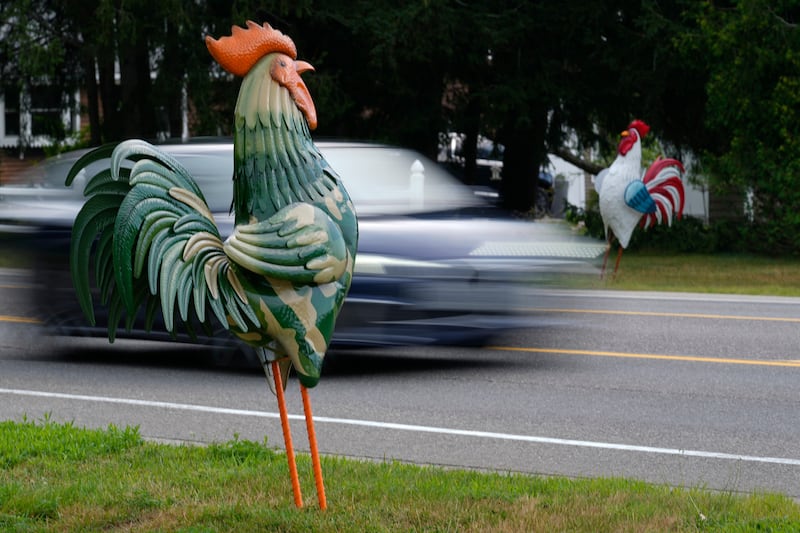
Hetal Patel, who owns a motel in nearby Wells and has a relative with autism, heard about Pyper’s story and wanted to purchase a rooster. Finding them sold out locally, she and her son traveled to New Hampshire to obtain one. When they installed it at her motel, the community response was immediate and enthusiastic, with people honking horns in support.
International participation followed. One rooster supporter shared photos from New Zealand showing his children posing with a rooster statue in their yard, demonstrating how the story resonated across continents. Local resident Kathy Kotakis explained the deeper significance of the movement, saying the roosters represent support for autism acceptance and the broader message that all children deserve love and happiness.
The zoning board discussed the matter last month, with some members expressing skepticism. Board member Jay Smith voiced concern about the lack of medical documentation supporting the roosters’ necessity as comfort objects. McOsker suggested that while comfort animals might have merit, the proliferation of roosters raised questions about how many were appropriate, and he emphasized that the seaside town sought to maintain a particular aesthetic.
Despite the ongoing regulatory challenges, the LeBlancs remain focused on the positive impact their roosters have generated. David LeBlanc expressed that he is moving forward from the dispute and concentrating on the good that has come from it. What began as a family’s attempt to provide comfort to their autistic daughter has evolved into a community-wide movement celebrating acceptance and inclusion.