


The US has opened its World Cup campaign in impressive fashion, and several members of the squad are earning sizeable salaries away from international duty.
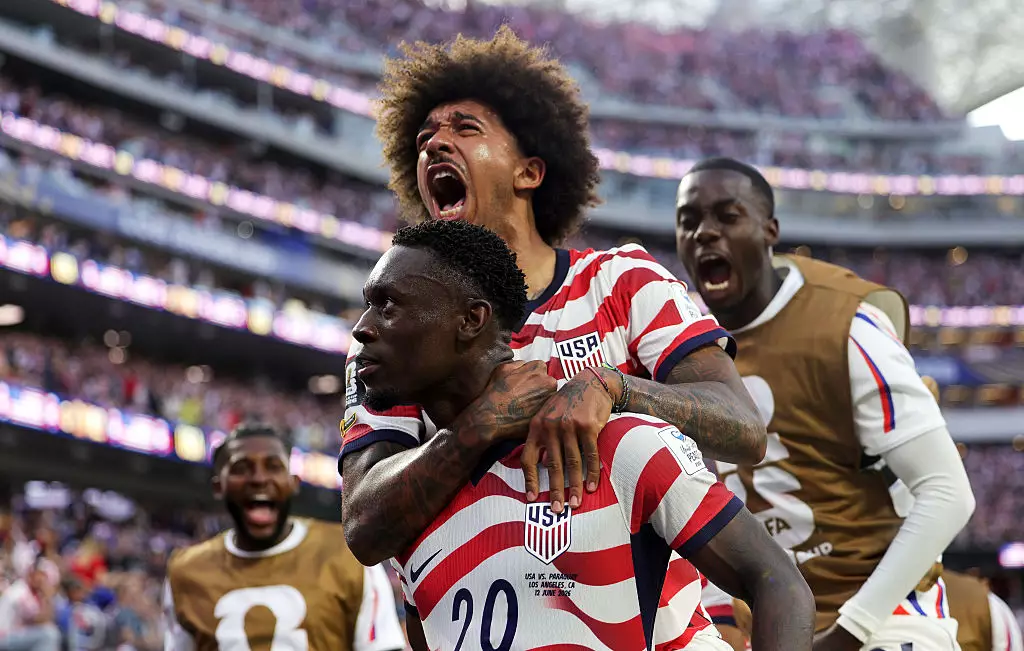
The team began the tournament with a convincing 4-1 win over Paraguay on Friday, June 12 at Los Angeles Stadium in Inglewood, California, as the FIFA World Cup returned to the United States for the first time since 1994.
A dominant first-half display from the co-hosts saw them score three times before the break and take firm control of the contest.
Paraguay managed to respond with a goal after half-time, but the early damage had already been done. The US later added another in the closing stages to seal a comfortable victory.
Folarin Balogun scored twice in the opener as Mauricio Pochettino’s side made an emphatic start in front of a crowd of more than 70,000, with the result widely described as one of the most encouraging US World Cup performances in years.
Elsewhere, co-hosts Canada played out a 1-1 draw with Bosnia and Herzegovina, while Mexico also made a winning start by beating South Africa 2-0.
The 2026 tournament is the biggest in World Cup history, expanding to 48 teams and 104 matches across the United States, Canada and Mexico, which has helped put even more focus on the commercial power of the game’s biggest names.
With the US off to such a positive start, attention has also turned to how much the squad’s top names earn.
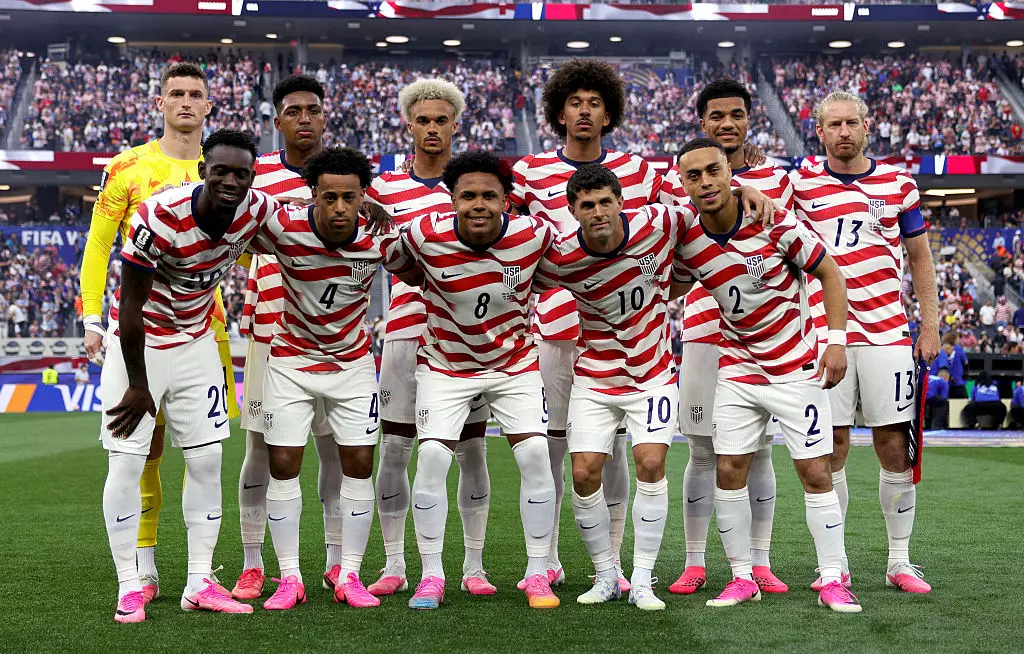
Compared with some of the biggest superstars in world football, the numbers are lower, though they are still extremely significant.
Players such as Lionel Messi, who is said to have earned around $70 million through commercial and business ventures, and Cristiano Ronaldo, whose wages are estimated at $230 million, sit in a different financial bracket. Still, that does not mean US players are doing badly.
Right now, Christian Pulisic is the highest-paid player in the US squad. The 27-year-old is one of the faces of the team and plays his club football in Italy, having represented AC Milan before a reported move to Inter Milan ahead of the tournament.
According to Sportico, Pulisic brings in around $27.5 million in total, made up of $7.5 million from on-field earnings and $20 million from off-field income such as sponsorships and endorsements.
That may fall short of the sport’s very biggest earners, but it remains a huge figure by any standard and underlines why Pulisic remains the most commercially valuable American men’s player in the game.
So how do the rest of the leading US players compare?
Weston McKennie is next on the list, with total earnings of $15 million. That breaks down into $7 million from football and another $8 million away from the pitch.
The 27-year-old midfielder has been listed with Juventus in some recent squad and club references, although reports around the tournament have also linked him with Marseille, reflecting how quickly club situations can change during a World Cup summer.
Timothy Weah follows with earnings of $9.5 million. He is another high-profile member of the US attack, with $6 million coming from on-field income and $3.5 million from commercial work.
Weah has also been associated with Marseille in recent World Cup coverage, adding to the European profile within the US squad.
Chris Richards comes next with a total of $7.5 million, including $5 million earned on the field and $2.5 million off it.
Outside international football, Richards plays his club football for Crystal Palace in the UK and has become one of the central figures in the American back line.
Rounding out the top group in joint fifth are Tyler Adams and Sergiño Dest, who are both on $7 million overall. Adams earns $5.5 million on the field and $1.5 million off it, while Dest makes $6 million on the field and $1 million away from it.
Adams has most recently been listed with Bournemouth, while Dest has been listed with PSV, giving the US a core of senior players based across some of Europe’s top leagues.
Although the US squad’s salary figures do not rival the game’s global elite, they still show how far the national team has come in terms of visibility, endorsement appeal and earning power. A strong run on home soil in the summer of 2026 would only be expected to increase that commercial value even further.