

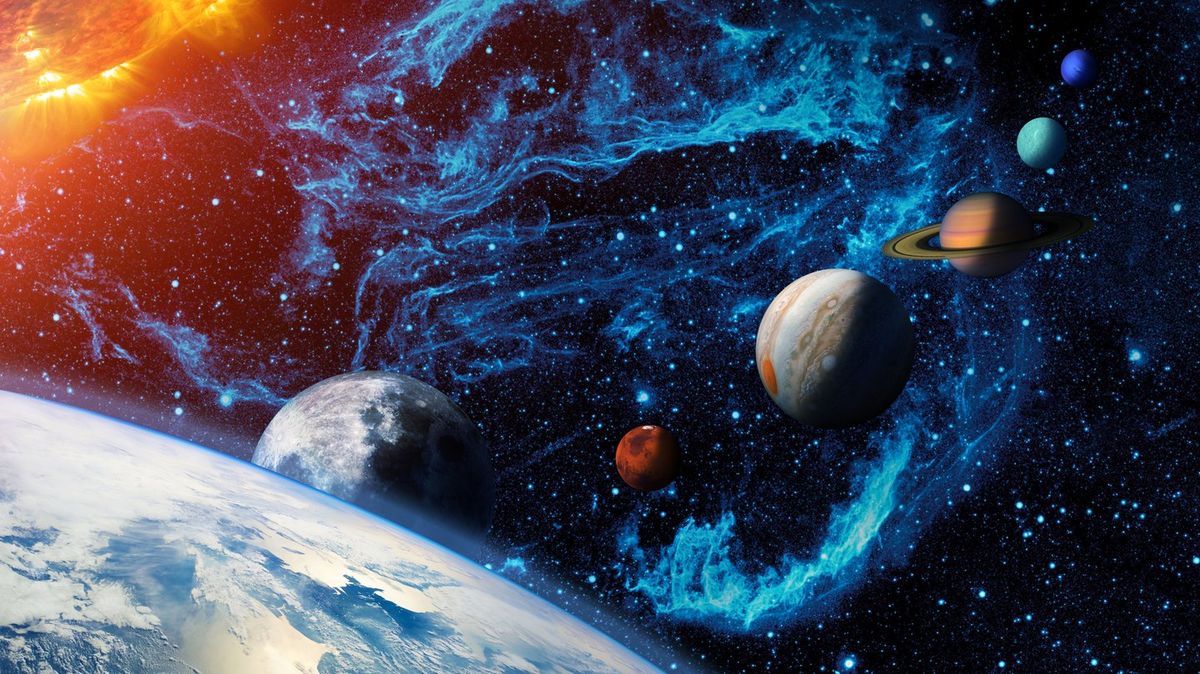
Cast your eyes upward this weekend for a striking skywatching event, as six planets appear in a near-line across the night sky — here’s what to look for and when to see them.
Skywatchers will have a chance to catch a “planet parade” this weekend, with six planets appearing close together from our viewpoint on Earth in what’s commonly called a planetary alignment.
NASA notes that the term is typically used when four or five (or more) planets are visible in the sky over the same period. A standout recent example came on 27 February last year, when Mercury, Venus, Mars, Jupiter, Saturn, Uranus and Neptune appeared in a rare seven-planet line-up — a configuration not expected to return until 2040.
This time around, observers may be able to pick out Mercury, Venus, Jupiter, Saturn, Uranus and Neptune arranged along the same general arc of sky. The peak date often cited is 28 February, though the best viewing window shifts depending on where you are in the world.
Dr Shyam Balaji, a researcher in astroparticle physics and cosmology at King’s College London, explained that while several of the planets should be easy to spot, one sits too far away to see without optical help.

“On 28 February, Mercury, Venus, Jupiter, Saturn and Uranus will appear as bright points clustered along a single line. While Neptune is also in alignment, it is too distant to be seen without binoculars or a telescope. These planets appear grouped in the night sky as their orbits happen to place them on the same side of the Sun during this period,”
He also stressed that there’s no impact on our planet.
“These alignments have no gravitational effects on Earth. Their combined gravitational pull of the planets on Earth is negligible compared to that of the Moon or the Sun,”
And while such events often spark speculation, the scientific explanation is far more straightforward.
“Planetary alignments have often inspired cultural or astrological interpretations, but scientifically they are predictable geometrical coincidences with no known physical influence.”
Researchers emphasise that a planetary alignment is essentially an observing effect. Because the planets orbit the Sun in a similar, relatively flat region of space — the ecliptic plane — there are periods when multiple worlds appear to “line up” when viewed from Earth, even though they remain separated by vast distances.
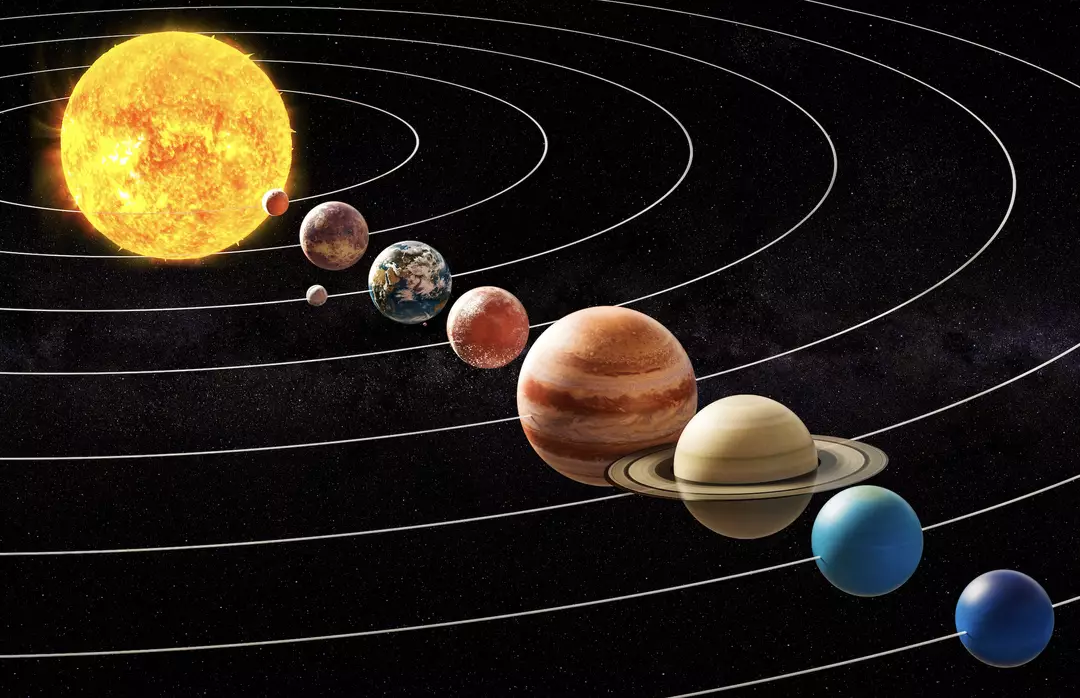
NASA also points out that a “planet parade” isn’t a single-night show — it can unfold over several weeks, sometimes more than a month.
Still, 28 February is expected to be especially useful for spotting all six in one go, as the grouping should be at its tightest then and easier to identify together (via The Guardian). NASA adds that while several planets are bright enough to be seen without equipment, the outer planets are much harder: Uranus and Neptune typically require binoculars or a telescope. Mercury may also prove tricky because it sits low near the horizon.
For the best chance of seeing them, aim to start looking around 30 minutes after your local sunset. Star Walk advises scanning low in the western sky, ideally from a location with a clear horizon and good weather.
NASA further explains that a planet becomes much easier to see when it’s at least a few degrees above the horizon, with 10 degrees or more being ideal.
Even if you miss the exact date, you may still be able to catch the alignment a few days either side of 28 February, depending on your latitude and local sky conditions.
Star Walk’s viewing guide suggests the strongest dates vary by city: 25 February for São Paulo; 28 February for Athens, New York, Mexico City and Tokyo; 1 March for Beijing, Berlin, London and Mumbai; and 2 March for Reykjavik.