

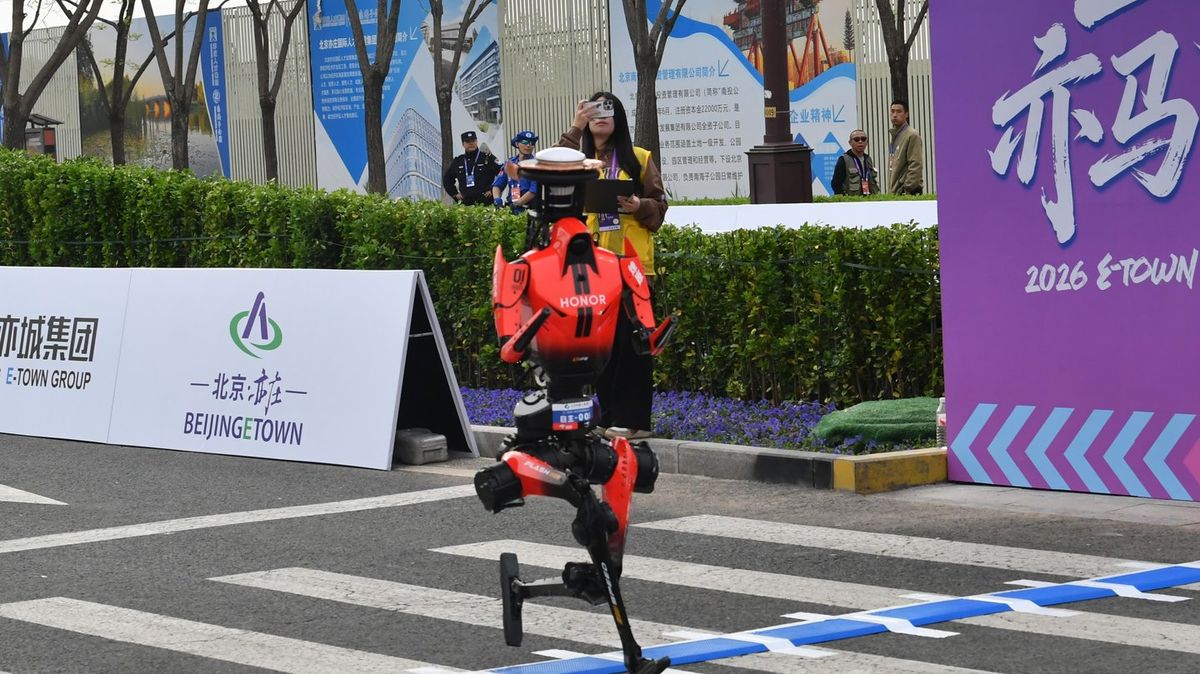
Humanoid robots marked a major moment in endurance sport this weekend after one took first place in a half marathon in China.
Built by Chinese smartphone brand Honor, the robot—called Lightning—finished the 13-mile course in 50 minutes and 26 seconds. That time beats the widely noted human benchmark set by Jacob Kiplimo, who ran 57 minutes and 20 seconds at a half marathon in Lisbon in March.
The result stands out even more when compared with last year’s edition of the race, where a robot completed the route in 2 hours, 40 minutes and 42 seconds. Lightning’s much quicker finish has been viewed as a significant leap in performance and capability.
Spectators reacted with surprise at how far the technology has come. Sun Zhigang said: “I feel enormous changes this year.
“It’s the first time robots have surpassed humans, and that’s something I never imagined.”
Another onlooker, Wang Wen, said: “The robots’ speed far exceeds that of humans.
“This may signal the arrival of sort of a new era.”
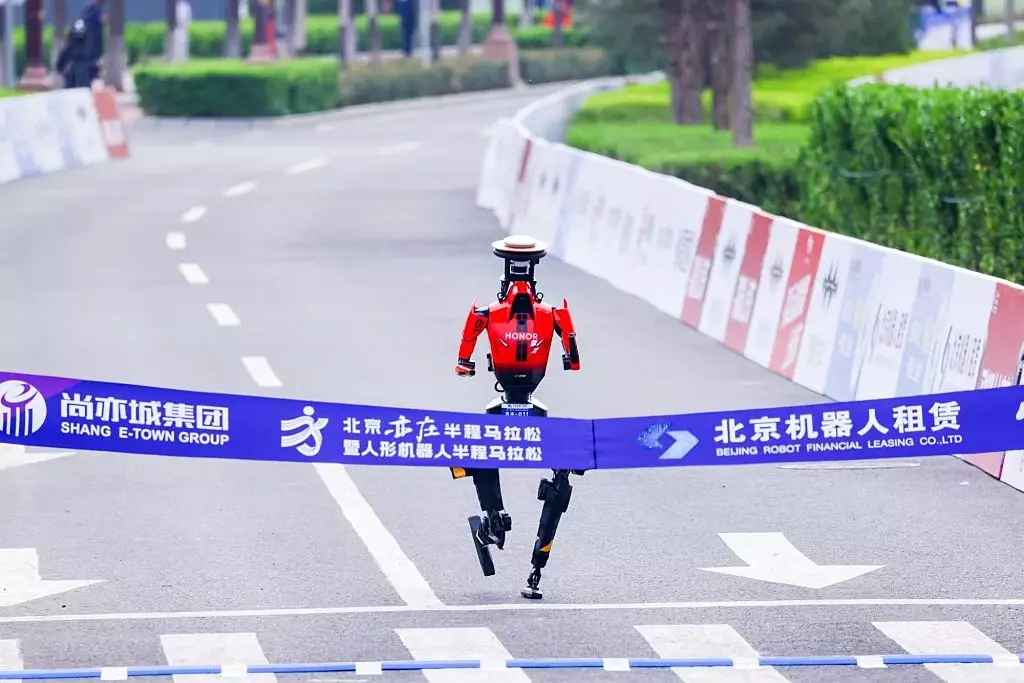
There were also more robots on the course than before—over five times as many as last year—and multiple entries reportedly clocked speeds that outpaced some human runners.
Lightning stood out visually in bright red. At 169cm tall, it completed the race using autonomous navigation.
Even with the headline win, the day wasn’t completely smooth for every machine. Reports said one robot fell at the starting line and another struck a barrier during the event.
Full independence wasn’t universal, either: about 40 percent of the humanoid runners were operated remotely rather than navigating entirely on their own.
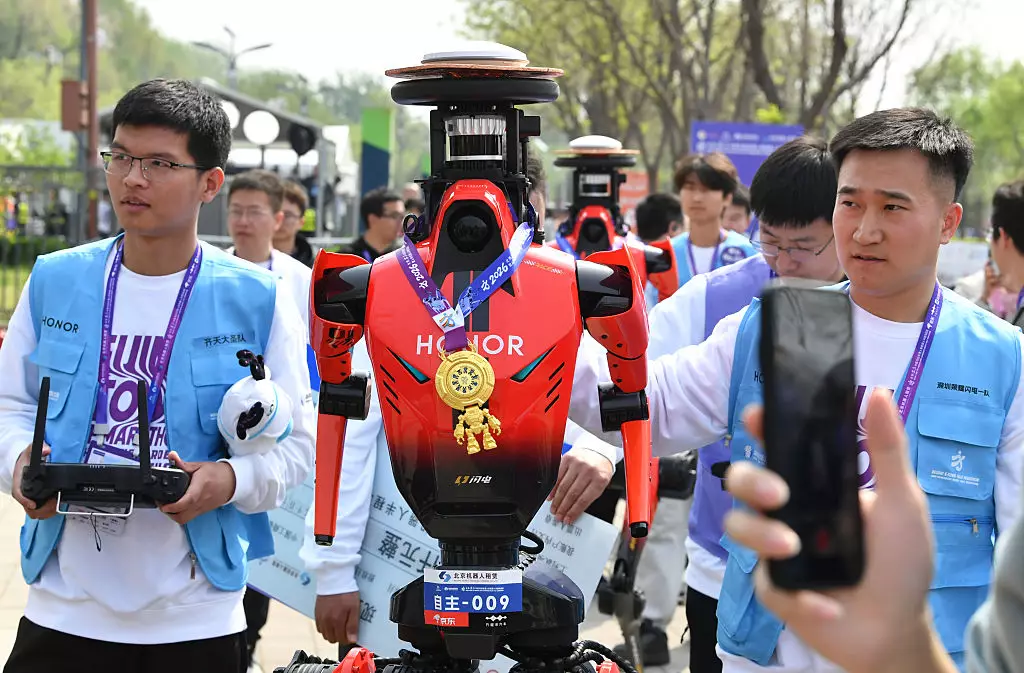
Speaking to NBC News, Honor team captain Ma Huaze described the pressure of competing with major updates on a public stage: “I felt very nervous.
“The biggest challenge was having the courage to perform and test large-scale upgrades on a major competitive stage like this.”
The fastest human participant, Zhao Haijie, crossed the line in 1 hour, 7 minutes and 47 seconds and said he noticed the robots flying by mid-race.
“I felt it was going quite fast,” Zhao said. “It just went whoosh right past me.”
The victory follows a broader surge in robotics appearing in Chinese sporting events over the past year.
In 2025, Beijing also staged what was billed as the world’s first Humanoid Robot Games, featuring events like soccer, martial arts, and boxing.