

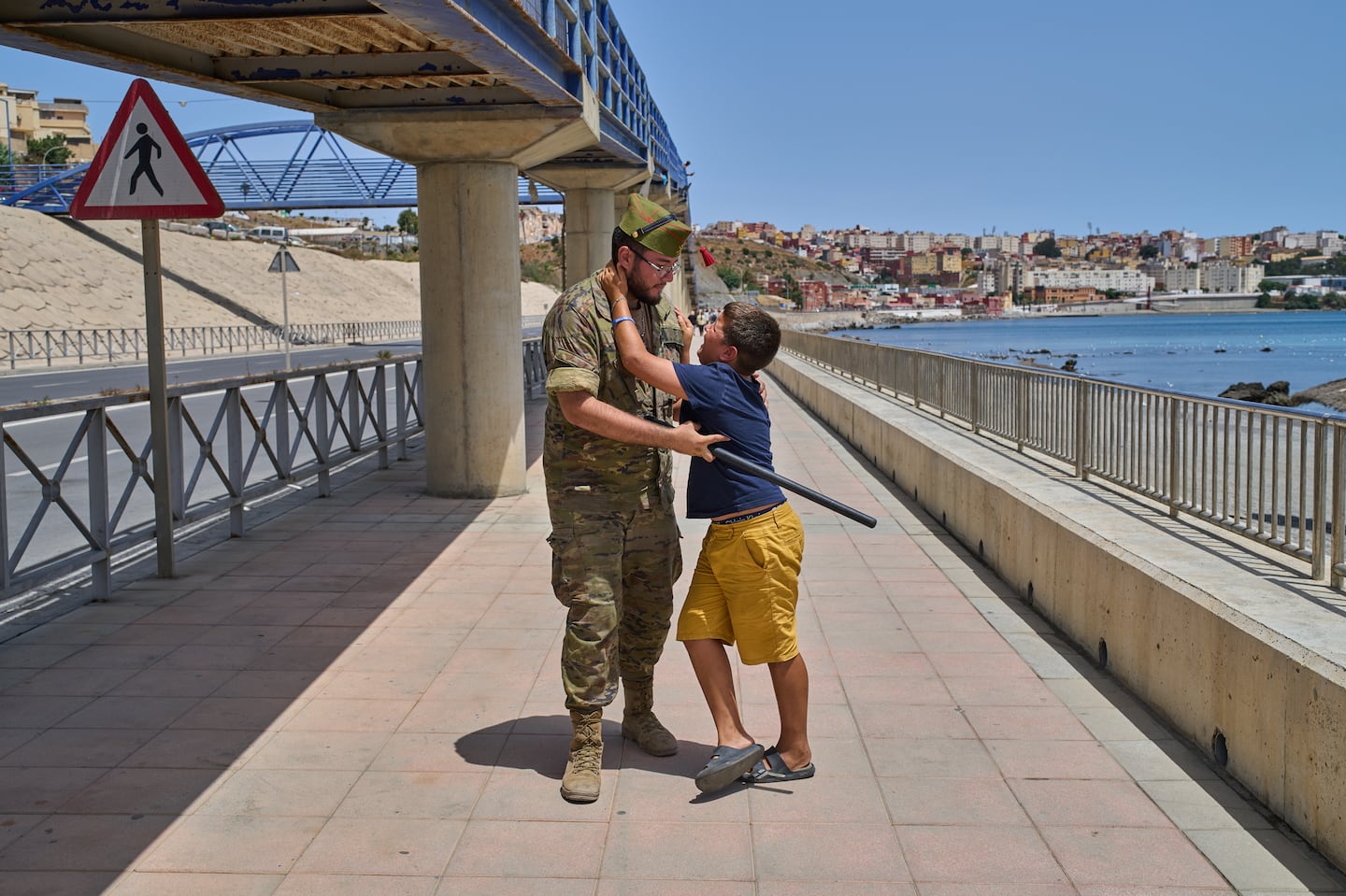
Hundreds of migrant children are stranded in Spain’s Ceuta after a massive wave of migrants surged across the border from Morocco, with the territory’s overburdened reception facilities unable to accommodate the influx despite legal protections that should guarantee them care.
The crisis unfolded over several days beginning on July 30 when an estimated 60,000 people breached the border into the Spanish autonomous city of Ceuta in North Africa. Among them were more than 800 unaccompanied minors who remained in the territory on August 3, facing food shortages, inadequate shelter, and traumatic experiences during the crossing. While most adult migrants have returned to Morocco, authorities say the minors cannot legally be deported and must remain under Spanish protection, though the city lacks capacity to provide it.
One 17-year-old girl from Tangier embodies the desperation of many children now in Ceuta. She managed to reach Spanish territory by swimming through the Mediterranean, but her younger brother drowned in the chaos as tens of thousands of people surged through a breakwater. Her mother disappeared in the mayhem. “I saw people stepping on the dead,” she said, describing the horror of the crossing. “Now we are children begging on the street.” Separated from her family for four days, she has relied on the kindness of local residents for food and shelter while the city’s government youth center turned her away because it was completely full.
The scale of the crisis overwhelmed Spanish authorities who reported that at least 72 people died during the crossings, mostly in the water, with Morocco reporting an additional 11 deaths. Some migrants were crushed trying to climb the breakwater with the border fence. The sheer number of arrivals—described as the territory’s largest ever mass migration—strained all available resources.
Spanish law mandates that unaccompanied minors must be granted protection and cared for by authorities, but Ceuta’s capacity has been shattered. The city’s main migrant center, designed for 600 people, is completely full. According to local officials, only about 29 child-specific accommodations could be provided by the local government for the 862 minors still present on August 3, forcing facilities to operate at around 2,400 percent of their normal capacity. Many children report being turned away from shelters after days without food or medical attention. Some carry injuries sustained during the crossing but lack access to healthcare. Many are sleeping outside on beaches or in the hills surrounding the city.
The minors now comprise a large part of the estimated 3,000 to 5,000 migrants who have managed to avoid expulsion from Ceuta out of the original 60,000 who entered. While most Moroccan adults have either voluntarily returned home or been escorted back by Spanish police, the remaining migrant population includes Sudanese fleeing their war-torn country, Palestinians from Gaza, Afghans, and people from several African nations.
The triggering event for this crisis traces to a June 29 Supreme Court ruling that stated authorities cannot summarily deport migrants who arrive by sea without due process. Spanish officials said human trafficking networks exploited and misrepresented this ruling, encouraging crossings by falsely claiming that anyone arriving by water could not be deported. The court’s decision was highly technical, distinguishing between migrants who climb physical barriers and those who swim around them, but traffickers capitalized on the confusion to generate demand for dangerous sea crossings.
The humanitarian emergency has prompted international concern. The European Union called an emergency meeting after the incident, and international organizations like UNICEF expressed particular concern over the number of unaccompanied minors, calling for them to be identified and housed separately from adults in appropriate facilities and protected from potential trafficking and exploitation.
Spanish Prime Minister Pedro Sánchez arrived in Ceuta to manage the crisis and announced plans to install floating barriers in the water around the enclave—a move the government argues would comply with the Supreme Court ruling while restoring the ability to carry out immediate returns. In the meantime, the Spanish government has ordered a shipment of 39 migrants to be brought to mainland Spain and is working to expand reception capacity, but the pace of transfers remains slow relative to the number of stranded minors.
The crisis has sparked significant domestic and international controversy. Spain has accused Morocco of using “blackmail” by appearing to loosen border controls, and Spain’s defense minister alleged that this was retaliation for Spain’s hosting of a Western Sahara independence leader. Morocco’s Interior Ministry countered that migrants were misled by online misinformation about the Supreme Court ruling. The incident has also fueled anti-immigration rhetoric throughout Europe, with some countries calling for stricter border policies and Spain demanding reciprocal support from European Union partners who have previously received Spanish assistance during migration crises.
For the children still stranded in Ceuta, the crisis represents an uncertain future. They remain protected by Spanish law but face a severe humanitarian crisis in a territory with minimal resources to care for them. Some locals have stepped in to help, providing food and clothing on an ad hoc basis, but systemic solutions remain elusive as Spanish authorities scramble to expand shelter capacity and organize transfers to the mainland.