

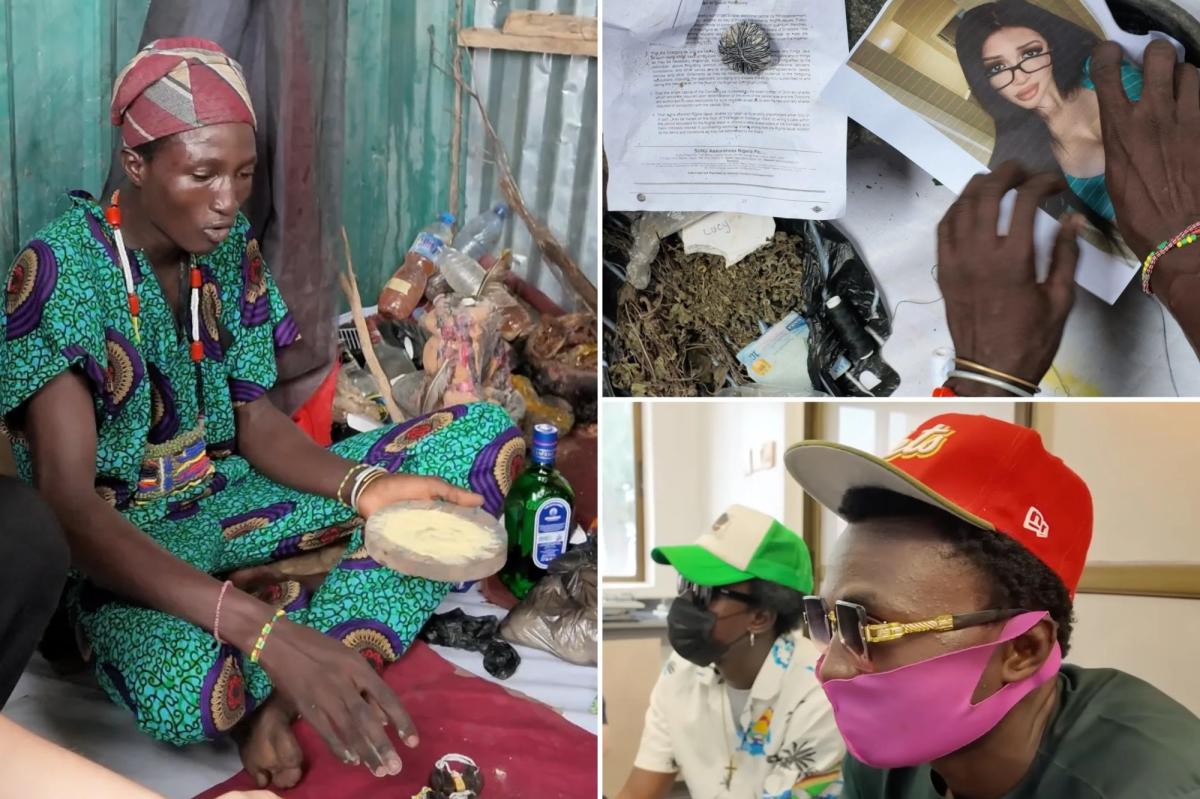
Cybercrime researcher Paul Raffile has released a documentary exposing how Nigerian sextortionists use blood sacrifices and black magic rituals to bless their scams targeting American teens.
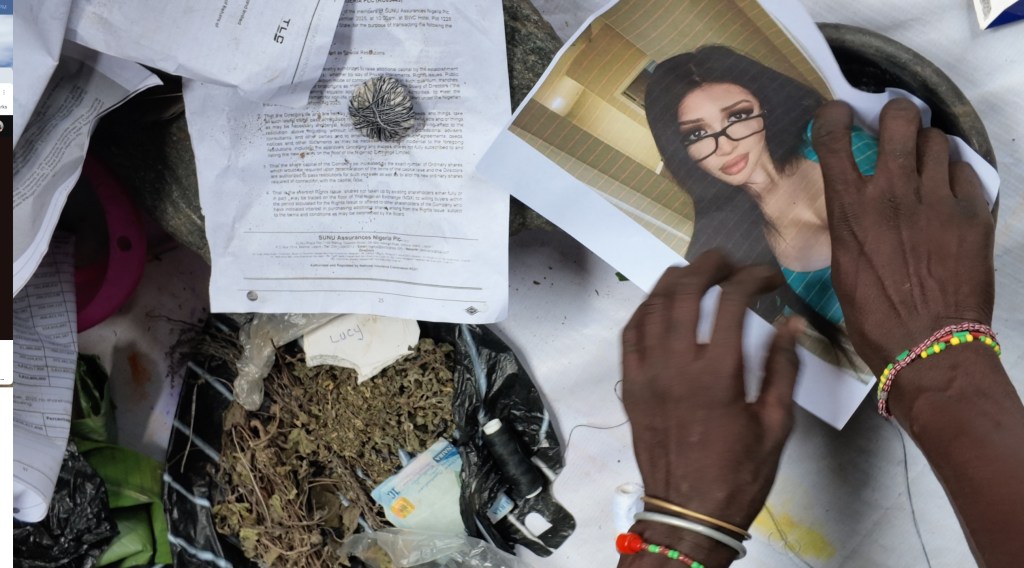
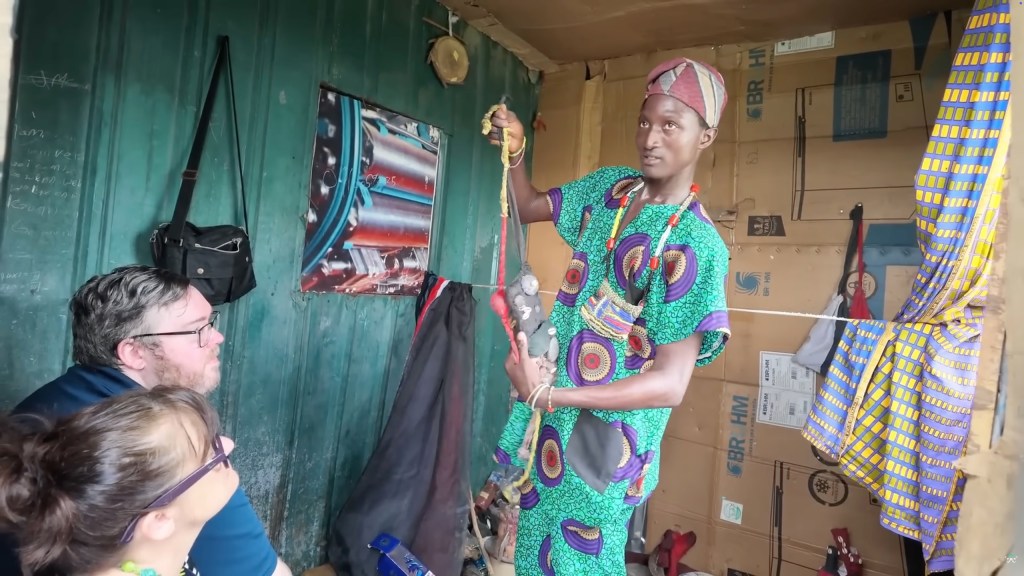
Raffile, 38, traveled to a muddy Lagos shantytown last month with UK-based former prosecutor Erin West, 48, after the pair set a digital trap to catch a scammer in action. Inside a cardboard-and-steel shack littered with potions and talismans, they watched a witch doctor chop the head off a live goose and pour its blood over a photograph of an American porn star. The Babalawo, as the spiritualists are known, was performing a ritual to bless a sextortion scam, scrawling the names of a teenage boy in Wisconsin and an online impersonator called “Lucy” onto charms to “fuse their souls together.”
The Wisconsin teen was just one of countless American boys caught in a web that has claimed at least 40 teenage lives since 2021, according to the US State Department. The National Center for Missing and Exploited Children receives almost 100 reports of financial sextortion daily, roughly 33,000 each year since 2021. In 2024 alone, the FBI documented $33.5 million stolen through these schemes, though the true figure is believed to be far higher due to underreporting driven by shame.
Raffile built a fake Instagram account posing as an American teen to understand the operation from the inside. Within days, a dozen West Africans reached out. One took the bait, and through hidden cyber tracking embedded in a crypto payment, Raffile and West retrieved the scammer’s exact location and snapped a photo of him through his own phone camera. That led them to Lagos and ultimately to the confrontation that became the short documentary they released online this month.
The mechanics are brutally efficient. Networks of young men in Nigeria and neighboring West African nations, calling themselves “Yahoo Boys” or “BM Boys” — BM for “blackmail” — flood American teen boys with fake social media accounts posing as flirtatious female peers. They use sophisticated tactics, including AI-generated responses and stolen photos of real porn stars sold in $10 bundles, to coerce victims into sending explicit images. The moment they obtain material, the demands begin.
“They then demand money via Cash App or gift cards, first in a single payment and then more, while threatening to release the photos they have been sent,” Raffile explained in the documentary.
The attacks move with devastating speed. Embarrassed teens are sometimes found dead within hours of initial contact. Bryce Tate, 15, of West Virginia, took his life last November in his father’s man cave just two hours after a suspected Nigerian scammer made contact.
Oludayo Tade, a sociology professor at Nigeria’s University of Ibadan, told The Post that discouraged scammers seek evil charms to cast spells and “to dispossess their victims.”
“A spiritual approach to cybercrime is to enhance the success rate. The power to keep the victim under a spell is needed by those who may have suffered losses with previous prospects. This is why hypnotism may be sought from spiritual providers,” Tade said.
He added that the witch doctors themselves are outcasts within their own traditions. “Evil charms are forbidden in the traditional religion,” which blends Christianity, Islam and traditional African beliefs. “So the spiritualists who do evil charms are rebuked and considered deviants and criminals within the traditional religion setting.”
A 2024 report by the Network Contagion Research Institute found Instagram was the most common platform for sextortion schemes, followed by Snapchat. The same report documented how BM Boys coordinate attacks, sharing tactics for fake profiles, discussing AI tools, and workshopping blackmail scripts on open platforms. One script circulating on Scribd suggested opening with “What do you like to do for fun?” Before escalating to explicit photo requests. Once obtained, the scammers deploy a chilling threat: “Hey I have ur nudes and everything needed to ruin your life.”
The brazenness extends to mocking their victims. The scammers refer to targets as “clients,” share screenshots of their torment, and celebrate their crimes through memes. Many have become micro-celebrities on TikTok with hundreds of thousands of followers.
“Their goals are fame and fortune. Fortune comes first, but they also like the fame. They go viral showing off their scams and trying to recruit others,” Raffile said in the documentary.
He rejected poverty as an excuse. “We asked the scammers, ‘Why do you do this?’ Their initial response was always, ‘Oh, well, we’re poor and we don’t have money.'”
“We saw that they have nice shoes, Louis Vuitton branded things, gold jewelry, a newer iPhone than I have. One of them has a Mercedes-Benz. It’s not about poverty,” Raffile recalled.
He noted that countless locals who grew up in identical conditions chose legitimate work and succeeded. “They chose to make money the right way with a legitimate job. And they rejected this idea that they have to scam in order to make a living. And they’re successful,” he said.
Arrests remain vanishingly rare. In 2023, Nigerian brothers Samuel Ogoshi, 22, and Samson Ogoshi, 20, received 17-year sentences for a sextortion ring linked to the suicide of Jordan DeMay, 17, of Michigan. Last November, Imoleayo Samuel Aina, 27, was extradited through joint US-Nigerian efforts after using a fake “Alice David” persona to extort Kutztown University student Jack Sullivan, 20, who died by suicide. Aina pleaded guilty to cyberstalking and wire fraud and received a 72-month federal sentence.
Other families have turned to civil action against tech platforms. Tricia Maciejewski of Shippensburg, Pennsylvania, filed a wrongful death suit against Meta in December over her 13-year-old son Levi’s death. On August 20, 2024, less than 48 hours after creating his first Instagram account, a scammer posing as a young girl demanded $300 in gift cards from Levi. He offered $37, all he had, before dying by a self-inflicted gunshot in the family’s backyard. Authorities ruled it a homicide tied to extortion.
Ohio parents Tamia and Tim Woods joined a Meta lawsuit in March, alleging wrongful death, product defect and negligence after their son James, 17, died by a self-inflicted gunshot in his Streetsboro bedroom in 2022 following a 19-hour ordeal with a scammer who sent over 200 threatening demands.
The researcher turned the tables on the man who had taken his bait. “We weren’t threatening him. We were just saying, ‘We know who you are and we know what you’re doing. And we’ve reported this to law enforcement and they will find you,'” Raffile recounted.
The effect was immediate. “He was scared. Immediately after we confronted him, he changed his name on TikTok and went private.”
Meta, in a statement to The Post, called sextortion a “horrific crime” and pointed to its work with law enforcement, automatic strict message settings for teens, and safety features including blurring potentially nude images in DMs and warning users about risks and international chat partners.
Raffile and West continue their documentary work as the crisis accelerates, with AI making scams more convincing and platforms struggling to contain coordinated criminal networks operating in plain sight.