

Anne Morrow Lindbergh once contemplated divorce after four decades with the legendary aviator, a new joint biography reveals.
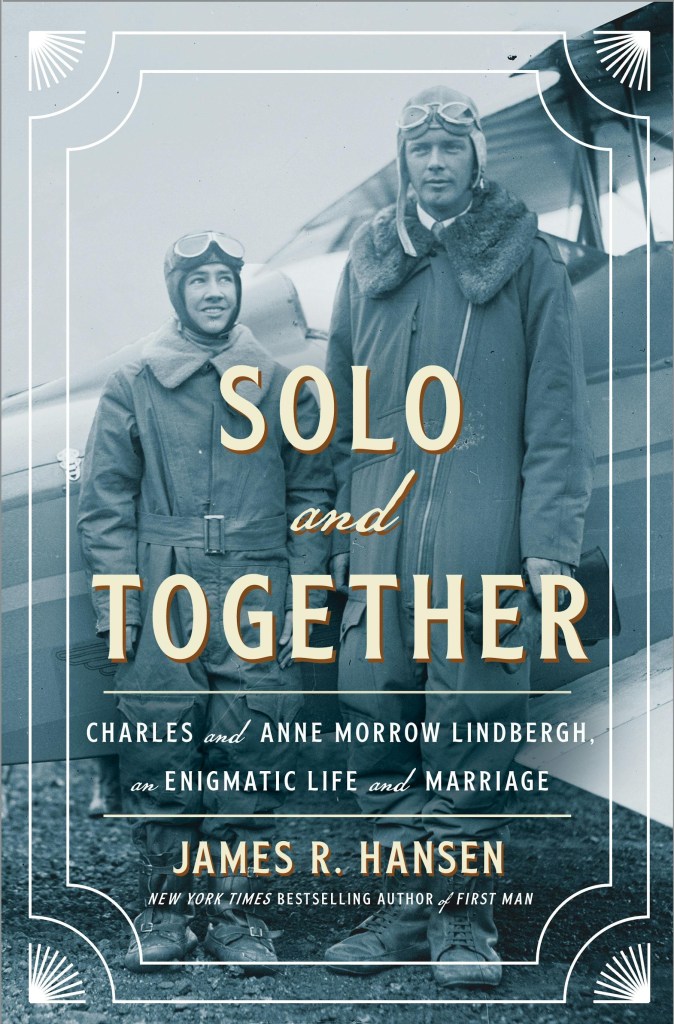
The disclosure surfaces in “Solo and Together: Charles and Anne Morrow Lindbergh, an Enigmatic Life and Marriage,” by James R. Hansen, the biographer also known for “First Man,” his account of Neil Armstrong. Anne, 44 in 1950, had begun weighing an exit from the 45-year union that would last until Charles’s death in 1974, according to the book.
The marriage’s survival, Hansen told The Post, owed nothing to perfection. “They had a remarkable marriage not because it was ideal but because it was so intensely human,” he said. “And the triumphs and failures in their lives are almost inseparable.”
Anne’s patience had been forged through extraordinary trials. In 1931, she trained as radio operator and navigator to serve as Charles’s co-pilot during a three-month expedition surveying air routes over Canada and Alaska to the Far East, chronicled in her National Book Award-winning “North to the Orient.” The following year brought the kidnapping of their toddler son, Charles Jr., from the family’s Hopewell, NJ home in March. “Charles dealt with the tragedy by trying to control it, control the investigation and by suppressing his emotions,” Hansen explained. But after the boy’s body was discovered in nearby woods that May, “Anne needed to grieve, she needed to talk, and Charles responded by building emotional walls.”
The couple fled to England, then a remote island off Brittany, escaping the media circus around the investigation and trial of Bruno Hauptmann, later convicted and executed for the murder. During their European exile, Charles assessed Nazi Germany’s air power at American government request, praising “the organized vitality” he observed and concluding no European nation could or should challenge German military might. Anne, more attuned to domestic reaction, promptly dubbed the swastika-studded medal Hermann Goering awarded him “the albatross.”
Yet she defended him when he joined the America First Committee, telling her mother — who tried vainly to change her mind — “Charles stands for integrity.” In fall 1940, Anne published “The Wave of the Future,” arguing fascism wasn’t worth fighting, a work she later disavowed. Hansen writes that she never asked “why Charles failed to examine his own prejudices in shaping his view of American’s path — or why she hadn’t examined her own.”
By 1950, Anne had borne five children — three sons and two daughters, the youngest, Reeve, born in 1945. Charles’s wartime service advising the Air Force in the South Pacific, including combat missions as a civilian during which he shot down a Japanese plane, extended into permanent absence. He continued working in distant corners while Anne remained in Darien, Conn., managing their large household alone for months at a time. He issued each child a to-do list before departing, expecting completion upon return. When Anne began psychiatric treatment, Charles stopped speaking to her for six months.
She told Reeve she had planned to wait until the youngest turned ten before leaving. The decision to stay was eased by her growing closeness to Dr. Dana Atchley, her internist — a warm, witty, nonjudgmental man who likely became her lover for a time. From this strained period came “Gift From the Sea,” her 1955 meditation on solitude, work and human relationships that became an immediate bestseller and has since sold three million copies worldwide.
Charles’s own extramarital life operated on a staggering scale. He began an intimate relationship with his German secretary, Valeska von Arnim, who bore him a son in 1958. Around the same time, he took up with two of her friends, sisters Brigitte and Marietta Hesshaimer, eventually fathering seven illegitimate children with the three women. He made regular visits to his secret families, applying the same discipline he brought to aviation to concealing this parallel existence. Hansen believes Anne sensed something amiss. “Anne knew something was up, but she didn’t know what it was, and she really didn’t want to know what it was,” the author told The Post.
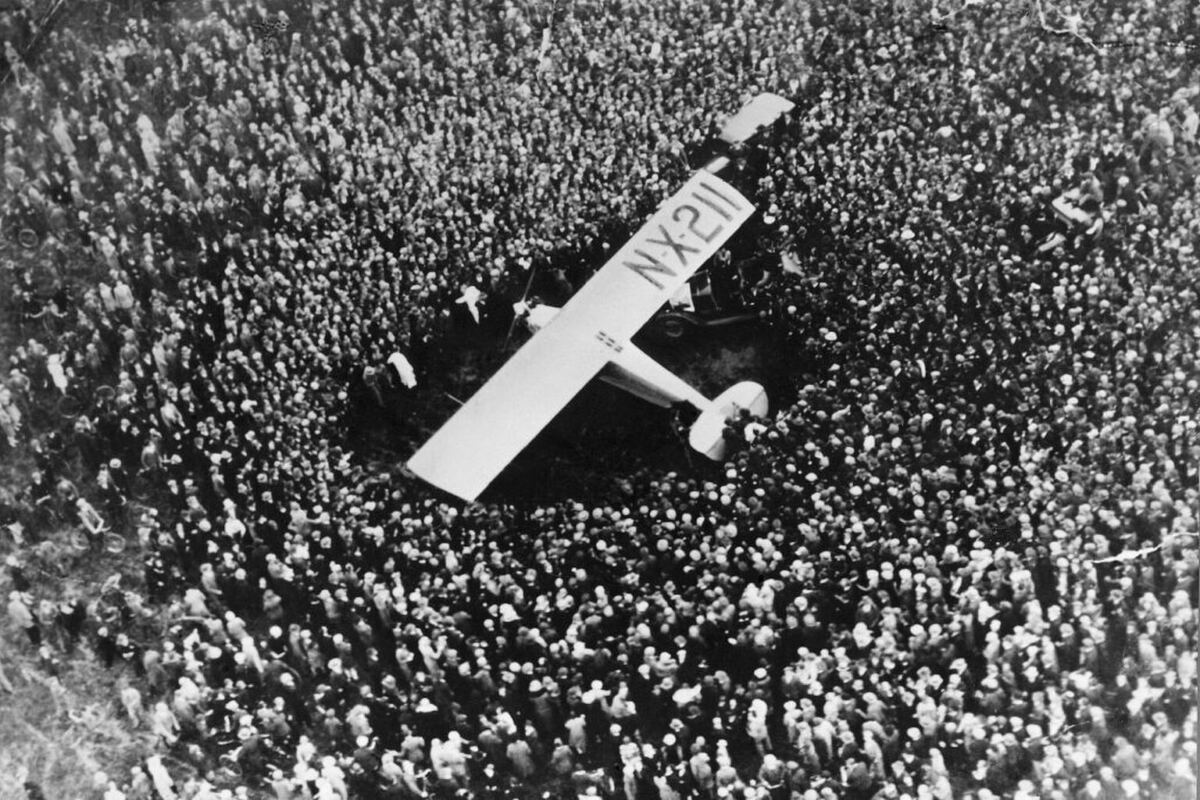
The romance had begun gloriously. Charles, 25, became global celebrity overnight for his solo Atlantic crossing in May 1927. Seeking escape from publicity and a partner to build a family, he fixed on quiet, pretty Anne Morrow, 21, whom he met Christmas 1927 during a goodwill tour in Mexico, where her father Dwight served as American ambassador. Anne, returned to Smith College, wrote in her diary: “The idea of this clear, direct, straight boy … has swept out of sight all other men I have ever known, all the pseudo-intellectuals, the sophisticates, the posers.” She was astonished when he called that October for a flying date over Long Island, letting her steer the two-seater de Havilland Moth — establishing their pattern of greatest ease together in the air. They married in her family’s Englewood, NJ drawing room with only family present. Decades later Anne recalled being congratulated for capturing “the hero of the hour,” and seeing herself as “a devoted page to Charles’s knight” — “hardly,” she admitted, “a good basis for marriage.”
When cancer struck in 1974, Charles insisted on dying at the rustic A-frame he and Anne owned on Maui’s remote southeastern coast, despite doctors’ warnings he might not survive the trip from his Manhattan hospital. Anne supported the wish. “Going along with how he was and how he wanted everything done, was so typically Anne,” Hansen writes. Charles had his grave dug in Kipahulu’s church cemetery with space reserved beside him. Anne declined. She died in 2001, cremated as requested, her ashes scattered in places she loved — Maui among them.
“Solo and Together” is available now from Simon & Schuster.