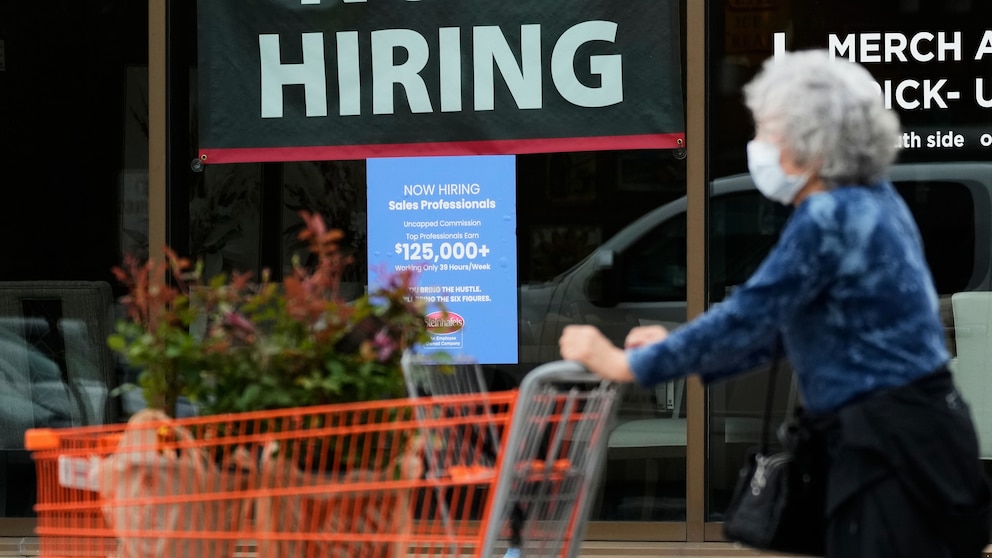
The U.S. Labor market stands at a critical juncture as the nation prepares for Thursday’s closely watched jobs report, which will offer crucial insights into whether hiring is finally accelerating after months of sluggish growth. The June employment data, being released one day early due to the July 4 holiday weekend, could provide important clues about whether the economy is emerging from a period of hesitant hiring into something more dynamic.
The backdrop for this report is mixed. Recent months have shown signs of improvement, with employers adding an average of 188,000 jobs between March and May—a marked turnaround from the period of December through February when the economy actually lost an average of 4,000 jobs monthly. May’s jobs report showed 172,000 new positions created, well above economist expectations, though the unemployment rate remained stable at 4.3 percent.
Yet beneath these headline numbers lies a more complicated picture. Economists surveyed by Bloomberg expect the economy to have added roughly 115,000 jobs in June, with the unemployment rate staying flat at 4.3 percent for the fourth consecutive month. While some forecasters anticipate stronger figures approaching 200,000, others project more modest gains of 35,000 or fewer. The wide range of estimates reflects genuine uncertainty about the labor market’s trajectory.
For context, the current level of job creation matters more in 2026 than it might have in previous years. As more Americans retire and new immigration has dropped sharply, the U.S. Workforce is barely growing. In this constrained environment, adding roughly 100,000 jobs per month is sufficient to keep the unemployment rate steady—or potentially lower it. By historical standards, 188,000 monthly jobs might seem unremarkable, but given demographic headwinds, it represents solid progress.
The path to this month’s report has been complicated by significant geopolitical and economic challenges. Earlier this year, economists and Federal Reserve officials worried that President Donald Trump’s import tariffs would make companies nervous about expanding their workforce. Those concerns have largely faded. A recent peace agreement between the United States and Iran helped ease energy costs that had spiked inflation to a three-year high of 4.2 percent in May. With gas prices expected to decline, many Fed officials believe inflation should begin cooling, though debate continues about what monetary policy response is appropriate.
Economists have noted growing caution from employers despite the headline job gains. Companies remain selective in their hiring, taking longer to fill openings. The disconnect is striking: job openings reached nearly 7.6 million in May, the highest level in two years, yet actual new hires continue lagging. This creates what economists call a “low-hire, low-fire” market where companies avoid aggressive expansion but also hesitate to lay off workers. Workers have quit their jobs at historically low rates, suggesting limited confidence in alternative opportunities elsewhere.
Nicole Bachaud, a labor economist at ZipRecruiter, noted that business uncertainty has diminished somewhat. “Even though it’s still kind of a challenging market,” she said, “the understanding of where things are headed has calmed down a bit, and so businesses are able to now execute on hiring plans.”
The composition of recent job growth also raises questions about sustainability. In May, of the 172,000 jobs created, 70,000 came from just two sectors: restaurants, bars, and hotels. This concentration suggests that growth remains narrow rather than broad-based across the economy, though recent data on job openings showed increases across leisure and hospitality, construction, manufacturing, and wholesale trade.
Some economists see potential catalysts for stronger June numbers. Continued expansion in goods production tied to artificial intelligence datacenter buildouts, sustained growth in healthcare as the population ages, and a World Cup-driven lift in transportation and leisure employment could push hiring higher. However, potential headwinds include payback effects if May’s leisure and hospitality gains were driven by seasonal timing rather than underlying strength.
Technology and finance sectors have been particular weak spots, with tech and finance job postings actually declining in recent months. The rise of artificial intelligence adoption, while not yet producing widespread layoffs, has shifted hiring patterns. Companies increasingly seek senior, experienced workers to manage AI transitions, while job seekers gravitate toward entry-level positions—a mismatch that has left many workers frustrated despite the historically low headline unemployment rate.
The broader picture reveals underlying labor market slack that standard unemployment figures don’t capture. The U-6 unemployment rate, which includes underemployed and discouraged workers, stands at 8.1 percent compared to the headline rate of 4.3 percent. More Americans have stepped out of the labor force entirely, and long-term unemployment remains elevated at roughly 2 million people.
Thursday’s report will ultimately serve as a test of whether the labor market’s recent improvement represents genuine acceleration or merely stabilization. The Federal Reserve faces mounting pressure to address inflation while remaining cautious about cooling a job market that still faces demographic challenges. Policymakers, investors, and workers alike will scrutinize the numbers for any indication of sustained momentum or renewed weakness in America’s employment landscape.