

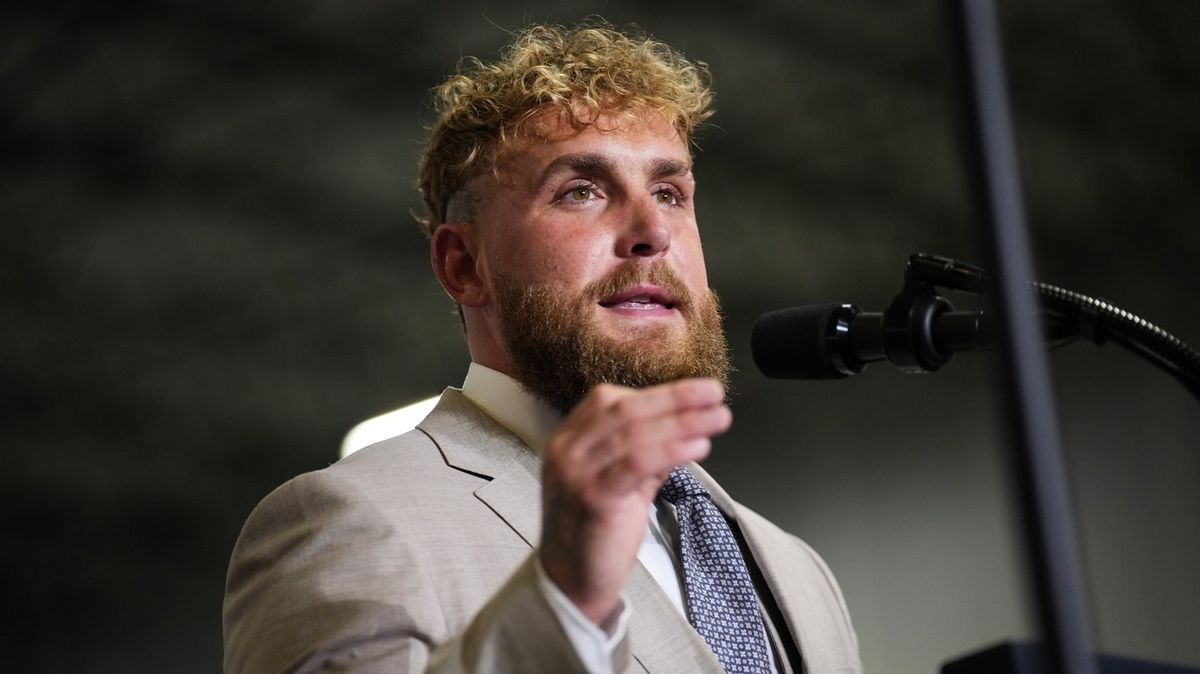
New YouGov figures give a clearer picture of where Americans stand on Jake Paul, after Donald Trump suggested he could have a future in politics.
Paul hasn’t said he plans to run for office, but Trump recently implied the YouTuber-turned-boxer would be suited to public service.
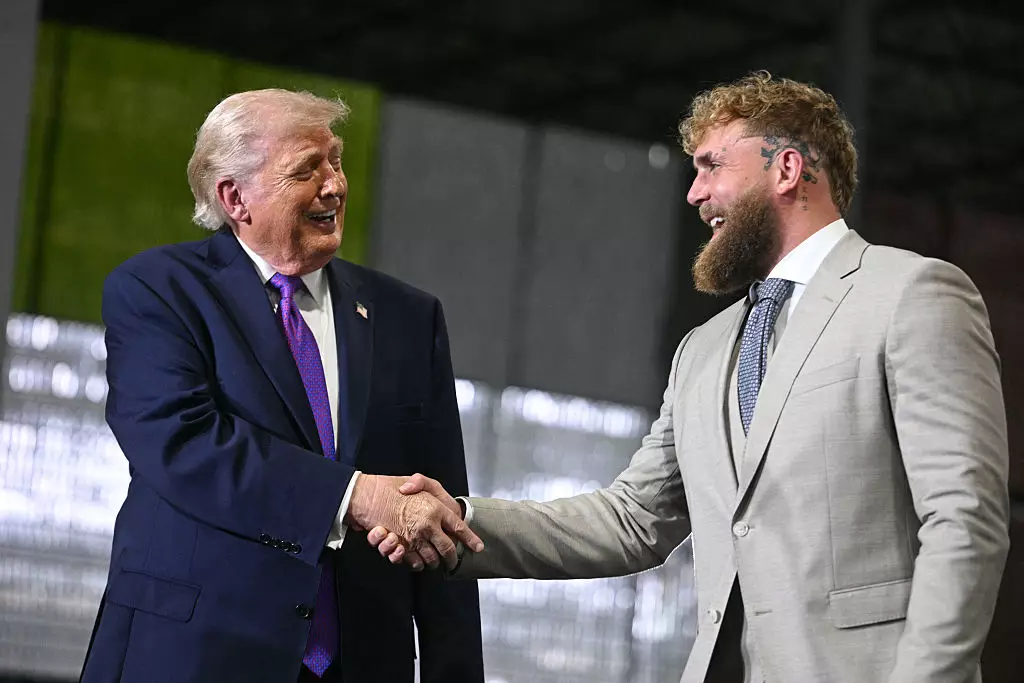
At a rally in Kentucky on Wednesday (March 11), Trump invited Paul on stage and told the crowd: “I’m going to make a prediction that you will be, in the not-too-distant future, running for political office. You have my complete and total endorsement.”
Paul replied: “What Mr. Trump has taught me is courage. We never back down from a fight, even if they’re much bigger than you, much, much bigger than you.”
He added: “I feel all the local Kentuckians feel the same way. You guys have that fight. You guys have that swag.”
But the question is whether voters would actually welcome Paul as a political figure. Based on YouGov’s tracking, the public mood appears lukewarm at best.
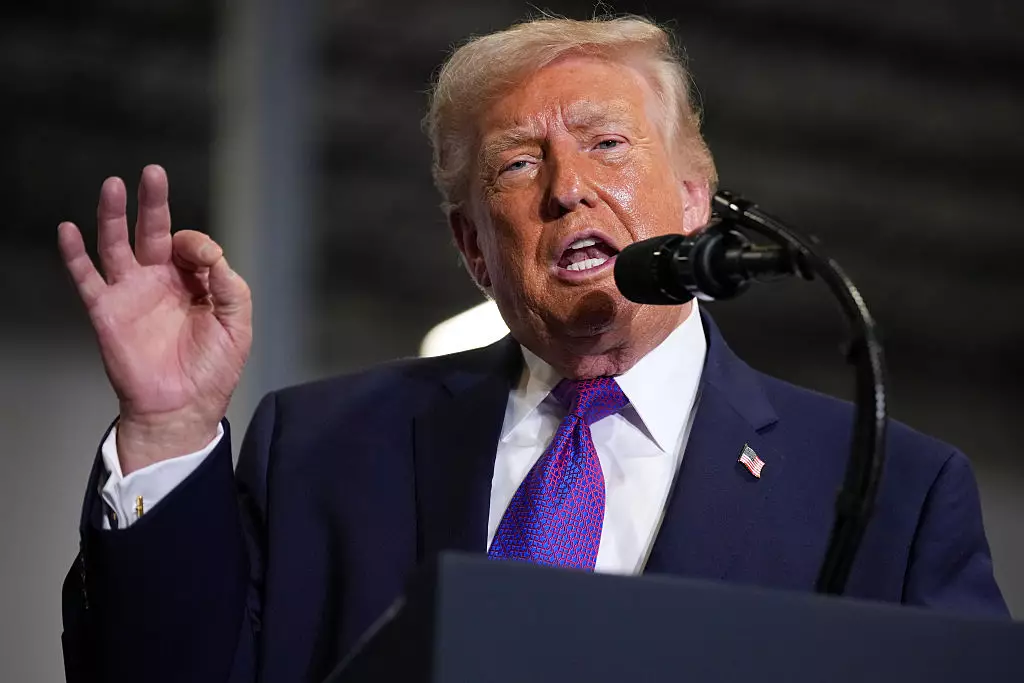
Before diving into Paul’s numbers, a separate NBC News poll suggests Trump is currently viewed more favorably by registered voters than both major political parties and several prominent names often floated for the 2028 presidential race.
In that poll, 41 percent of Americans said they see Trump positively, while 53 percent said they see him negatively.
Even with more respondents viewing him unfavorably overall, those ratings still come out ahead of Vice President JD Vance, Secretary of State Marco Rubio, former Vice President Kamala Harris, California Governor Gavin Newsom, and Representative Alexandria Ocasio-Cortez.
Meanwhile, YouGov’s popularity trackers offer a snapshot of how both Paul and Trump are viewed by the broader US adult population.
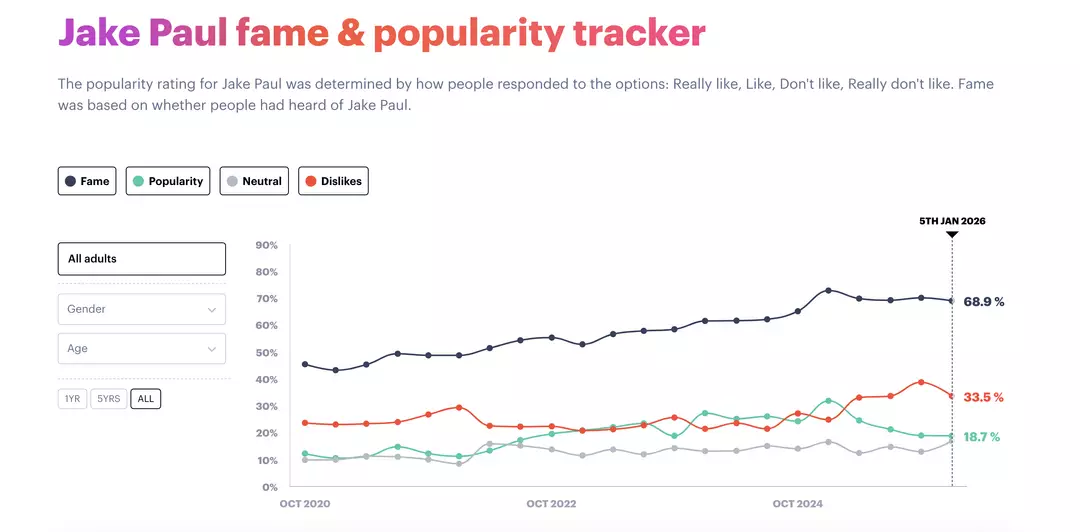
YouGov’s data indicates awareness of Paul has climbed consistently since 2020, reaching roughly 69 percent of adults by early 2026.
His favorability, however, has remained comparatively low. While it has moved up and down over time, the latest reading puts the share who like him at around 18.7 percent.
Unfavorable views of Paul have trended upward, with about 33.5 percent saying they dislike him — meaning negative opinions outweigh positive ones.
Trump’s numbers, by comparison, reflect near-universal recognition, with awareness at about 97.5 percent of adults.
The proportion who say they like Trump is notably higher than Paul’s, sitting at around 33 percent, though still short of a majority.
Dislike remains dominant for Trump, with roughly 54.6 percent of respondents expressing an unfavorable view.
So, while most Americans report disliking Trump, around one-third report disliking Paul.
The difference is intensity and scale: Trump is widely seen as divisive, but he also appears to command a larger and more durable group of supporters — whereas Paul’s support is smaller, and his overall ratings still lean negative.
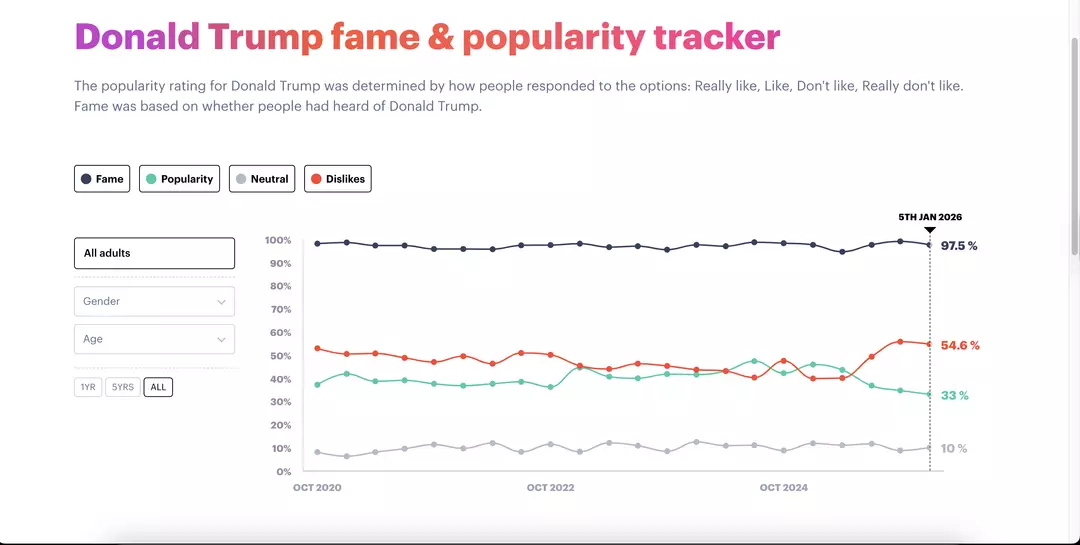
In simple terms, the trackers suggest Trump is far better known and far more polarizing than Paul. He also draws stronger opposition — but simultaneously has a bigger base that views him positively.
Paul, meanwhile, is less established with the public and sits in a position where more people dislike him than like him, which wouldn’t be an ideal starting point for a serious political run.
So, for now, the numbers don’t indicate a particularly promising outlook for Paul if politics ever becomes more than just rally talk.