

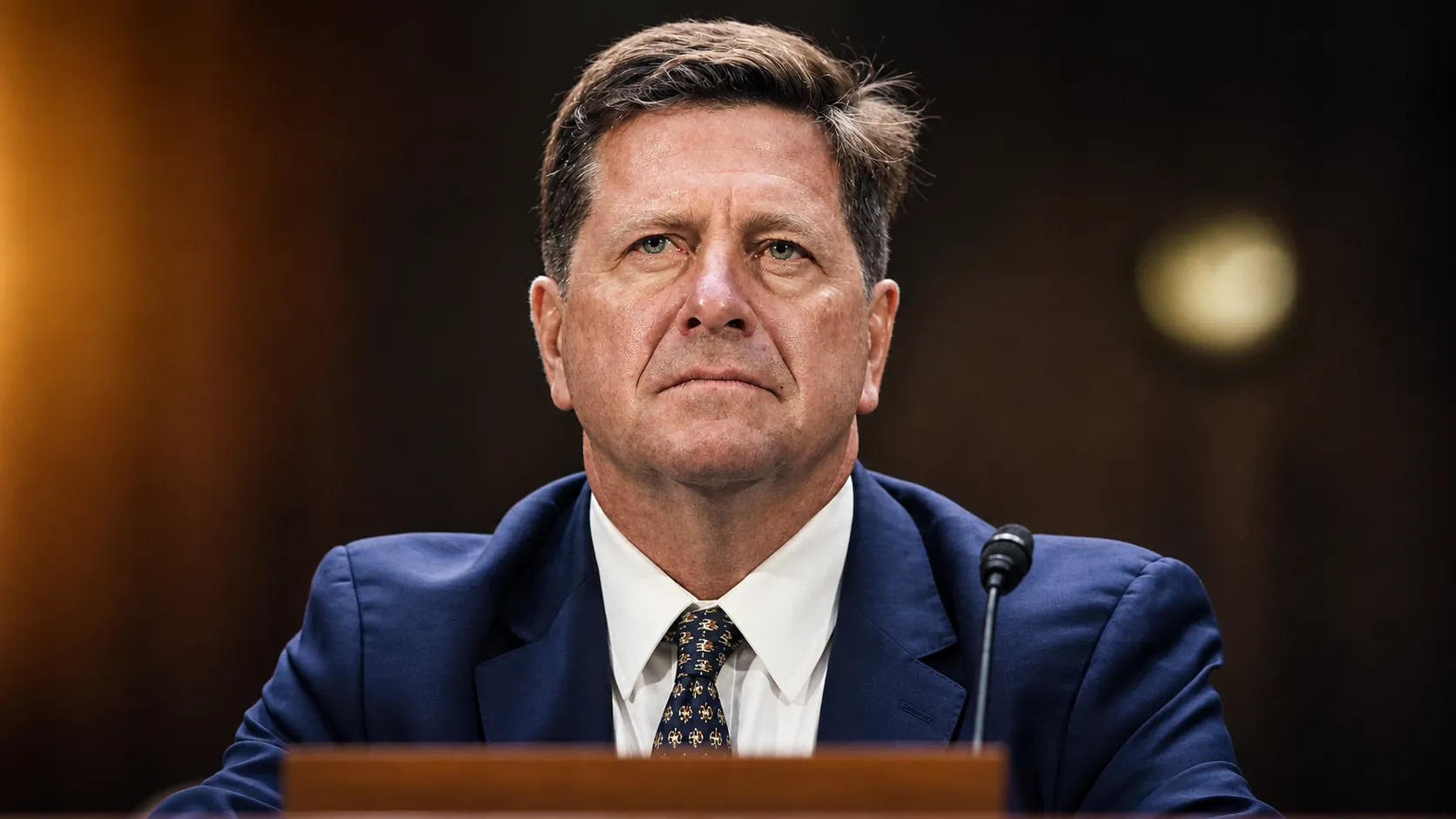
The Senate Intelligence Committee advanced Jay Clayton’s nomination to serve as Director of National Intelligence on Tuesday, clearing a major hurdle toward confirmation in what has become a contentious battle over Trump’s leadership of the intelligence community. The committee voted along party lines, 9 to 8, to send Clayton’s nomination to the full Senate floor for consideration, a move that could happen as early as next week.
Clayton, the U.S. Attorney for the Southern District of New York and former Securities and Exchange Commission chairman, faces a dramatically different landscape than the one he encountered just weeks ago when some Democrats initially signaled they might support his nomination. That goodwill evaporated following a contentious confirmation hearing on July 15, during which the former Trump administration official repeatedly declined to explicitly state that President Joe Biden won the 2020 election.
Democratic Senator Mark Warner of Virginia, the committee’s top Democrat and someone who had previously worked with Clayton at the SEC, declared he would vote against the nominee. “I’ve known Jay for a long time. I like Jay. I worked well with him when he was at the SEC. But I was bitterly disappointed by his performance in front of my committee,” Warner said on a Sunday political program before the committee vote.
Senate Democratic Leader Chuck Schumer was even more pointed in his criticism, characterizing Clayton’s performance at the hearing as “abysmal” and saying it made it much less likely he would receive Democratic votes for confirmation on the full Senate floor.
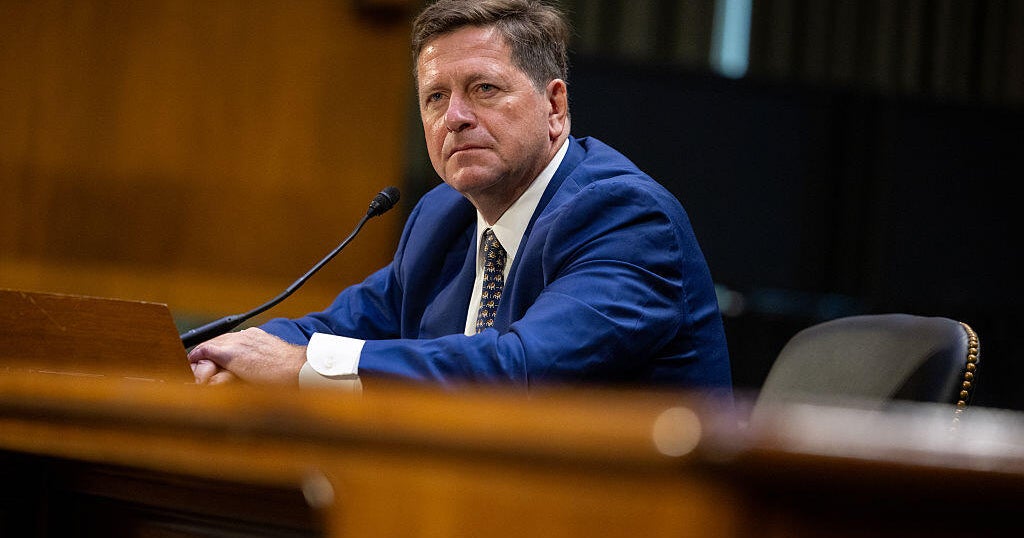
At the hearing, Democrats from both parties extensively questioned Clayton about his stance on the 2020 election, particularly after former Director of National Intelligence Tulsi Gabbard was present during a federal raid of election offices in Fulton County, Georgia earlier this year. When asked directly who won the 2020 election, Clayton said Biden was certified as president but stopped short of saying Biden won outright. After repeated questioning from Georgia Democratic Senator Jon Ossoff, Clayton became terse, refusing to engage further with the line of inquiry.
Republican Senator Tom Cotton of Arkansas, who chairs the Intelligence Committee, presented a markedly different assessment of Clayton’s qualifications. “Jay Clayton is a highly qualified nominee with a deep experience combatting a wide range of national security threats,” Cotton said in a statement following the committee vote. “I’m pleased that the Senate Intelligence Committee voted to advance his nomination to be Director of National Intelligence.”
The path to this moment has been unusually turbulent. Trump initially nominated Clayton in early June, creating a rare moment of potential bipartisan consensus that could have allowed his confirmation to proceed swiftly. But Trump abruptly canceled Clayton’s scheduled confirmation hearing in mid-June, linking progress on his nomination to passage of his voter identification legislation, the SAVE America Act, which had already failed in the Senate. He kept Clayton’s nomination stalled until rescheduling the hearing for July 15.
The dramatic delay stemmed in part from Trump’s insistence on installing Bill Pulte as acting DNI. Pulte, who previously led the Federal Housing Finance Agency, has become a controversial figure precisely because of his lack of any intelligence or national security background. In that housing role, he initiated investigations of several Trump political adversaries on mortgage-related matters. The arrival of such an unqualified figure at the helm of America’s intelligence apparatus motivated even some Republicans to express alarm.
The intelligence community leadership vacuum took on added urgency with a deadline surrounding a critical surveillance tool. A key component of U.S. Intelligence operations, Section 702 of the Foreign Intelligence Surveillance Act, expired on June 12 after Congress failed to reauthorize it. That lapse occurred after Trump’s appointment of Pulte soured Democratic negotiations over reauthorizing the surveillance program. Democrats withdrew from a potential deal to extend the authorities in protest of Pulte’s appointment.
Clayton’s advancement out of committee sets the stage for a full Senate vote, where Republicans hold the majority. Despite his controversial hearing performance and unified Democratic opposition, Clayton is expected to be confirmed given GOP control of the chamber. Warner himself acknowledged the likely outcome, saying “I know Jay Clayton will probably get confirmed,” while expressing hope that Clayton would govern differently than he performed at his hearing.
Clayton brings extensive experience from multiple administrations. As SEC chairman from 2017 to 2020, he received bipartisan support during his confirmation. His role as U.S. Attorney for the Southern District of New York has involved prosecuting significant national security cases, including matters involving foreign cartels, terrorist organizations, terrorism-related prosecutions and complex financial crimes. He has earned a law degree from the University of Pennsylvania and earned degrees in engineering and economics as well.
However, critics have questioned whether his background in securities law and financial enforcement adequately prepares him to oversee the nation’s intelligence agencies and their 18 different components. Some analysts have noted he has no prior experience working within the intelligence community itself.