

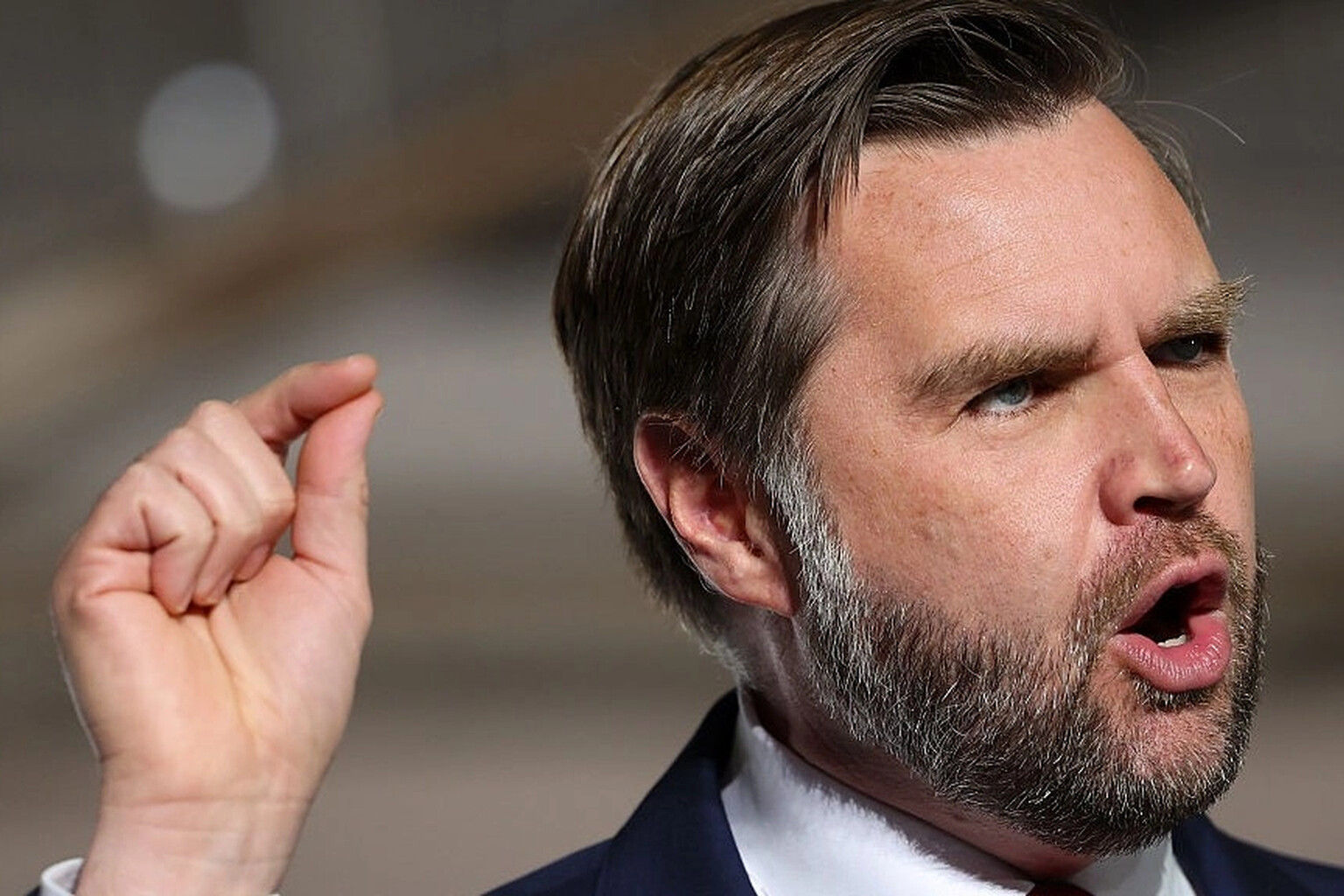
JD Vance has broken his silence on the Republican Party’s midterm defeats, posting a detailed analysis on X that pins the losses on voter anger rather than apathy.
The vice president, 41, said he had spent the aftermath of Tuesday’s elections gathering feedback from respected pollsters and data analysts to understand why Democrats flipped battleground states and seized control of both chambers of Congress. What he found, he wrote, contradicted the prevailing narrative that poor turnout had doomed the GOP.
Vance said Republican analysts had been tracking the “composition” of the electorate state by state, measuring whether the voters showing up matched the profile of Trump 2024 supporters. The numbers were not the problem. In Florida, he noted, the electorate was nine percentage points more Republican than Democrat—still a couple of points off 2024 levels, but hardly a collapse.
“The biggest problem was not getting Republican supporters to the polls, but persuading them to vote Republican once they arrived,” Vance wrote.
He recalled pressing one data analyst whether strong turnout meant the party might still outperform expectations. The analyst’s warning proved prophetic: Republican voters were showing up, but many former Trump supporters were angry and intended to vote Democrat.
Vance said he had asked a respected pollster to speak directly with former Trump voters about what it would take to bring them back into the Republican fold. The four leading responses, he shared, were ending the war, addressing the cost of living and inflation, putting America First, and changing the US relationship with Israel. These four issues, he said, accounted for nearly all responses from voters who had abandoned the party.
“Clear reasons” voters turned their backs, Vance called them.
He acknowledged that some critics had faulted the party’s economic messaging in the campaign’s closing weeks, citing conversations with another pollster he respected. But he maintained that the four issues identified in the polling offered the more significant explanation for the Republican losses.
The vice president’s post landed as Democrats completed their sweep of Congress, with PBS and other outlets calling the House for Democrats following their earlier capture of the Senate. The results marked a sharp reversal from 2024, when Trump and Vance won the White House and Republicans held both legislative chambers.
Vance’s analysis notably challenged the internal GOP finger-pointing that had begun within hours of polls closing, as operatives and media figures debated whether weak candidate quality, Trump’s presence on the trail, or structural disadvantages had cost the party its majorities.
The Israel item on Vance’s list stood out among the four priorities, reflecting growing strain between the Republican base and the Netanyahu government that had accelerated during the Gaza conflict. “Changing the US relationship with Israel” ranked alongside economic nationalism and non-interventionism as a top demand from defecting Trump voters.
Vance did not elaborate on what specific policy shifts on Israel these voters sought, nor did he indicate whether the administration would adjust its posture.
The vice president’s framing—that persuasion, not turnout, failed the GOP—carried implicit weight given his own electoral history. Vance won his Senate seat in 2022 as a Trump-aligned populist, then joined the former president’s ticket two years later. His post suggested that the coalition that elected them had fractured over policy, not simply failed to materialize at polling places.
He offered no prescription for how Republicans might address the four voter demands before the next federal elections in 2028.
The midterm elections saw voters hand control of Congress to Democrats in what PBS characterized as a sharp rebuke of Trump, who had held rallies in states including Nebraska in the campaign’s final days attempting to lift Republican incumbents. Democrats flipped multiple battleground states that Trump had carried in 2024, defying pre-election modeling that had shown the Senate particularly difficult for the party to capture.
Trump has since forewarned Democrats that he will veto any “insane” suggestions from them, while Iran’s government has publicly claimed that “Americans said NO TO WAR” with their voting intentions.
Vance is expected to continue his analysis of the defeat as the GOP regroups ahead of the 2028 presidential cycle.