


Jeff Bezos has come out on top in the billionaire rivalry with Elon Musk, securing the chance to be first to help build a base on the Moon.
Bezos, the Blue Origin founder with a reported net worth of $284 billion, has won the contest to support NASA’s effort to establish a new lunar outpost.
The work falls under NASA’s Artemis program, which is designed to return humans to the Moon and use what’s learned there to push farther into deep space—ultimately including missions to Mars.
Although SpaceX did not land this particular contract, Musk appeared upbeat about the result, describing what Blue Origin and NASA are working toward as “inspiring” in a post on X.
NASA Administrator Jared Isaacman has framed the proposed facility as ‘humanity’s first long-term outpost beyond Earth.’
“The Moon Base will be America’s and humanity’s first outpost on another celestial world,” Isaacman said.
“Every mission, crewed and uncrewed, will be a learning opportunity as we return to the lunar surface, build the infrastructure to stay, and master the skills required to live and operate in one of the most demanding and dangerous environments imaginable.”
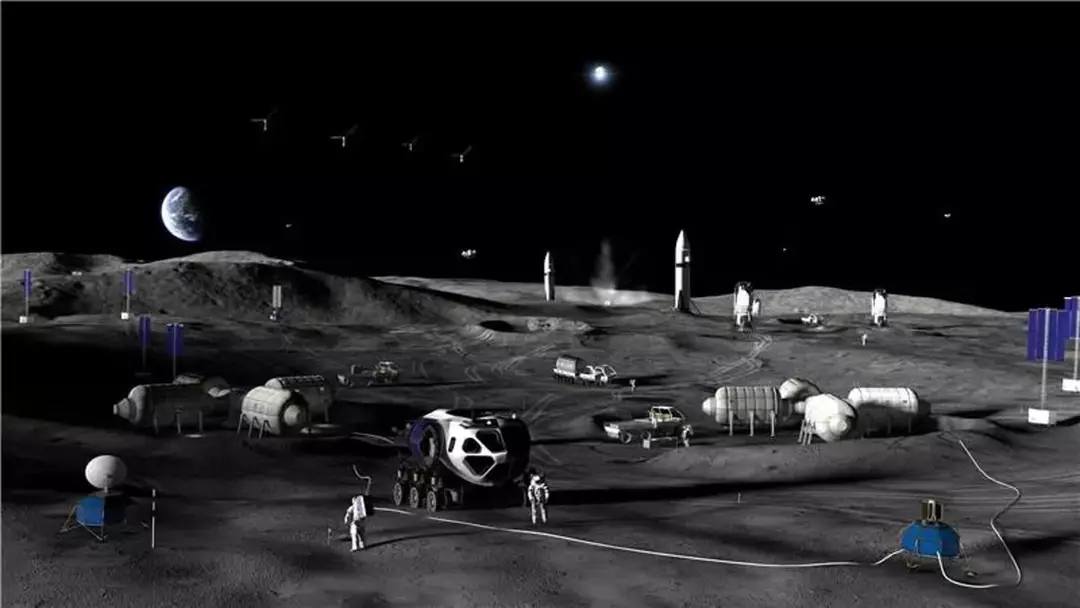
NASA’s aim is to put Americans back on the Moon before President Donald Trump’s term ends in 2029.
At the same time, the agency is keeping pace with China’s accelerating lunar plans, with Beijing targeting a landing before 2030. China’s approach is expected to rely on the Mengzhou orbiter and the Lanyue lunar lander, launched by the heavy-lift Long March 10 rocket.
That sets the stage for an increasingly intense race, heightened by rising geopolitical strains between the two countries.
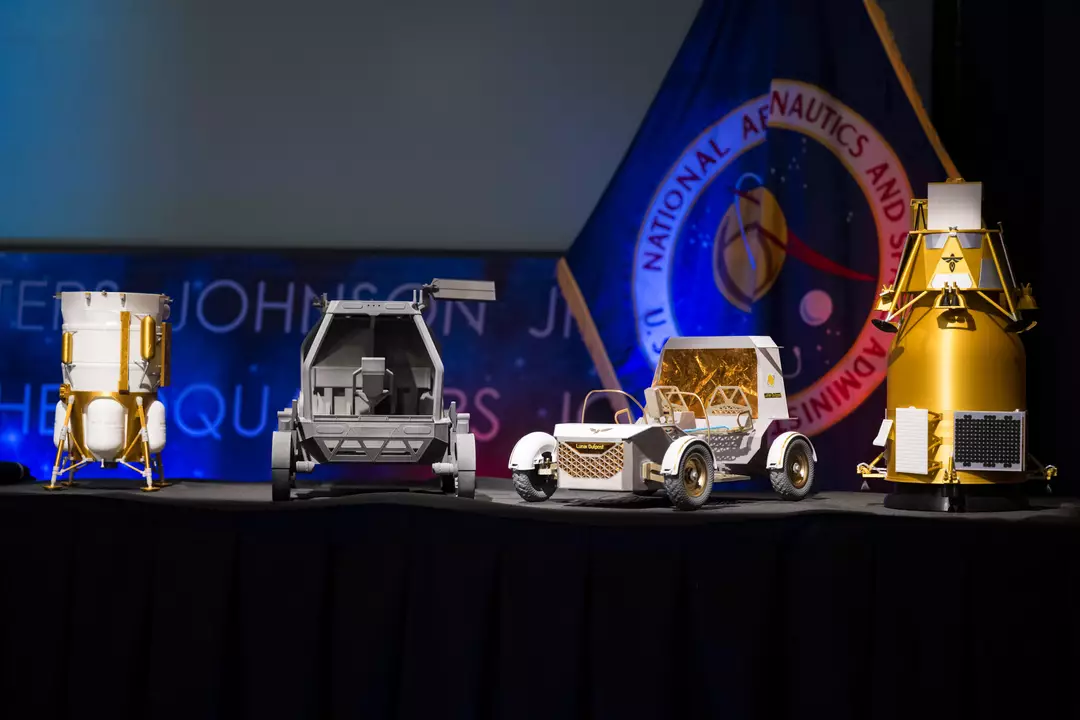
To build the Moon Base, NASA has set out a three-stage roadmap that begins with robotic exploration and leads, step by step, to human habitation.
Through the Ignition Moon Base initiative, the agency plans to survey and study the lunar environment extensively before committing astronauts to surface operations. This includes deploying robotic landers, rovers, and hopping drones to chart challenging regions and identify the safest and most useful locations.
Those early deliveries are also expected to provide astronaut-ready surface vehicles, communications capabilities, and research payloads that can begin work long before crews arrive.
NASA confirmed on Tuesday that Blue Origin, Intuitive Machines, Astrobotic, and other companies have received contracts tied to building the equipment required for Phase One.
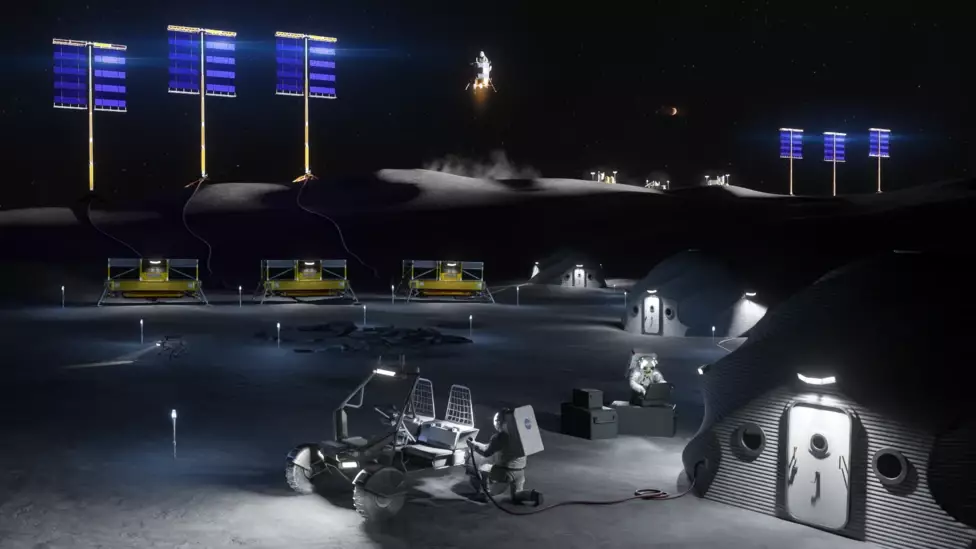
Alongside the announcements, NASA has shared new artist renderings of the type of Moon Base it envisions, showing living quarters for astronauts, surface power systems, and rovers operating around the site.
Blue Origin’s lander, Endurance, is being built to carry out extremely accurate landings and move around the lunar surface with a high degree of autonomy. Astrobotic’s Griffin‑1 lander, meanwhile, is expected to target a landing close to the Moon’s south pole in the Nobile Crater region.
These robotic flights will take NASA scientific hardware too, such as high-resolution imaging systems and laser-based tools designed to help spacecraft descend and land more safely. Moon Base programme executive Carlos García‑Galán has said this exploration stage is expected to continue through 2029, with around 25 launches delivering roughly four metric tonnes of cargo to the Moon.
After that, NASA plans to shift toward constructing essential lunar utilities, with proposed power systems including solar arrays as well as nuclear fission reactors.
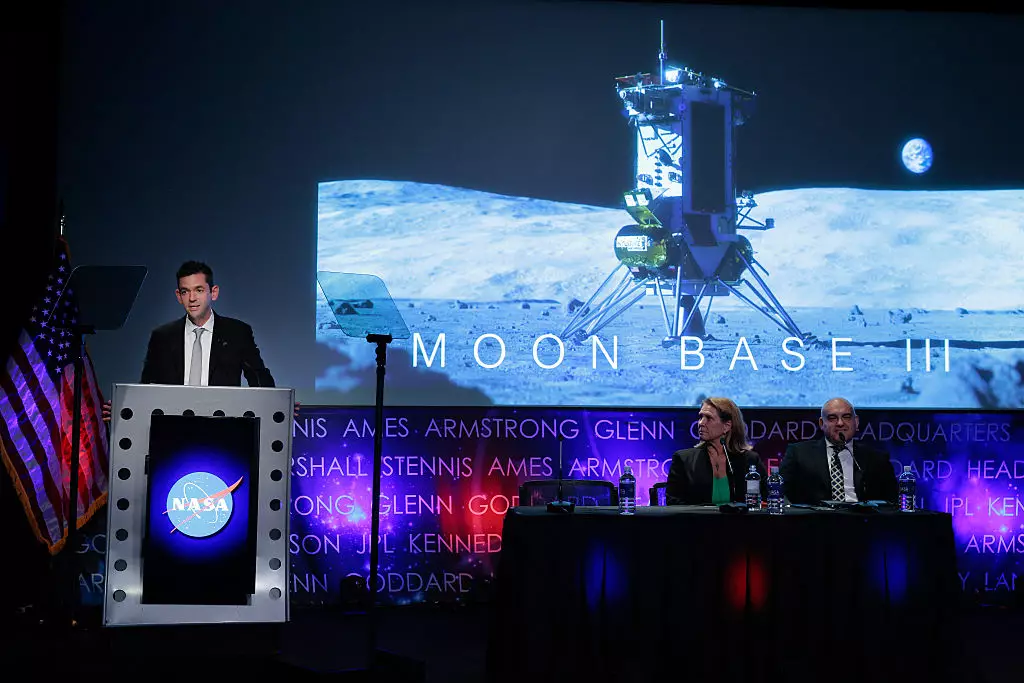
By about 2032, NASA says it hopes crews could remain on the Moon in what it calls “semi‑permanent” accommodation, using rovers to travel farther across the harsh, rocky terrain.
The south pole is viewed as especially valuable because scientists believe water ice exists there—potentially supporting drinking supplies, oxygen generation, and even the production of rocket propellant.
Even so, the overall plan still hinges on developing and proving a system that can reliably carry astronauts to the Moon and bring them home safely—an issue NASA says remains a major technical hurdle. The agency adds that these awards are only the beginning, with more than a dozen Moon Base-related missions expected to be revealed over the course of the year.