

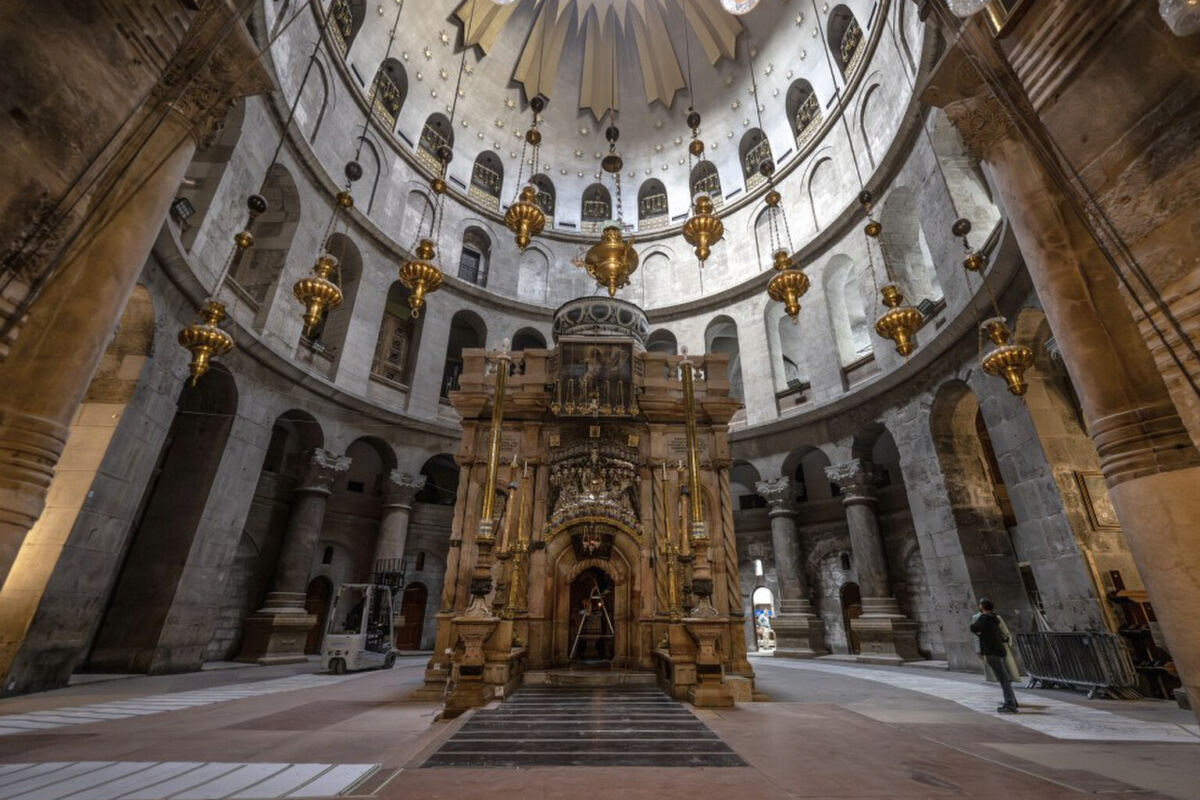
Italian archaeologists say they have uncovered an ancient funerary landscape beneath Jerusalem’s Church of the Holy Sepulchre that aligns with biblical descriptions of Jesus Christ’s burial site.
Francesca Romana Stasolla, lead archaeologist from Rome’s “La Sapienza” University, said in an exclusive that the team had “found evidence of a funerary landscape.” The discovery emerged during the final phases of excavations in 2025, though the project began three years earlier during a floor restoration at the fourth-century church.
The church stands where millions of Christians believe Christ was crucified, buried and resurrected, drawing roughly four million pilgrims annually. Beneath it, Stasolla’s team found an abandoned quarry, cultivated plots, rock-cut tombs and an ancient garden — elements that mirror the Gospel of John’s description: “At the place where Jesus was crucified, there was a garden, and in the garden a new tomb, in which no one had ever been laid.”
No remains were found in the tomb. Yet the parallels proved compelling to researchers. John 19:20 places the crucifixion near Jerusalem, while Hebrews 13:12 locates it outside the city gate — matching the quarry’s position during Christ’s era. Sections of the quarry reached 20 feet deep and had been filled with dirt, indicating pastoral use.
Olive trees and grapevines dating to around 33 A.D., the believed year of Jesus’ death, further supported the site’s agricultural function. Stasolla told the Times of Israel that “the gospel mentions a green area between the Calvary and the tomb, and we identified these cultivated fields.” The plants may correspond to those referenced in John 19:41.
The rock-cut graves themselves matched descriptions in Matthew, Mark and Luke of Jesus’ tomb as carved from stone. One chamber had been blocked by a Roman structure built during Emperor Hadrian’s reign in the second century. Constantine’s workers later demolished that structure around 200 years afterward, separated the tomb from other chambers, and erected a Christian shrine where pilgrims could worship.
This preservation effort indicated that early Christians had maintained knowledge of the site’s significance across generations. Stasolla told the Times that “the real treasure we are revealing is the history of the people who made this site what it is by expressing their faith here.”
She continued, “Whether someone believes or not in the historicity of the Holy Sepulchre, the fact that generations of people did is objective. The history of this place is the history of Jerusalem, and at least from a certain moment, it is the history of the worship of Jesus Christ.”
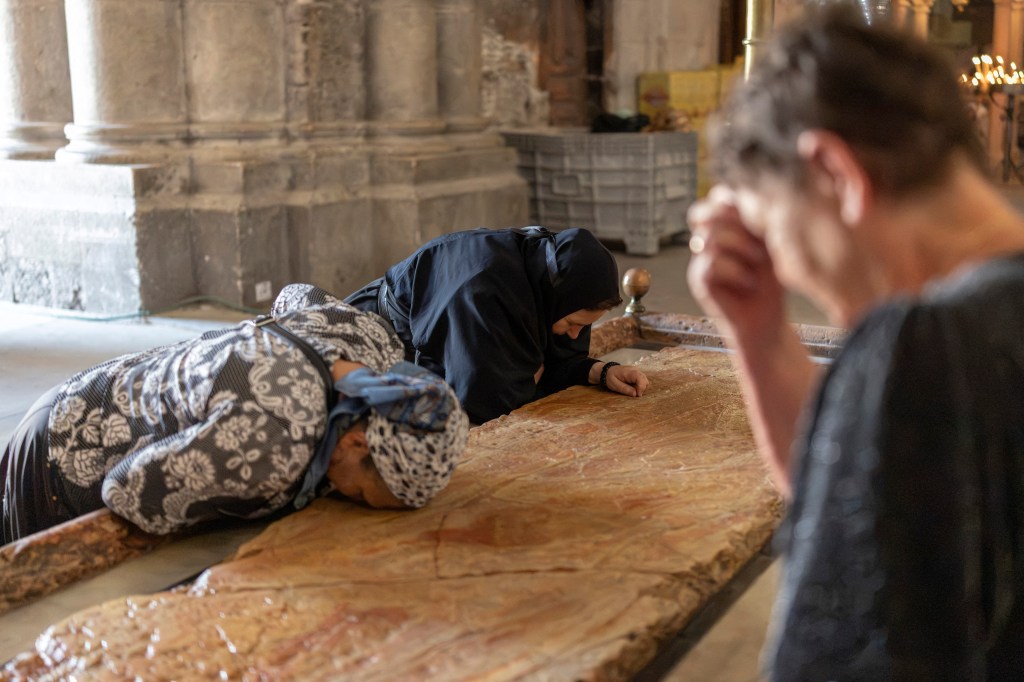
The findings were detailed in a preliminary study published in the Jerusalem archaeological journal Liber Annuus. Stasolla and her team emphasized that the evidence does not definitively prove this was Jesus’ burial site, but rather documents a landscape consistent with biblical accounts and later veneration.
The Church of the Holy Sepulchre remains one of Christianity’s most visited sacred sites, with the new discoveries adding archaeological layers to its long contested claim as the authentic location of Christ’s passion and resurrection.
The excavation findings will be presented in further detail at upcoming archaeological conferences in Rome.