

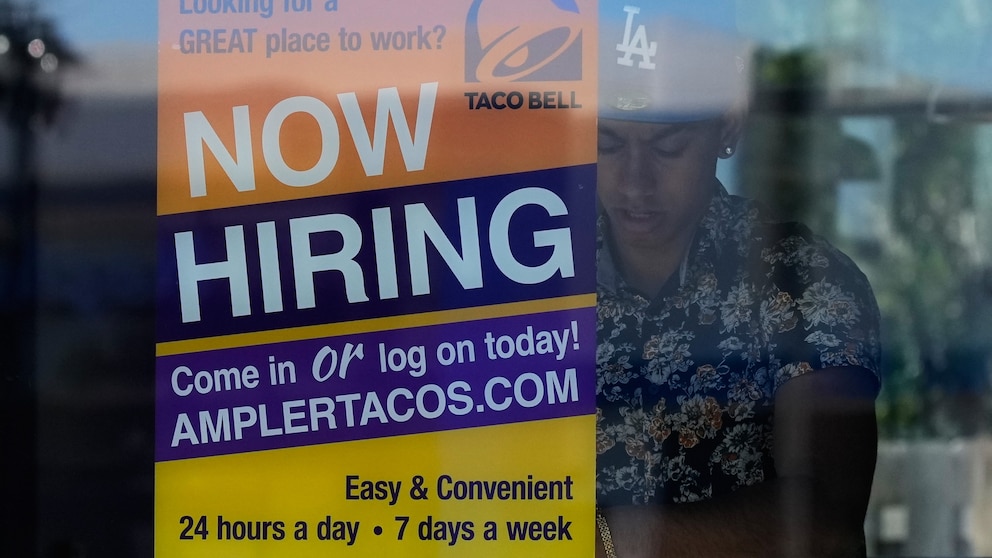
Fewer Americans filed for jobless aid in the week ending June 20, with initial claims falling to 215,000, a decline of 12,000 from the previous week and a better-than-expected result that suggests layoffs remain restrained despite ongoing economic challenges.
The Labor Department reported the decline on Thursday, showing applications for unemployment benefits came in below analyst forecasts of 225,000. The result marks the lowest level in four weeks and adds to signs that the labor market is holding its ground even as businesses face headwinds from inflation, trade policy uncertainty, and lingering aftereffects of the war in Iran that disrupted global energy markets.
Weekly jobless claims are closely monitored by economists as a leading indicator of layoffs and overall labor market health. The numbers have stabilized in a narrow band mostly between 200,000 and 250,000 since the U.S. Economy emerged from the pandemic recession in 2020, a range that indicates historically restrained firing activity. The four-week moving average, which smooths out weekly volatility, edged higher by 750 to 224,250.
The picture of the labor market remains decidedly mixed. Layoffs appear to have stayed at historically low levels, with some economists noting that the current level of claims represents minimal turnover in an economy with a labor force of roughly 159 million workers. But gains on the hiring side tell a different story. After a dismal 2025 that saw fewer than 200,000 job gains for the full year—compared with about 1.5 million in 2024—hiring has picked up modestly in recent months.
In May, employers added a surprise 172,000 jobs. Over the three months since the Iran war began in late February, the economy has averaged 188,000 new jobs per month, marking the best three-month stretch since early 2024. Still, job creation is running well below the pace seen in prior years. From 2021 through 2023, employers averaged nearly 400,000 new jobs monthly as the economy bounced back from COVID-19 lockdowns.
The broader economic backdrop remains complicated. Inflation pressures have not fully subsided. The Federal Reserve’s preferred inflation gauge rose to a three-year high in May as oil prices spiked following Iran’s closure of the Strait of Hormuz, a critical chokepoint through which a fifth of the world’s oil passes. Consumer prices rose 4.1% in May compared with a year earlier, the largest annual increase since April 2023 and well above the Federal Reserve’s 2% target.
Energy prices have since fallen from those peaks, but the surge earlier in the year squeezed consumer budgets and appears to have dampened business confidence in hiring. The Federal Reserve, at its most recent meeting, left benchmark interest rates unchanged, with officials continuing to weigh the risks of persistent inflation against the desire to support economic growth.
Job openings rose in April to 7.6 million, up from 6.9 million in March and the most since May 2024, suggesting employers still have demand for workers despite the cautious hiring pace. The unemployment rate remains historically low at 4.3%, having held within a narrow range of 4.3% to 4.5% since July 2025.
Yet some signs point to stress in the labor market below the surface. While continuing claims, which measure people already receiving unemployment benefits, stood at 1.82 million for the week ending June 13, they have been creeping higher. The number of people jobless for 27 weeks or more rose by 524,000 over the past year, suggesting that those who do lose work are taking longer to find new jobs.
Hiring began slowing roughly two years ago and deteriorated further in 2025. Economists point to several culprits: President Donald Trump’s tariff policies, aggressive reductions in the federal workforce, and the lingering impact of higher interest rates that were meant to control inflation. The administration’s immigration enforcement efforts may also be affecting the pace at which businesses need to hire, with the monthly “break-even” hiring rate—the pace needed to keep unemployment from rising—potentially lower than in prior years due to fewer new workers entering the labor force.
Looking ahead, the labor market faces uncertainty. While low layoffs suggest employers remain reluctant to shed workers they may need, the modest pace of hiring raises questions about whether the economy can sustain growth. The government will release its June jobs report next week, providing the next major data point on whether the improvement seen in recent months persists or retreats.