

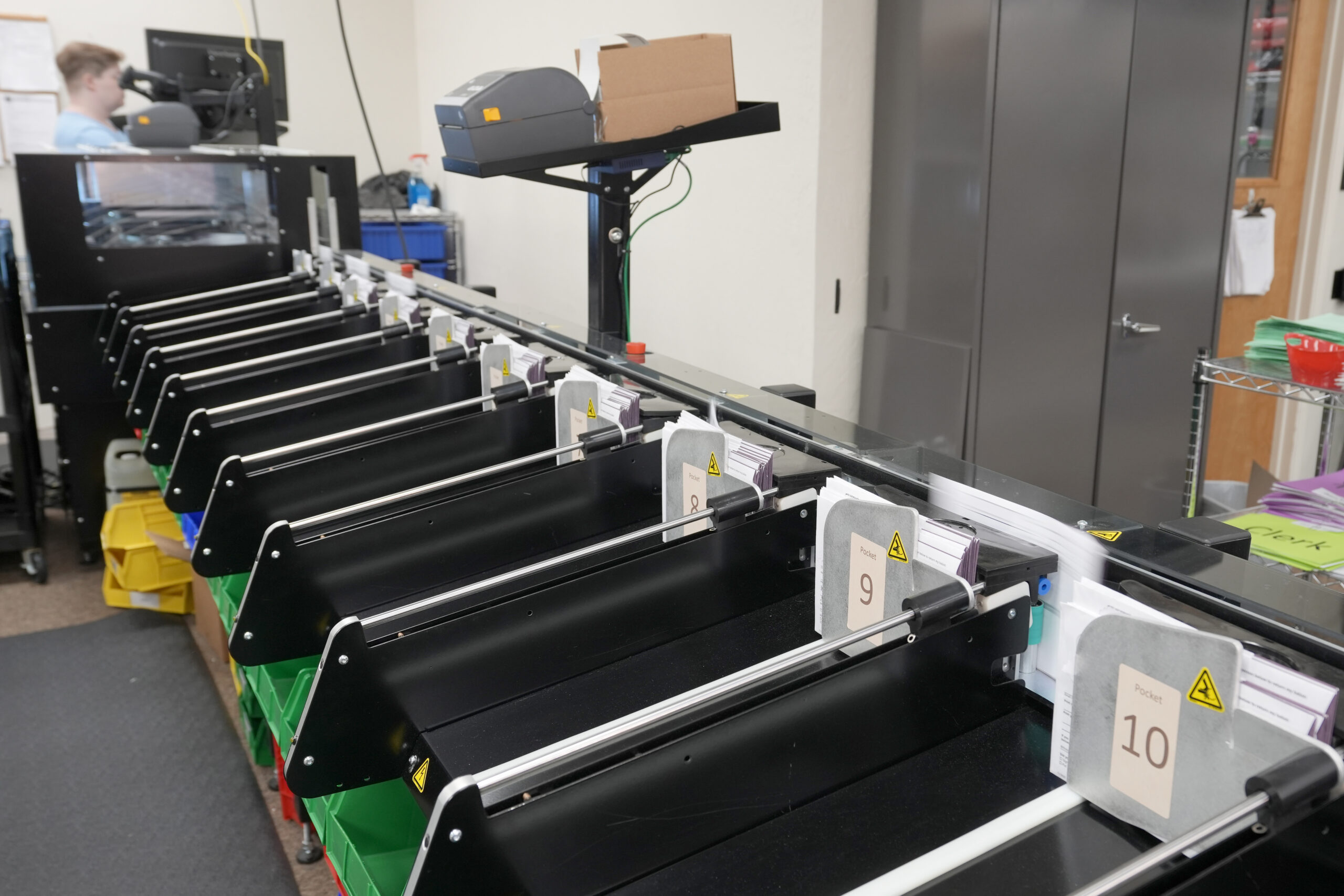
A Shasta County Superior Court judge has issued a preliminary injunction blocking Measure B from taking effect for the Nov. 3, general election, unless the court orders otherwise.
Judge Benjamin Hanna granted a preliminary injunction Friday morning to stop Shasta County’s Measure B from moving forward.
Measure B passed in June with about 56% of the vote.
Among other things, Measure B would require voters to present a government-issued photo identification to register to vote and vote in person, eliminate vote-by-mail and most early voting options, mandate the hand-counting of ballots, and create a separate county voter registration system disconnected from the state’s uniform system.
On June 30, Attorney General Bonta and Secretary of State Weber filed a lawsuit in Shasta County Superior Court challenging Measure B.
On July 2, they filed a motion for a preliminary injunction arguing that Measure B is unlawful because it exceeds Shasta County’s constitutional authority—as a charter county, Shasta County does not have home-rule authority, or the power to set its own rules, over voter registration or elections; it is preempted by state law; Measure B directly conflicts with California laws governing voter identification, vote-by-mail, early voting, ballot counting, and the statewide voter registration system; and it threatens to disrupt the November election.
“Measure B would unlawfully change how elections are conducted in Shasta County,” said Attorney General Rob Bonta. “Today’s ruling prevents Measure B from taking effect while our litigation proceeds, providing certainty that the November election will be conducted under California’s established election laws.”
Bonta added that he would keep fighting the measure.
“While others attempt to close doors, California ensures that the portal of democracy remains wide open,” said Secretary of State Shirley N. Weber. “The court decision today blocking Measure B has made clear what we already know — creating unnecessary barriers does not strengthen our democracy, it weakens it. We will continue making voting accessible for more eligible voters to use their voices in the best way possible, by casting a ballot.”
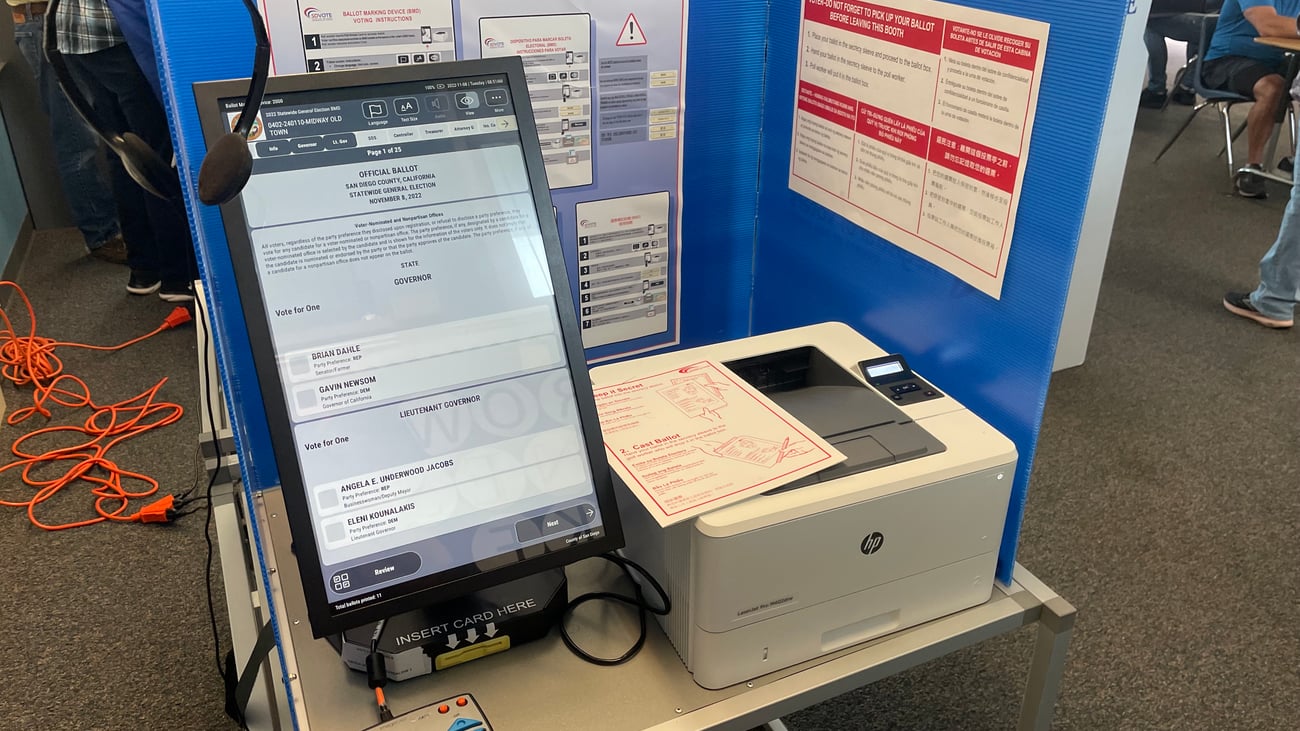
“Measure B seeks to create a whole new electoral system that would require creation of new voter rolls and re-registration of existing voters,” wrote Hanna in his ruling. “Such a feat would be difficult under normal time frames, let alone three months before the November general election.”
Hanna also addressed the charter county issue directly.
“The regulation and administration of the electoral process is a matter of statewide concern, and Shasta County’s status as a charter county does not entitle it to enact invalid legislation simply because some in this community do not agree with the existing law,” wrote Hanna.
The judge was sympathetic to the county’s confusion about how to proceed.
“It’s a kind of Schrodinger’s cat situation,” the judge said, comparing the county’s current imbroglio to the famous thought experiment utilized in quantum mechanics. “We don’t know if the cat in the box is alive or dead, so we have to prepare for both eventualities.”
Deputy Attorney General Liam O’Connor represented the state in court today, arguing that implementing the measure would both be illegal and cause irreparable harm to voters.
In his oral ruling, Hanna agreed on both points, saying leaving the measure in place this fall — while the full court process continues to play out — would likely result in voter disenfranchisement due to confusion and uncertainty. “Some would likely be discouraged from voting, or unable to vote,” Hanna said.
He found that the four main provisions of the measure directly contradict state law. That includes the voter ID requirements, restricting mail-in voting, hand-counting ballots and creating a new voter roll independent of the state.
Hanna also concluded that most of the legal parts of the measure are so inextricably linked to the illegal portions, that the measure can’t be split up.
He said that the community’s opposition to state election laws isn’t justification for breaking them.
California Attorney General Rob Bonta and Secretary of State Shirley Weber are suing Shasta County Clerk Clint Curtis and five private citizens over portions of the measure. State officials argue that provisions including hand counting ballots and limiting voting to a single day conflict with state election law.
Among those named in the lawsuit is Laura Hobbs, an employee of the Shasta County Elections Office who helped lead the signature-gathering effort.
The proponents have hired Alexander Haberbush, a Long Beach attorney, to represent them in court.
Hobbs said “We do expect to be victorious in this, and we expect the county to take this on and put a full defense forward.”
However, the county took a different path.
The California Attorney General sued the county shortly after the measure passed. The county board of supervisors voted to not defend the measure in court, so instead the proponents who got the measure on the ballot took the county’s place.
Laura Hobbs, one of the Measure B proponents who remains involved in the lawsuit represented by attorney Alexander Haberbush, said Curtis’ role is to administer elections rather than defend ballot measures.
“To me that’s not really noteworthy. He’s decided in his official capacity not to defend. He doesn’t really have a dog in the fight. His job is to administer elections however he is told to either through the local laws, state laws and the federal laws,” Hobbs said.
Shasta County Counsel Joe Larmour told the court the county is not taking a position on the broader legal dispute, but it opposes any delay that could disrupt preparations for the November election.
County officials have moved forward with standard procedures.
Consistent with State and federal election law, all Shasta County active registered voters will receive a ballot for the November 3, General Election by mail. County elections officials will begin mailing ballots by October 5.
Shasta County, an abnormally Republican jurisdiction for California, passed Measure B in June, with 55% of its voters voting in favor of it via ballot initiative.
The proposed charter amendment was brought forward by Laura Hobbs, Rich Gallardo and other county residents involved in local politics for years.
Both are well-known election skeptics who have spent years casting doubt on the veracity of local elections.
The county first tried switching to hand-counted ballots in 2023, based on misinformation and lies circulating about electronic voting machines rigged to make Donald Trump lose the 2020 election.
The latest iteration brought together all those restrictions into one comprehensive overhaul.
Attorneys will be reconvening on August 24 to determine the schedule for the remainder of the case.