

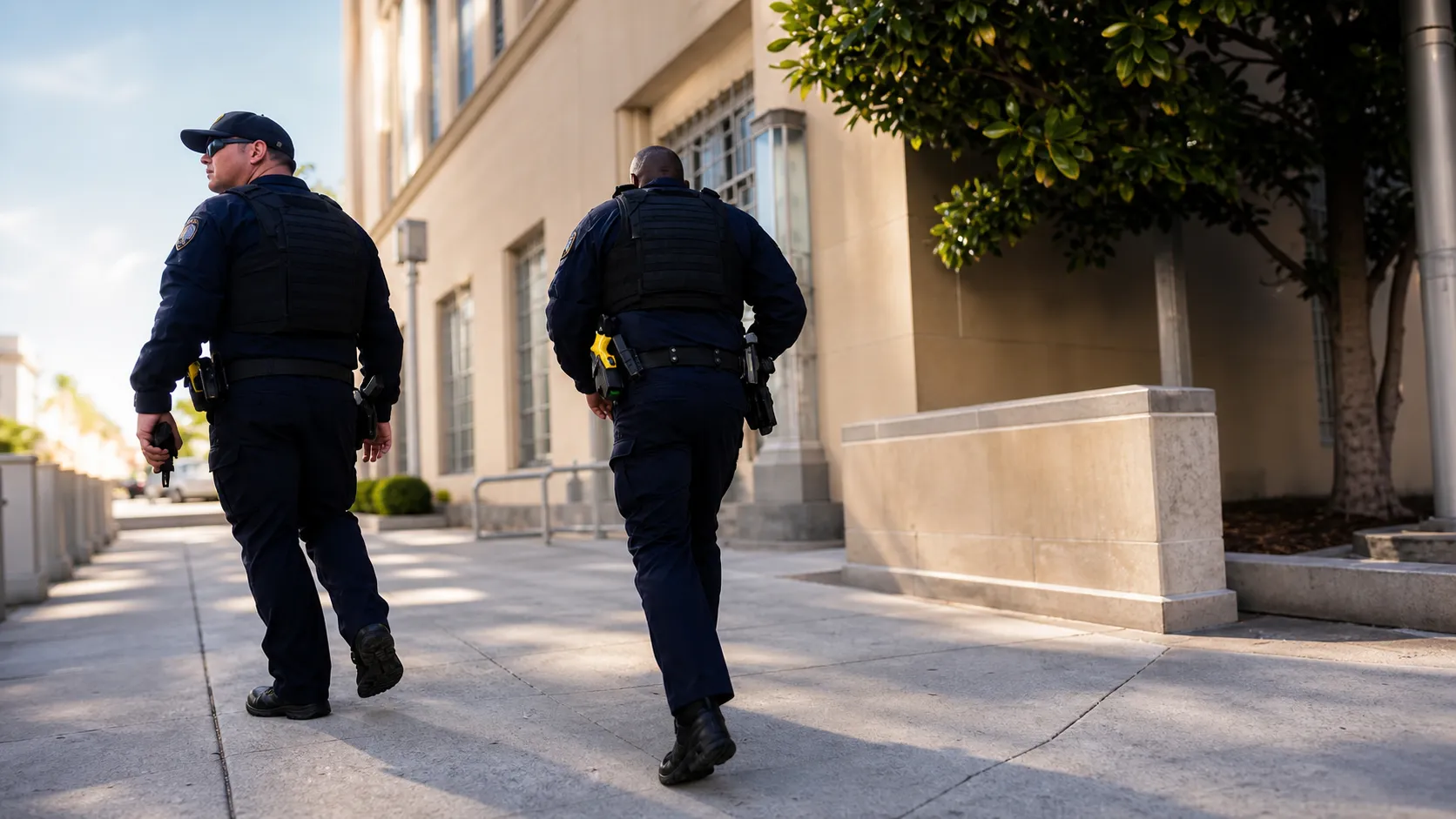
Federal judges in Fort Worth have resumed sentencing proceedings in a high-profile terrorism case involving eight protesters convicted in a shooting at a Texas immigration detention facility. On Tuesday, June 23, 2026, the judges handed down sentences ranging from 30 to 100 years in prison for their roles in a July 4, 2025 demonstration at the Prairieland Detention Center near Dallas that ended with a police officer being wounded.
Benjamin Song, a former U.S. Marine Corps reservist, received the harshest sentence: 100 years in prison, the maximum punishment available. Prosecutors said Song opened fire and yelled “get to the rifles” during the late-night protest, wounding Alvarado Police Lieutenant Thomas Gross. Song was convicted of attempted murder. Seven other defendants received sentences ranging from 30 to 70 years after being convicted in March of various charges including rioting, providing material support to terrorists, and weapons violations.
Maricela Rueda received 70 years in prison. Autumn Hill, Zachary Evetts, Meagan Morris, Savanna Batten, and Elizabeth Soto were each sentenced to 50 years. Daniel Sanchez Estrada received 30 years, despite not being present at the facility on the night of the shooting. He was convicted of concealing documents related to the incident.
The Justice Department characterized the case as the first federal terrorism sentencing of defendants accused of antifa affiliation, following President Donald Trump’s September 2025 executive order designating antifa as a domestic terrorist organization. Authorities called the July 4 demonstration a premeditated attack by a “North Texas antifa cell” motivated by anti-ICE and anti-government ideology.
The sentencing came three months after a three-week trial in which prosecutors presented testimony from 46 witnesses and more than 210 exhibits. Prosecutors told jurors that the group’s actions—including bringing firearms, body armor, and first aid kits—signaled nefarious intent. They showed surveillance footage of fireworks set off outside the detention center’s fence line and presented evidence of vandalized vehicles and a damaged security camera.
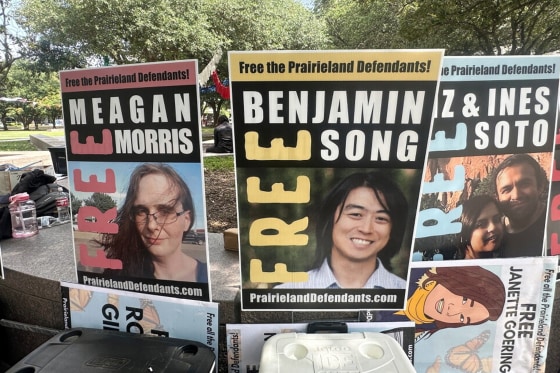
The defense told a starkly different story. Attorneys argued the demonstration was planned as a peaceful noise protest meant to show solidarity with immigrants detained inside the facility. They contended there was no coordinated ambush and that protesters who brought firearms did so only for their own protection. Song’s attorney, Phillip Hayes, argued outside the courthouse that his client fired “suppressive fire” and that a ricochet bullet struck the officer after he arrived on the scene and “aggressively” pulled out his firearm.
U.S. District Judge Reed O’Connor characterized what occurred as “an assault on democracy,” while Judge Mark Pittman noted Song had not accepted responsibility or shown remorse. Pittman stated it was “by the grace of God” that Song and others were not dead, striking down Hayes’ attempt to present evidence that Song fired at the ground.
Outside the federal courthouse in Fort Worth, family members and supporters condemned the sentences as grossly disproportionate and politically motivated. Lydia Koza, the wife of Autumn Hill, expressed fury over what she called a “grotesque distortion” of due process. She said the couple had spent more than half of their married life separated by incarceration as a result of the case.
Several defendants’ attorneys pointed to inconsistencies in the government’s account. Initially, authorities described a violent assault by “nearly a dozen” armed attackers, but the case eventually centered on a single shooter. Hayes noted that Song had previously had “an impeccable life” as a former Marine and good student, with qualities that “were just ignored.” He said his client would appeal the 100-year sentence.

Critics warned the case could establish a dangerous precedent for protest prosecution. Legal experts noted that organizations operating within the United States are supposed to be protected by First Amendment free-speech rights, yet the defendants were convicted under terrorism statutes for attending a demonstration. The case has drawn comparisons to prosecutions of January 6 Capitol riot participants, many of whom received far lighter sentences despite charges prosecutors could have pursued under similar terrorism laws.
The defendants have consistently denied any affiliation with antifa, which they characterized as an ideology rather than a centralized organization. They maintained they attended the demonstration to support immigrants in the detention center, not to plan a terrorist attack.
The Justice Department highlighted the sentencing as part of its broader commitment to combating what it describes as antifa-related activities. Acting Attorney General Todd Blanche stated that the sentences made clear that “antifa terrorists who attack law enforcement and federal facilities will face swift and uncompromising justice.”
The case is not yet complete. Seven additional defendants who pleaded guilty to providing material support to terrorists face sentencing on July 1, 2026. One defendant, Ines Soto, who was convicted during trial, will also be sentenced on that date. Each of the guilty-plea defendants faces up to 15 years in federal prison.
Several convicted defendants have already filed notices of appeal with the Fifth Circuit Court of Appeals, setting the stage for potential legal challenges to both their convictions and sentences. Defense attorneys have pledged to appeal, arguing that the government has overreached in applying terrorism statutes to political protest activity.