


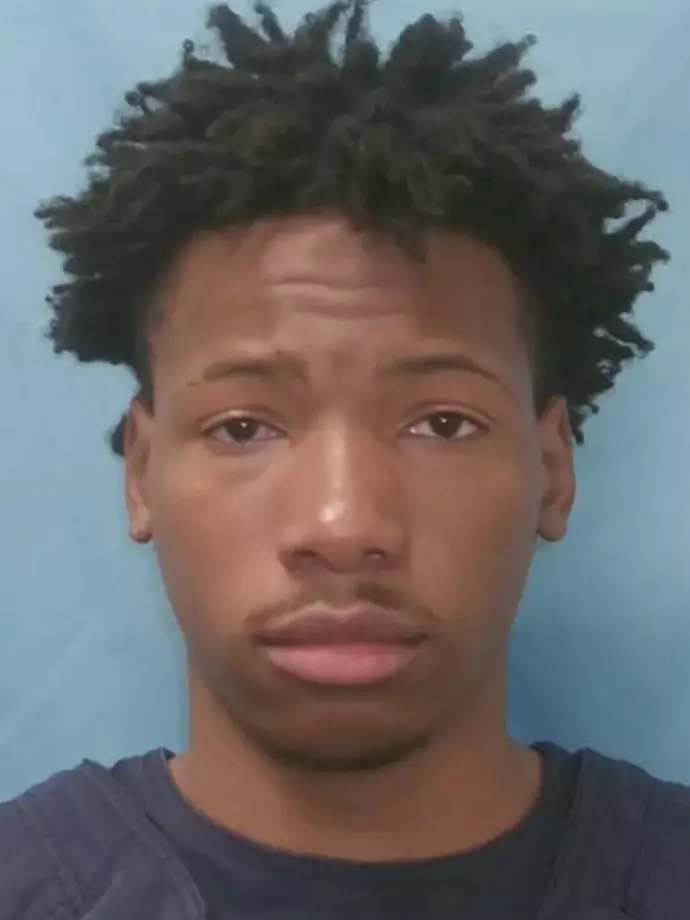
Karmelo Anthony, the Texas teenager found guilty of murdering Austin Metcalf in a fatal stabbing at a track meet, has now formally begun the appeals process.
Collin County court records show that less than 24 hours after a jury convicted Anthony and sentenced him to 35 years in prison on June 9, 2026, his legal team filed a notice of appeal, moving the closely watched case into its next phase.
Speaking to TMZ, Anthony’s attorney Mike Howard said, “After the conclusion of the trial yesterday, we gave the court our official notice that Karmelo Anthony is filing an appeal. We believe there are several important issues for the appellate courts to consider. An appeal is the next part of the legal process and a right afforded every American.”
The verdict came after a week-long trial in Collin County, with jurors deliberating for roughly three hours before finding Anthony guilty of murder on Tuesday. He was 19 at the time of trial; both Anthony and Metcalf were 17 when the stabbing happened on April 2, 2025.
Not long afterward, the punishment phase concluded as well. Under Texas law, the murder charge carried a sentencing range of five to 99 years or life in prison. Anthony’s defence argued the stabbing should be treated as self-defence and urged jurors to view the case through that lens, while the court also instructed jurors they could consider the lesser charge of manslaughter.
That argument did not persuade the jury, which convicted Anthony of murder and sentenced him to 35 years in prison. Because he was convicted of murder rather than capital murder, he will become eligible for parole after serving half of his sentence, meaning 17.5 years, though parole is not guaranteed.
That parole-eligibility period is close to the number of years Metcalf had lived before the confrontation that ended his life. Metcalf was 17 when he was killed.
Witness accounts and prosecutors’ evidence said the incident unfolded at Kuykendall Stadium in Frisco during a rainy school track meet, after Metcalf confronted Anthony for sitting under Memorial High School’s team tent. Prosecutors alleged Anthony refused to leave and, after a brief physical confrontation, pulled a knife from his backpack and stabbed Metcalf once in the chest.
Anthony has not disputed that he stabbed Metcalf. Officers testified that he surrendered at the scene, and the defence maintained throughout trial that he acted because he believed he was in immediate danger.
When he was arrested, he told an officer, “I was protecting myself”.
His defence team supported that account, arguing that the teenager acted out of ‘fear’. Anthony did not testify in his own defence during the trial.

During the trial, Howard told the court: “In that split second, Melo has a decision to make: how and when to act. Self-defense is useless if you wait too late to defend yourself. He reacts in a split second of fear, chaos.
“After Karmelo defended himself with that knife, he ran. He didn’t stab again. He dropped the knife. He didn’t stab anyone else.”
Prosecutors, however, argued the killing was not legally justified and described it as an avoidable confrontation that escalated with deadly force. The case drew national attention throughout the trial, in part because of the fatal encounter itself and in part because of the broader public debate it sparked around self-defence claims, race, and safety at school sporting events.
Since the conviction, Anthony has continued to draw public support, with some critics raising concerns about the makeup of the jury, which included no Black jurors in a case involving a Black defendant and a white victim. Cardi B also commented after Tuesday’s verdict, writing: “This is not justice, this is trying to make an example!!!”
By filing the notice of appeal, Anthony’s lawyers have preserved his right to challenge the conviction and sentence in a higher court. Appellate attorneys will now work to identify alleged legal errors from the trial record, and the appeals process could take months or longer before a court decides whether the conviction stands, a new trial is warranted, or the sentence should be revisited.