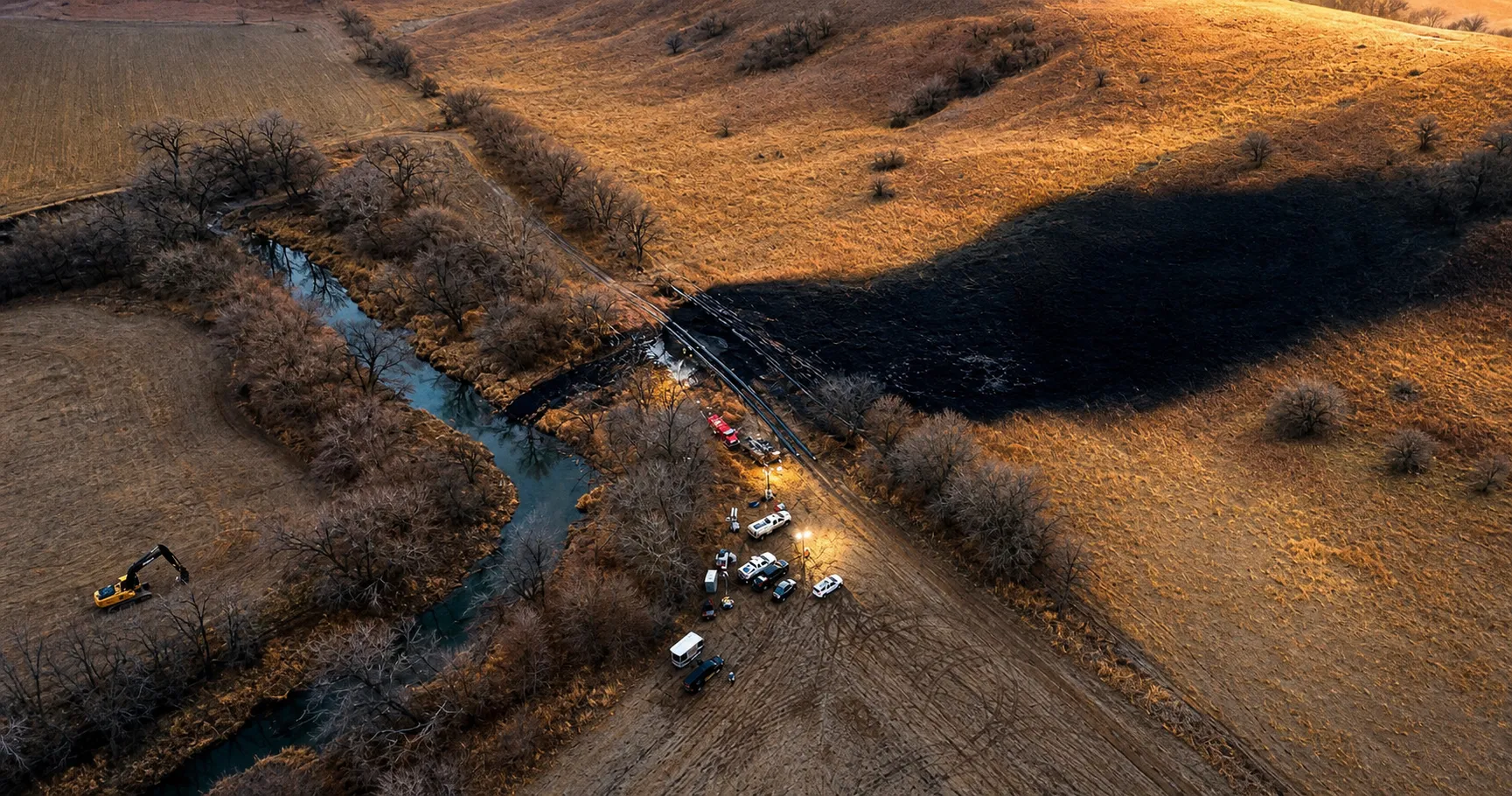
The owner and operator of the Keystone Pipeline has agreed to pay $26.9 million in civil penalties to settle allegations stemming from a December 2022 oil spill in Kansas that dumped nearly 13,000 barrels of heavy crude oil into a rural waterway. The settlement, which was filed in federal court Friday, represents a significant environmental and financial consequence for one of North America’s largest oil transport systems.
Under the proposed agreement, Canada-based South Bow will pay the $26.9 million civil penalty and an additional $3 million to Kansas for environmental restoration projects. The company has also committed to spending approximately $40 million on pipeline integrity improvements and measures designed to prevent future accidents. Combined, the settlement amounts to roughly $70 million in direct costs.
The December 7, 2022 rupture occurred in a section of the Keystone system running through rural Washington County, Kansas, about 150 miles northwest of Kansas City. The breach released approximately 543,000 gallons of crude oil that flowed into Mill Creek, one of the region’s perennial streams. The spill blanketed the creek bank-to-bank with oil an inch thick for 3.5 miles downstream from the rupture site.
The accident ranks as the largest onshore crude pipeline spill in the United States in nine years and surpassed all 22 previous spills on the Keystone system combined since its launch in 2010. In terms of volume, the oil released would have nearly filled an Olympic-sized swimming pool.
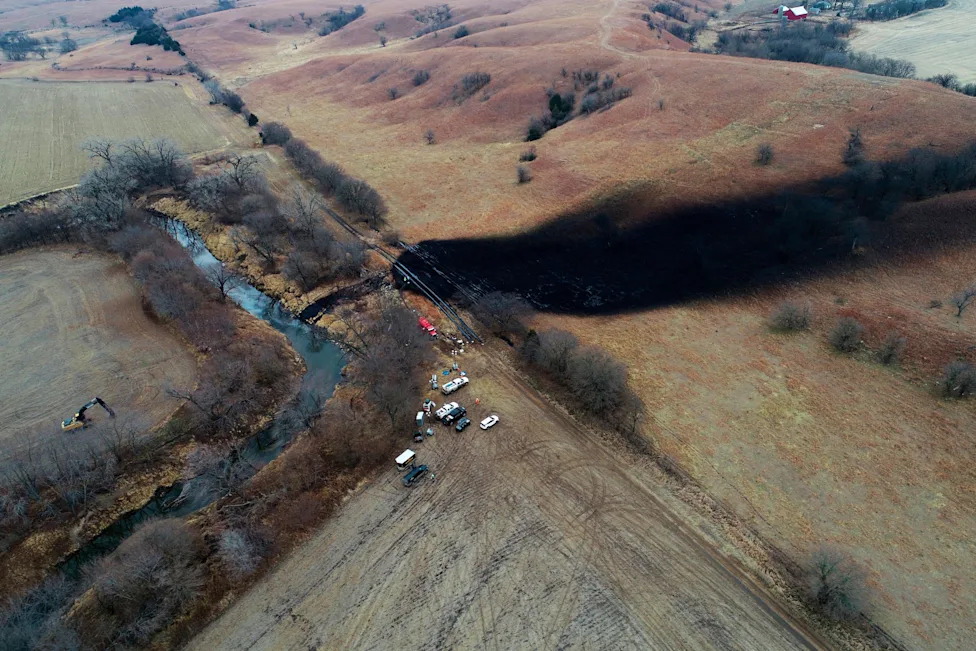
The environmental damage extended well beyond the waterway. According to federal investigations, more than 2,700 animals were harmed or killed in the spill. Oil residue was found across 35 acres surrounding the discharge site. The Kansas Department of Health and Environment issued a stream advisory prohibiting people, livestock, and pets from contacting Mill Creek. No public water supplies were affected, and no pipeline workers or area residents were injured in the incident.
The settlement resolves allegations that South Bow violated the Clean Water Act, along with federal and Kansas state environmental protection laws. The U.S. Environmental Protection Agency, the Department of Justice, and the State of Kansas jointly pursued the enforcement action. The proposed decree is subject to a 30-day public comment period and requires approval from a federal judge in U.S. District Court in Kansas. Notably, South Bow has disputed the government’s allegations and does not acknowledge any legal liability in the settlement agreement.
Engineering investigations revealed that the bend in the Keystone system where the failure occurred had been under stress since its installation in December 2010, likely due to construction activity that altered the surrounding land. Federal engineers determined the immediate cause of the rupture involved bending stress on the pipeline combined with a weld flaw, a structural weakness that remained undetected for years. The complaint filed with the settlement noted that soil under the pipe had been “improperly compacted” during original installation, and although the company re-excavated the site in 2013, it did not replace the affected section of pipe.
The cleanup operation proved massive in scope and duration. The company was required to perform remediation work under EPA oversight at an estimated cost of $480 million. Between December 2022 and October 2023, more than 650,000 gallons of oil were recovered from the site and surrounding areas. Recovery efforts involved removing 200,000 tons of oil-impacted soil, sediment, and debris. Cleanup crews treated and returned more than 54 million gallons of contaminated surface water to Mill Creek. EPA personnel logged more than 6,000 staff hours in the response, with more than 83 individual trips to the scene.
The cleanup was completed early in 2024. In October 2023, nearly a year after the rupture, the EPA confirmed that Mill Creek had resumed flowing naturally following removal of all visible oil contamination.
South Bow’s ownership structure changed during the cleanup process. TC Energy, the Canadian company that originally built and operated the Keystone system, spun off South Bow as a separate publicly traded entity in October 2024, after the Kansas cleanup was complete. As part of that separation agreement, TC Energy agreed to indemnify South Bow for 86 percent of total net liabilities and costs associated with the Kansas spill, subject to a maximum liability of $30 million.
The Keystone Pipeline itself is a 2,687-mile liquid oil transport system that carries thick Canadian tar sands crude to refineries in Illinois, Oklahoma, and Texas. The rupture occurred on the section stretching from Steele City, Nebraska, to Cushing, Oklahoma.
EPA Assistant Administrator Jeffrey Hall emphasized the significance of the environmental harm in a statement accompanying the settlement announcement: “The oil spill blanketed land and water, rendering the waterway lifeless and useless and requiring extensive cleanup and remediation. The substantial penalty reflects the seriousness of the environmental harm, and the other requirements of the settlement reflect the need to prioritize pipeline integrity and maintenance for this critical infrastructure.”
U.S. Attorney Ryan Kriegshauser for the District of Kansas added: “The incident had a massive impact on the State of Kansas, and we are happy that this settlement will mitigate that damage.”