

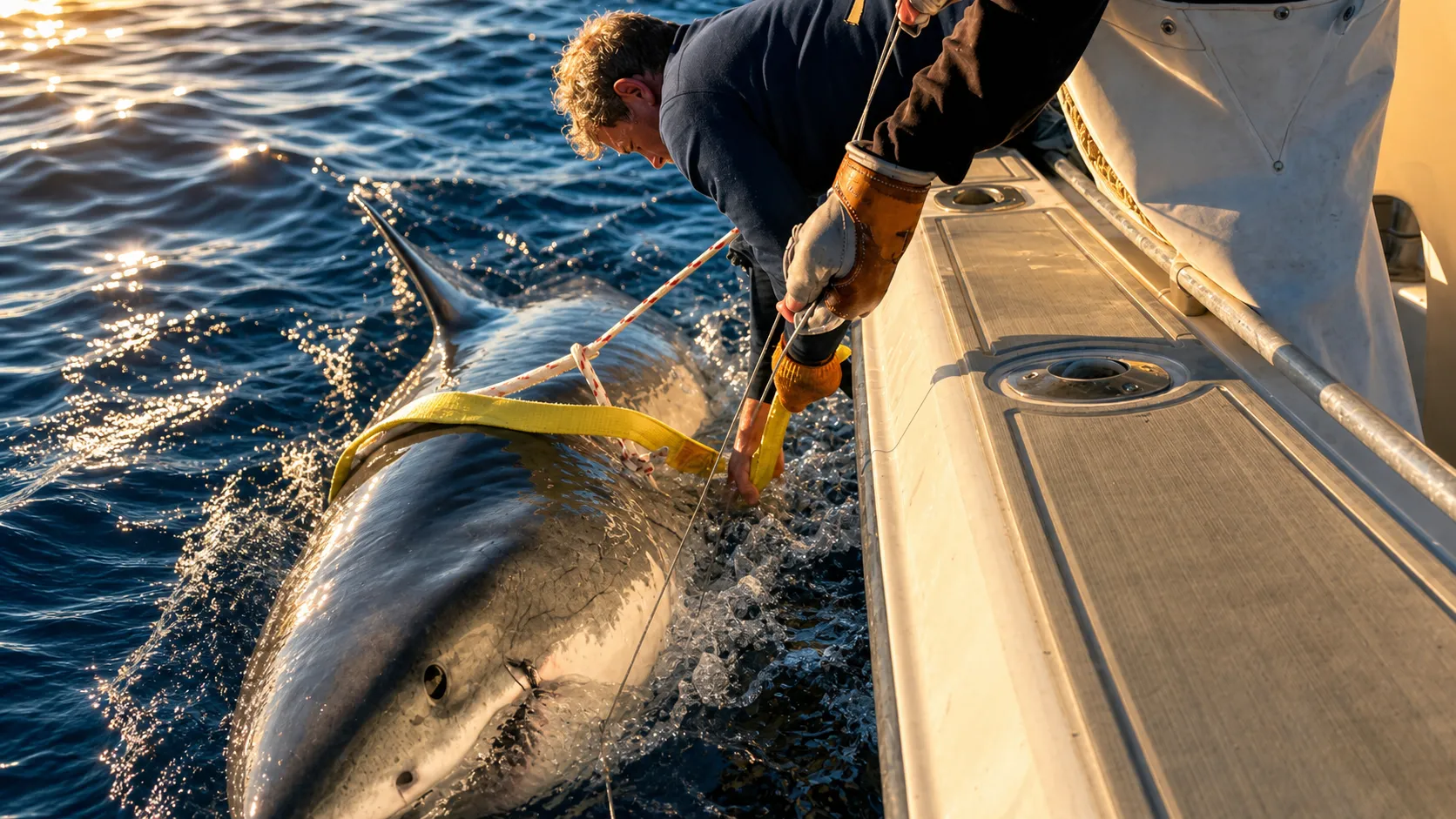
A massive great white shark being tracked in the Atlantic may now be moving toward one of the region’s busiest summer destinations.
Known as Contender, the shark measures nearly 14 feet long and is regarded as the largest male great white ever recorded in the Atlantic by researchers monitoring him. While impressive, he is still smaller than Deep Blue, the famously enormous shark estimated at around 20 feet after sightings near Hawaii.
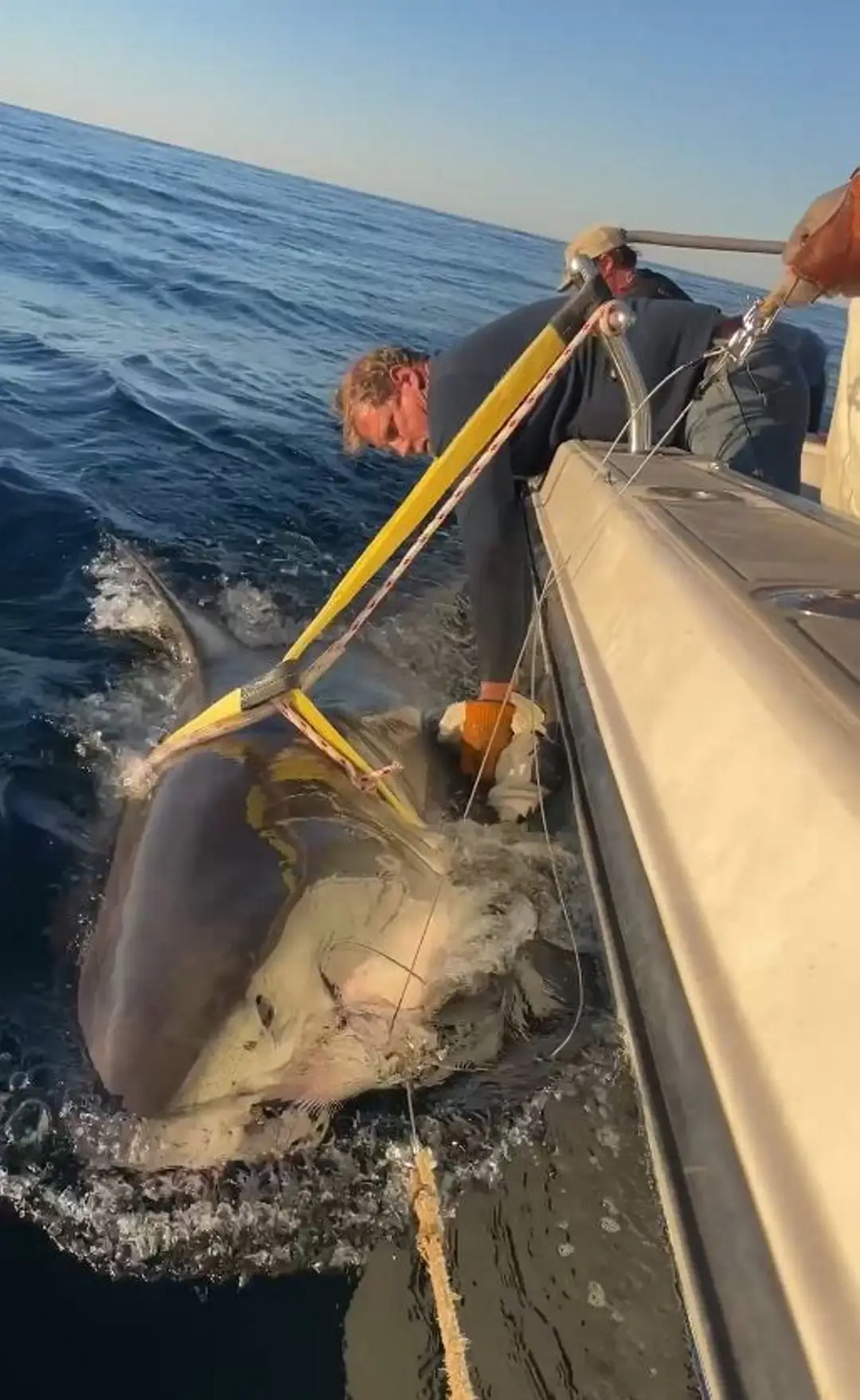
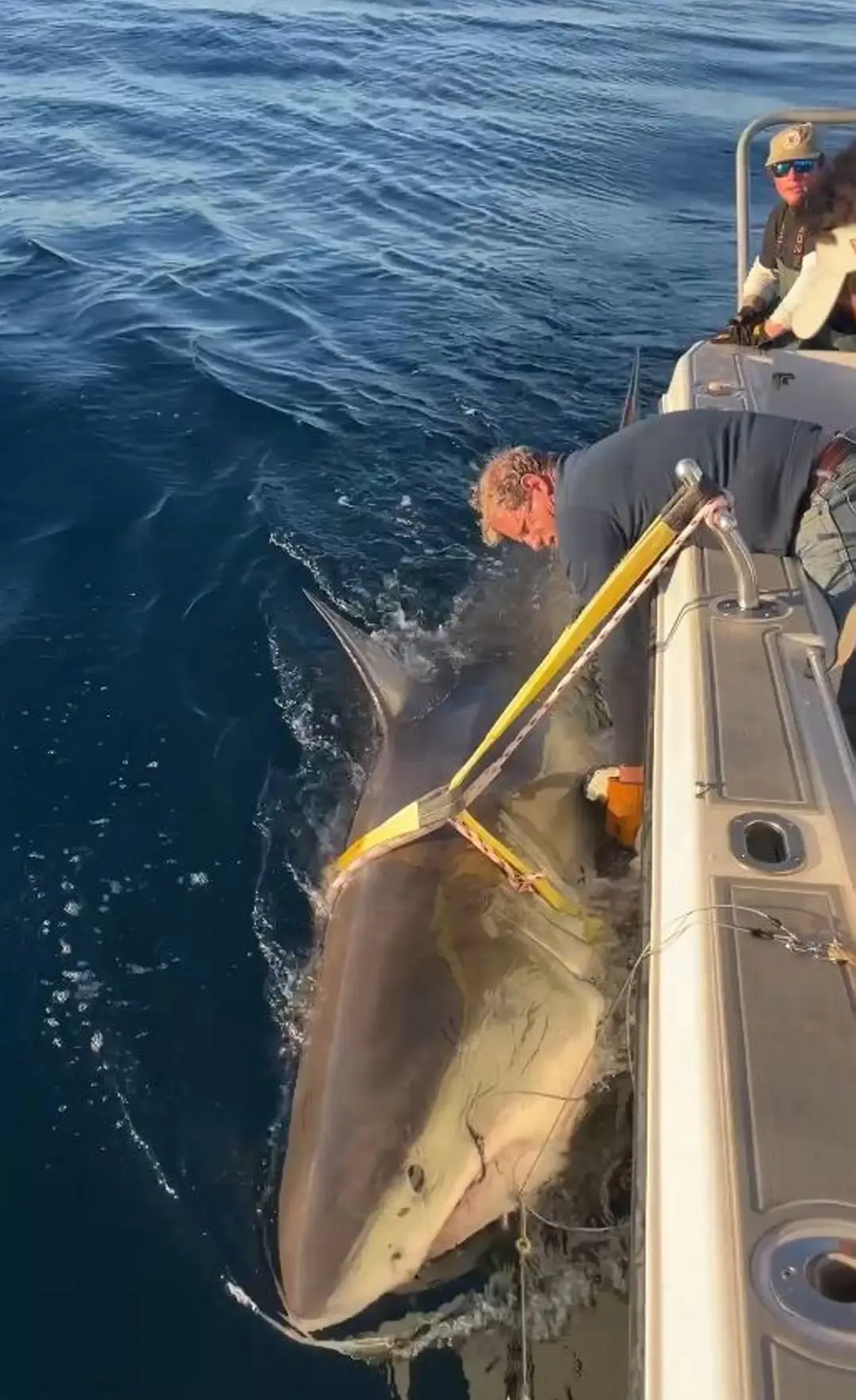
Scientists from OCEARCH attached a tracking tag to Contender in January 2025. The device transmits when the shark’s dorsal fin rises above the surface, helping experts monitor movement and behavior.
Tracking work like this gives researchers a better understanding of where great whites travel, how they migrate through the year, and the kinds of interactions they may have in the wild. OCEARCH says white sharks in the western North Atlantic commonly move north in warmer months and spend summer and early fall foraging in productive feeding areas such as Cape Cod or Atlantic Canada.
For months, Contender had not registered on tracking systems after his last confirmed appearance near Pamlico Sound, off North Carolina, in April.
That changed on June 12, when the shark briefly surfaced and triggered what researchers describe as a ‘Z-ping’ — a short signal indicating only a momentary appearance at the surface.
Because the signal was so brief, researchers could not pin down an exact location. Even so, specialists think he is likely making his seasonal journey toward either Cape Cod or Atlantic Canada, both of which offer rich feeding grounds and cooler summer waters that attract prey.
A spokesperson for OCEARCH said:
“The Z-ping is a weak non-locational ping.
“It typically occurs when the shark’s fin-mounted tag is briefly at the surface and just one single message is received by an overhead Argos satellite.
“Normally three or more messages are needed during a single satellite pass to calculate a reliable location.”
The spokesperson added:
“The last actual location for Contender was on April 23 when he was off the Outer Banks of North Carolina.
“White sharks in the western North Atlantic typically migrate north and spend the summer and early fall foraging in the waters of Cape Cod or Atlantic Canada.
“These two regions offer comfortable water temperatures and an abundant food supply, in particular abundant seals and large fish species.”
Great whites are known to target bigger prey, especially pinnipeds such as seals and sea lions. They have also been seen feeding opportunistically on whale carcasses.
Although they are among the ocean’s most formidable predators, great whites are not without threats of their own.
One of the few animals known to actively hunt them is the orca.
Researchers have documented orcas deliberately preying on large sharks, and one pod in particular has drawn attention for targeting their nutrient-rich livers.
Contender’s size was officially recorded when he was tagged on January 17, 2025, roughly 45 miles off the Georgia-Florida border. Since then, he has covered more than 7,000 miles.
OCEARCH’s tracker has made Contender one of the most closely watched sharks in the western North Atlantic, especially during the summer months when large white sharks often show up near coastal tourism hotspots from North Carolina to New England and Atlantic Canada.